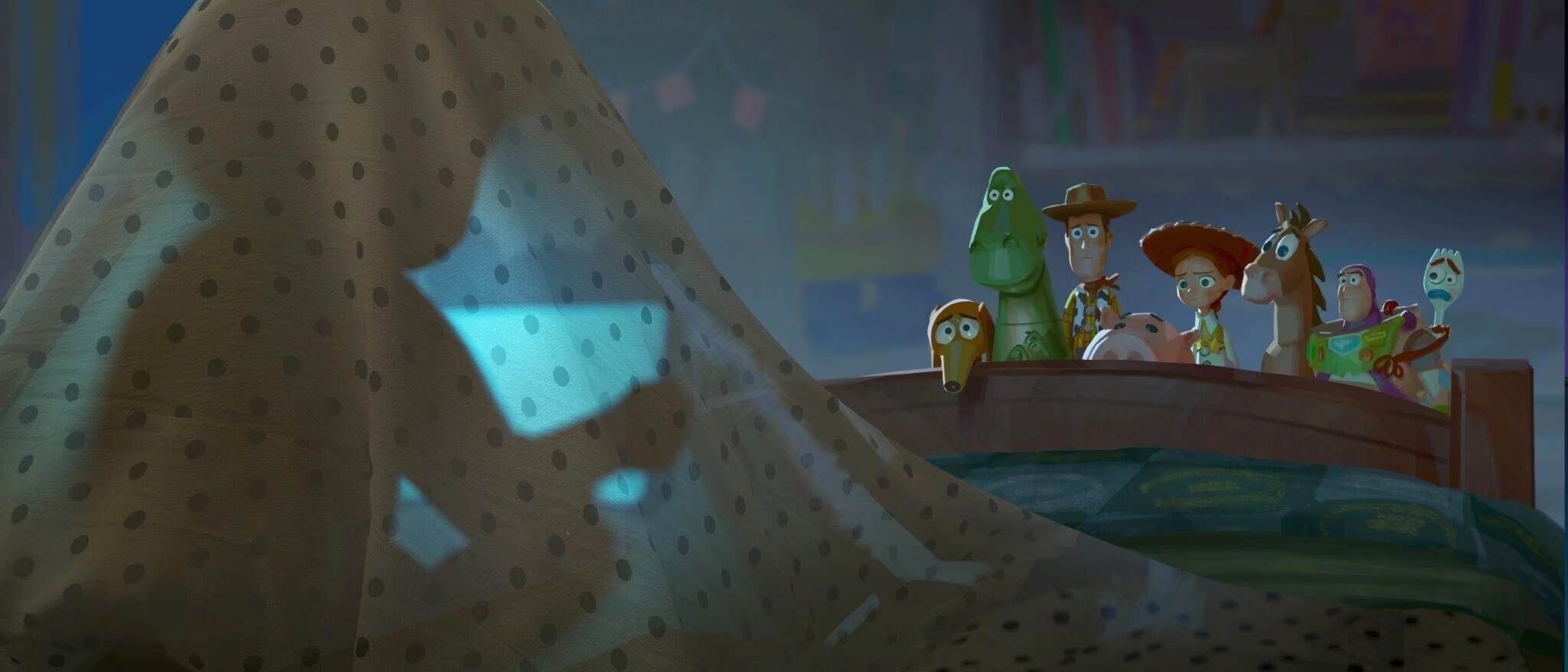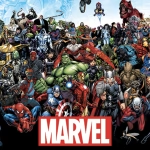


“Narrative art” is a category that reaches back to the very origins of art history, but one that has typically remained secondary in the language of museology. From frescoes to illustration, comics to film posters, children’s book drawings to science fiction visuals — no institution had ever gathered all of these under one roof and argued that the gathering deserved a serious cultural home. The Lucas Museum of Narrative Art, opening in Los Angeles on 22 September 2026, arrives with exactly that argument.
George Lucas’s Collection and a Museum’s Birth
The museum’s founders are George Lucas — creator of *Star Wars* and *Indiana Jones* — and his partner, prominent business figure Mellody Hobson. Over decades, Lucas assembled an extraordinarily broad collection of more than 40,000 works. Framed by the concept of “narrative art,” the collection encompasses the visual memory of popular culture: familiar works by beloved illustrators; mural paintings of the 20th and 21st centuries; comic art; children’s book illustrations; science fiction illustrations; and the fantastic visions of 20th-century culture.
The museum went through eight years of construction to bring this collection to the public. A long process debated whether it would open in Chicago, San Francisco, or Los Angeles. It settled in Exposition Park, at the heart of Los Angeles’s cultural axis.
MAD Architects: A Building That Echoes Mountains
The building’s design is by Chinese architecture firm MAD Architects (Ma Yansong). MAD is known for organic forms and nature-inspired shapes that surprise eyes accustomed to concrete masses. The approach for the Lucas Museum follows the same direction: the 300,000-square-foot structure takes a form echoing mountain silhouettes — settling into the urban fabric while declining to conform to it.
Gardens designed by Mia Lehrer Studios spread across an 11-acre site surrounding the building — positioning the museum not simply as a building but as a full cultural park.
35 Galleries, 100,000 Square Feet, Human Experience
The museum’s 35 galleries occupy 100,000 square feet of exhibition space. Their names are striking: love, family, community, play, work, sports, childhood, adventure, and more. Rather than chronological or stylistic art-historical categories, the museum chooses the universal themes of human experience.
This choice directly contests the reason “narrative art” tends to be undervalued in academic circles: visual narratives that ordinary people understand and love carry a historical accumulation comparable to the Renaissance or Impressionism. The Lucas Museum aims to present that accumulation with a serious institutional identity.
FAQ: Lucas Museum of Narrative Art
- When and where does the museum open?
The Lucas Museum of Narrative Art opens 22 September 2026 at Exposition Park, Los Angeles. For tickets and visit information: lucasmuseum.org.
- What is “narrative art”?
Visual art forms that tell stories, carry a specific narrative, or communicate with a viewer through that narrative: illustration, comics, film posters, children’s book drawings, science fiction imagery, mural paintings, and more.
- Why did George Lucas found this museum?
Lucas accumulated a collection of more than 40,000 works of narrative art over decades. He founded the museum to give that collection a permanent and accessible public home.
NO-26 Note
The Lucas Museum directly questions the old hierarchy between “high art” and “popular culture.” Is a comics panel less legible than a Velázquez portrait? Does a science fiction poster carry less cultural accumulation than a monumental landscape? These questions will take physical form in Los Angeles in September. Among the major museum openings of autumn, one of the most compelling.