

Interview: Serkan Genç on Patates Kızartması — “Working Under Humane Conditions Is No Utopian Fantasy”

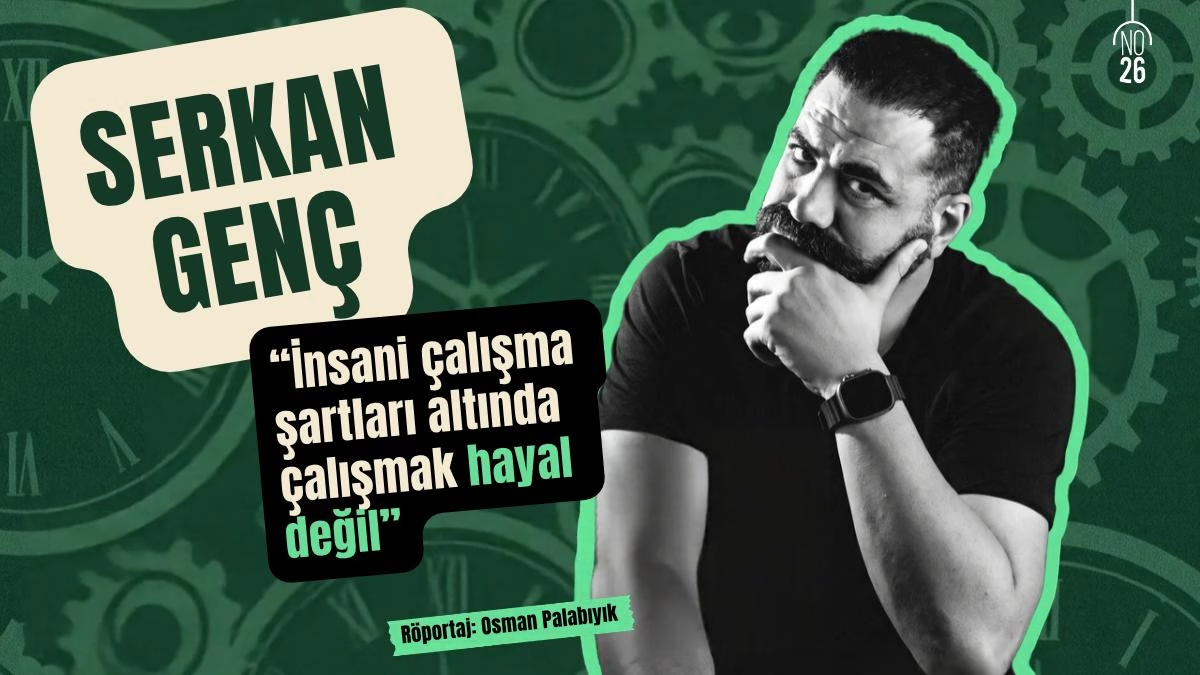
Drawing on the shifting power dynamics on set when a background actor happens to know a high-profile lead, Patates Kızartması uses sharp, observational comedy to interrogate an industry where human worth is measured almost entirely by proximity to influence. Unpacking the precarious labor conditions shared by cast and crew alike, the film mounts a candid, empathetic institutional critique. We sat down with actor Serkan Genç to discuss set politics, collective struggle, and the realities behind the screen.
When you first encountered Serdal on the page, what drew you to him?
When Sinan sent over the script, I read it in one sitting. It felt so intimately familiar, so inextricably bound to my own experience, that I could have sworn I had known this story since I first learned to read. I told him immediately: let’s do this. Serdal was me; he was everyone I knew, my peers, my family. What drew me to the role above all was that knife-edge tension between the ease of playing someone who embodies our collective condition and the quiet burden that recognition demands.
How did Serdal’s trajectory—founding an independent theatre company only to find himself drowning in debt—inform your approach to the character?
Serdal essentially does what all of us would do if we inhabited a system that didn’t compel us to live in constant existential precarity. When he listens to Akın and Barış lamenting their involvement in television dramas and commercial films they would never dream of watching as viewers, his sympathy for them is genuine, if fleeting. Because being the sort of chef who cooks strictly for his own palate—no matter how formidable one’s craft—ultimately does not keep the bailiffs from the door. Navigating that reality instilled in me a profound respect for him.
How accurately does the film capture an industry where an actor’s worth on set is dictated by status rather than craft?
It is an entirely faithful portrait—if anything, we softened the blow. When Cem turns to Serdal and remarks, “You’re a brilliant actor,” the look on Serdal’s face says it all: as if that carries any currency here. That dynamic is an open secret across the entire profession. Other forces dictate value on set, yet the industry remains perpetually reluctant to acknowledge it aloud.
What was it like to embody Serdal’s whiplash transition from being entirely overlooked to suddenly fawned upon within minutes? What did that resurrect from your own career?
Recognising that such sudden reverence is completely hollow is perhaps the only way an actor preserves their sanity. If the adulation is an illusion, then the neglect that precedes it must be equally fictitious. An actor cannot afford to anchor their selfhood to either the red carpets or the casual dismissals; neither state speaks to who you actually are.
Like nearly all my colleagues, I have weathered my share of these disparities. A friend from outside the industry once asked me in genuine bewilderment how I could bear watching untalented people handed major roles. I remember feeling pained—not because of the discrepancy itself, but because, despite believing in my ability, he perceived me as shortchanged. Yet I regarded myself as profoundly privileged simply to be practicing the craft I love, and articulating that nuance to someone on the outside was immensely difficult. My name wasn’t plastered in neon lights across billboards, but what did that matter? What purpose would it serve? The match isn’t over. I was content in the present; if richer opportunities surfaced, I would meet them with rigour, but the only true defeat would have been losing the ability to work at all—which, given my devotion to the craft, seemed improbable. I tried to explain this at length, and then in brief, but I never quite saw conviction in his eyes. He assumed, inevitably, that I was rationalising my circumstances.
The film casts an equally unsparing eye on the interpersonal dynamics among the crew. Is this where the industry reveals its sharpest edges?
Those sharp edges make no distinction between those in front of the lens and those behind it. When we co-founded the Actors’ Union of Turkey [Oyuncular Sendikası] fifteen years ago, our explicit purpose was to dismantle these structural distortions and ensure that a profession we cherish could be practiced under humane conditions. We are still fighting for those fundamental entitlements.
I recall an incident from the union’s early days during a shoot in Çanakkale. A fellow actor had fallen ill and was denied medical attention for three days while expected to work. When the production car arrived, I informed the driver that I would not set foot on set until our colleague was taken to a hospital. Two other actors waiting in the lobby joined the protest. Management promptly threatened us with formal disciplinary proceedings for breach of contract. Lacking legal fluency, we were initially shaken, but I telephoned our founding president, Mehmet Ali Alabora. He reassured me that a formal report was nothing to fear—in fact, it worked to our advantage—and promised to dispatch a union lawyer to the location immediately to file a counter-report regarding the neglected actor. The moment we relayed this, the production capitulated: they ensured our colleague was hospitalised with full medical care, after which we reported to set. Merely mentioning the arrival of union counsel was enough to compel management to honour their obligations. Naturally, once the film reached cinemas, I discovered the vast majority of my scenes had been left on the cutting room floor. But I have never regretted taking that stand.
The reliance on extended takes and sequence shots leaves virtually no margin for error. Does that formal constraint heighten tension, or does it liberate the performer?
When you are methodically constructing a character, that continuous temporality actually affords greater fluidity—at least in my experience. I felt neither strain nor inhibition. Sinan granted us extraordinary latitude, and the cast surrendered itself entirely to his direction, resulting in a rare narrative intimacy.
While Bülent and I are close friends, we had never shared a scene of this nature before. We studied during the same period at different conservatoires and shared several mentors. Perhaps because of that shared lineage, there was an effortless synchronicity between us, as though we had rehearsed together for years or shared the same classroom. That is why those long takes flow with such unforced authenticity; we could recalibrate the tone and cadence of a scene almost telepathically. There was zero friction. In fact, our three-way scenes alongside Serdal were executed almost instantaneously. The ensemble gave far more than what was asked of them, and I consider myself fortunate to have exposed our industry’s institutional vulnerabilities alongside peers of such caliber.
What was your experience working with Sinan Biçici’s deliberately elliptical script, which granted significant improvisational leeway to the cast?
The moment we engaged with the text, we became collaborators in the world-building. Sinan exhibited an immense degree of trust, granting us carte blanche to inhabit and shape the narrative material. Because we shared an identical artistic wavelength, we could organically extrapolate the subtext he had woven between the lines. We engaged in extensive dialogues about the text; while we respected the structural architecture he had established, there were moments we collectively resolved as the material demanded. That porous, trusting methodology allowed us to realise the script’s fullest potential.
Patates Kızartması was completed in just three days. Did that condensed timeframe impose undue pressure, or did it reinforce the film’s naturalistic immediacy?
We felt no pressure whatsoever, primarily because there was no frantic attempt to rush the process. At one point, rain forced us to halt production for nearly three hours. Everything proceeded at its organic pace; because the work was so immersive, we were genuinely surprised to realise three days had elapsed. By the end of the third day, there simply remained nothing left to shoot. Our only collective sentiment was a tinge of melancholia that we wouldn’t be returning to set the following morning.
Throughout the film, the systemic dysfunctions spanning cinema, television, and theatre unfold with unvarnished candour. Are these structural issues genuinely remediable?
Of course they are—and in truth, they are among the most straightforward problems to rectify. Once an institutional framework is established and upheld rather than left to individual whims, workflows become markedly more efficient and exploitation is curtailed. Our own set stood as proof: through rigorous pre-production and adherence to union-mandated hours, we wrapped the film without grueling overtime. And we did so in three days. That success certainly relied on the cohesion between cast and crew, but the broader implication remains clear: working under humane conditions is no utopian fantasy.
Both performers and crew members have waged economic and creative battles for decades. Could the disarming self-critique presented in Patates Kızartması galvanise industry leadership and syndicates into action?
I have witnessed lay audiences react with genuine disbelief, asking: “Does this really happen on set?” Meanwhile, industry insiders respond with heartfelt solidarity and their own candid introspection, having endured precisely these grievances for years. The film underscores that maintaining the status quo is untenable; systemic dysfunction cannot simply be accepted as the cost of doing business. The consensus across the creative community is that a shift is overdue. My hope is that Patates Kızartması serves as a deliberate flare.
The film premiered before audiences at the Golden Boll [Altın Koza] Film Festival. How was that reception, and what discussions did it provoke?
The engagement from viewers outside the creative arts far exceeded our expectations. The general public has long harboured a quiet curiosity about what truly transpires behind the glamorous veneer of film sets. We initially worried certain trade-specific nuances might prove alienating, but the reaction proved entirely contrary. Audiences immediately grasped that the film operates as a broader systemic critique whose mechanisms transcend the cultural sphere.
During our post-screening Q&A, an audience member working in the construction trade observed that the workplace hierarchies and exploitative patterns depicted on screen mapped almost identically onto his own industry. For me, that was the single most striking and perceptive reflection of the festival. It confirmed that the film had articulated precisely what it set out to interrogate.