

A striking spatial intervention addressing the economic and social dissolution in Turkey’s recent history at the uncanny intersection of financial data and climate ruptures deeply weighs upon the atmosphere of the Istanbul art scene these days. The Pill is hosting İrem Günaydın’s third solo exhibition at the gallery, a project titled “ABOUT THE ARTIST,” which fully envelopes the viewer between March 7 and July 31, 2026.
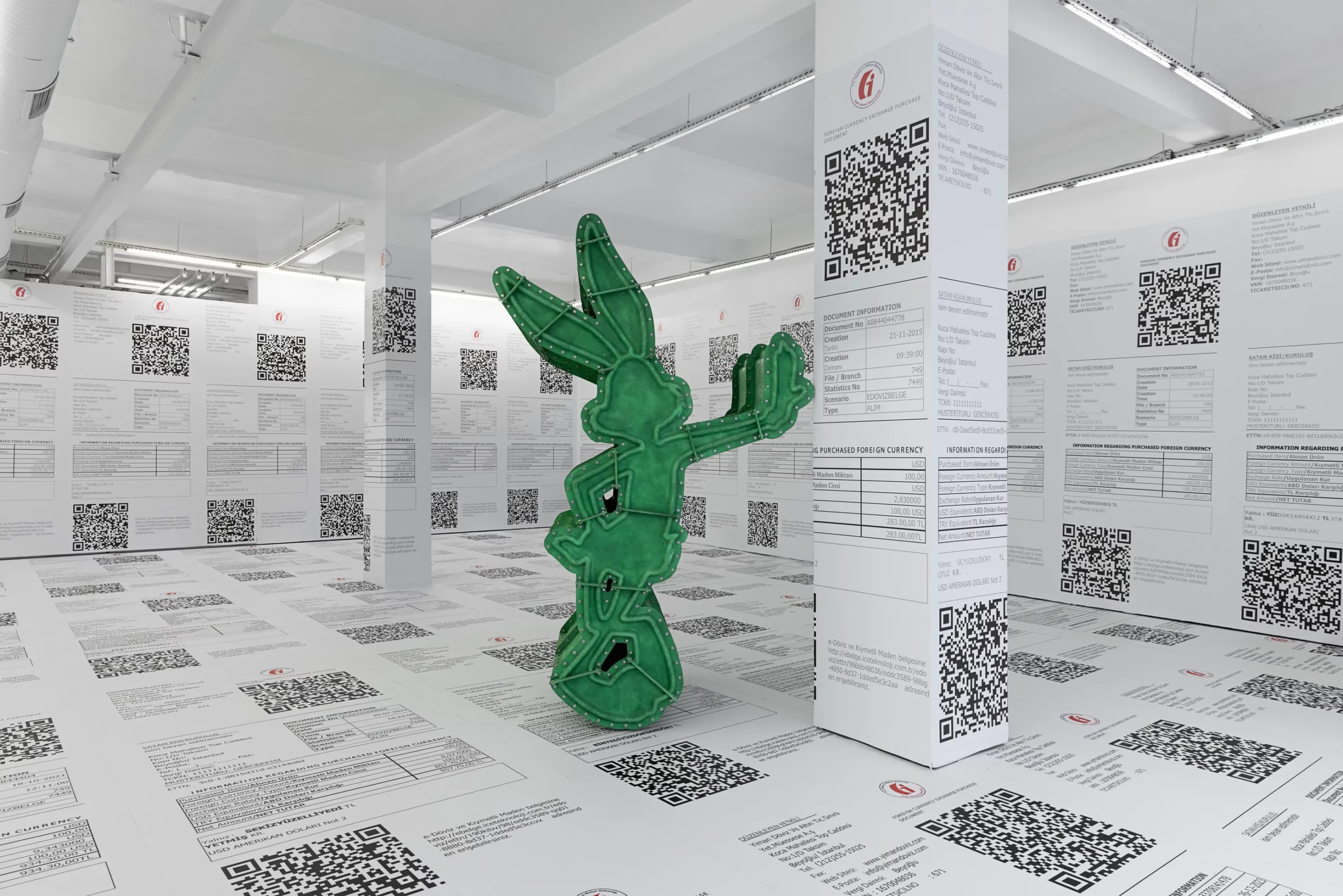
The exhibition transforms the gallery space into an interactive simulation of the financial climate, woven with real-time data streams of exchange rates, market movements, and stock market records. At the very center of this uncanny atmosphere rises a single monumental sculpture, turning Turkey’s history of dispossession over the last 24 years into a living field of memory identified with shifting winds and economic storms. The conceptual layers evolving from Günaydın’s previous two solo exhibitions at the gallery (Salad Cake, 2020 and Scripted Expanded Molded I’s, 2023) evolve into a much darker, intense, and radical reckoning in this third installment.
A Toxic Green Deconstruction and Bugs Bunny
The artist’s unique conceptual vocabulary, which investigates the residues remaining at the fringes of institutional memory, form, and narrative, puts on a show of strength in this exhibition through a fiberglass mold in “toxic green,” scale games transformed into political weapons, and an unexpected figure: Bugs Bunny.
While shifting shapes fluidly between text, form, frame, and mold, Günaydın deconstructs the artist herself as an unstable yet continuous fiction with the tautological name she gives her exhibition. Questioning the institutional boundaries of the art world and the massive mechanisms that govern our lives, “ABOUT THE ARTIST” turns that invisible frame outlining representation into an object of investigation itself. As the Bugs Bunny figure moves beyond a silhouette and transforms into a massive-scale, toxic green mold, it opens up a striking debate on how the artist-activist image is perceived by the system as a glitch and how it is downscaled in an attempt to domesticate it.
Counter-Archives Against Institutional Amnesia: Weather Report
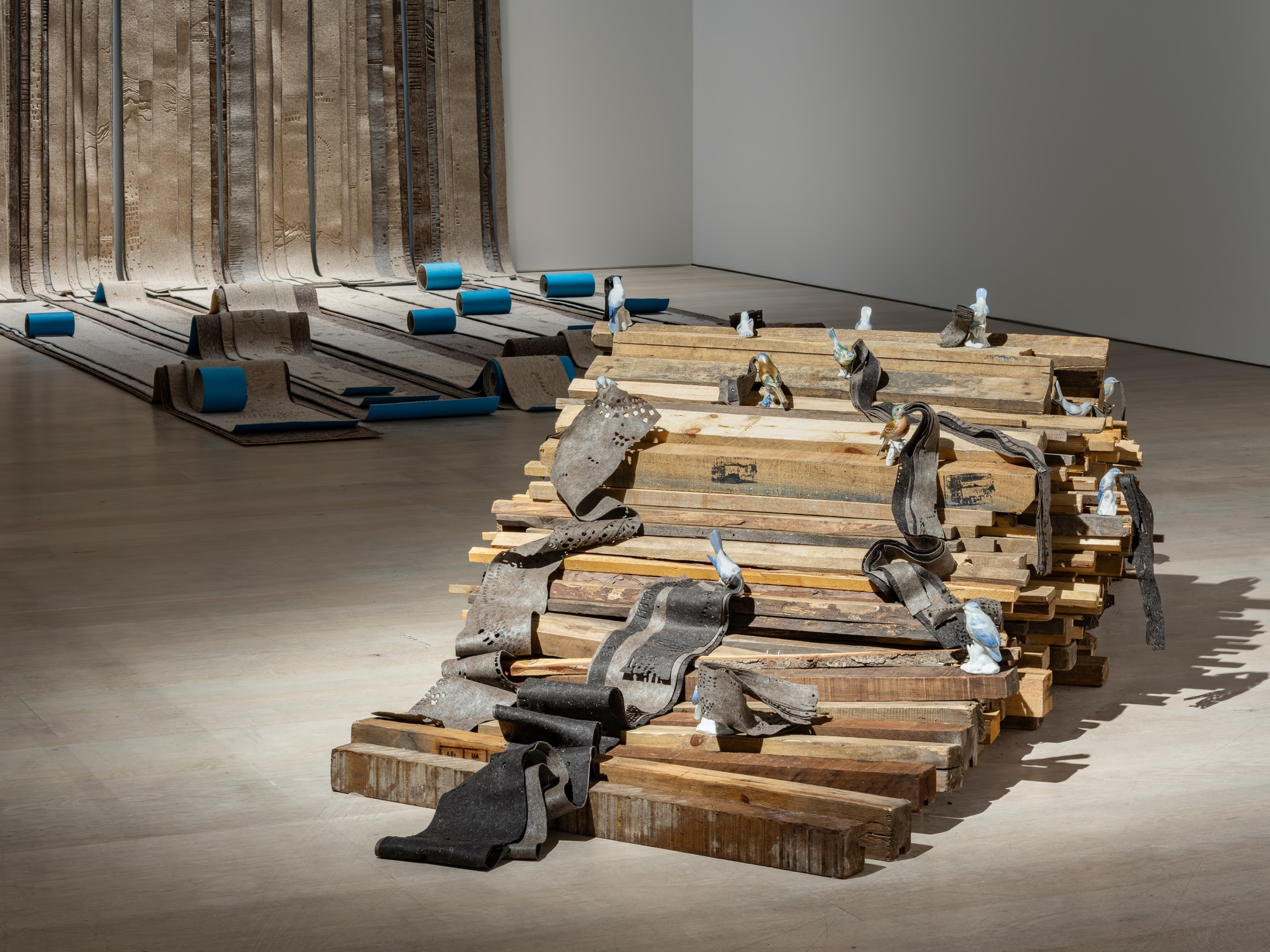
Günaydın’s site-specific installation, Weather Report, breaks conventions by blowing up to monumental scales whatever was deliberately rendered invisible or downscaled by the system in the hope of it getting lost among the cracks of institutional discourse. Offering a radical aesthetic of resistance against institutionalized amnesia—that is, organized politics of forgetting—the exhibition drives 75 foreign exchange transaction receipts chosen from Turkey’s last 24 years into the wall, elevated to an architectural scale.
This dizzying, massive counter-archive forces the viewer into a direct confrontation with the melting, disappearing value of our lowest common denominator—namely, both our currency and our social contract. The cheerful and playful imagination of the artist’s previous exhibitions—that ironic line stretching from Cézanne’s search for truth in painting to the red and blue pills of The Matrix—yields here to an uncanny, smoky atmosphere that makes one feel something is rotting.
Ontological Continuity: The Fourth Bunny
Rising right in the middle of this dark plane, the sculpture titled The Fourth Bunny achieves a flawless ontological continuity with the artist’s previous works, The Fourth Medusa and The Fourth Table. Here, the number four represents not just a chronological sequence, but that state of being after, a radical existential position that comes after repeatedly experienced ruptures.
While The Fourth Bunny is erected as a monument to shape-shifting survival and an organized collective memory, it holds the power to infinitely multiply its own fiction using fiberglass strands—another lowest common denominator shaping the world. Blending Derridean deconstructive theories with the transient images of popular culture, comic book aesthetics, and bureaucratic documents in an exquisite intellectual tension, İrem Günaydın pursues those administrative traces left behind by history and art.
Experiable at The Pill until the end of July, this striking memory space promises the viewer a cleverly constructed disorientation rather than a comfortable ending, leaving a painful truth declared in the artist’s own manifesto right in the middle of the room: shrinking or reducing is no longer an option.