

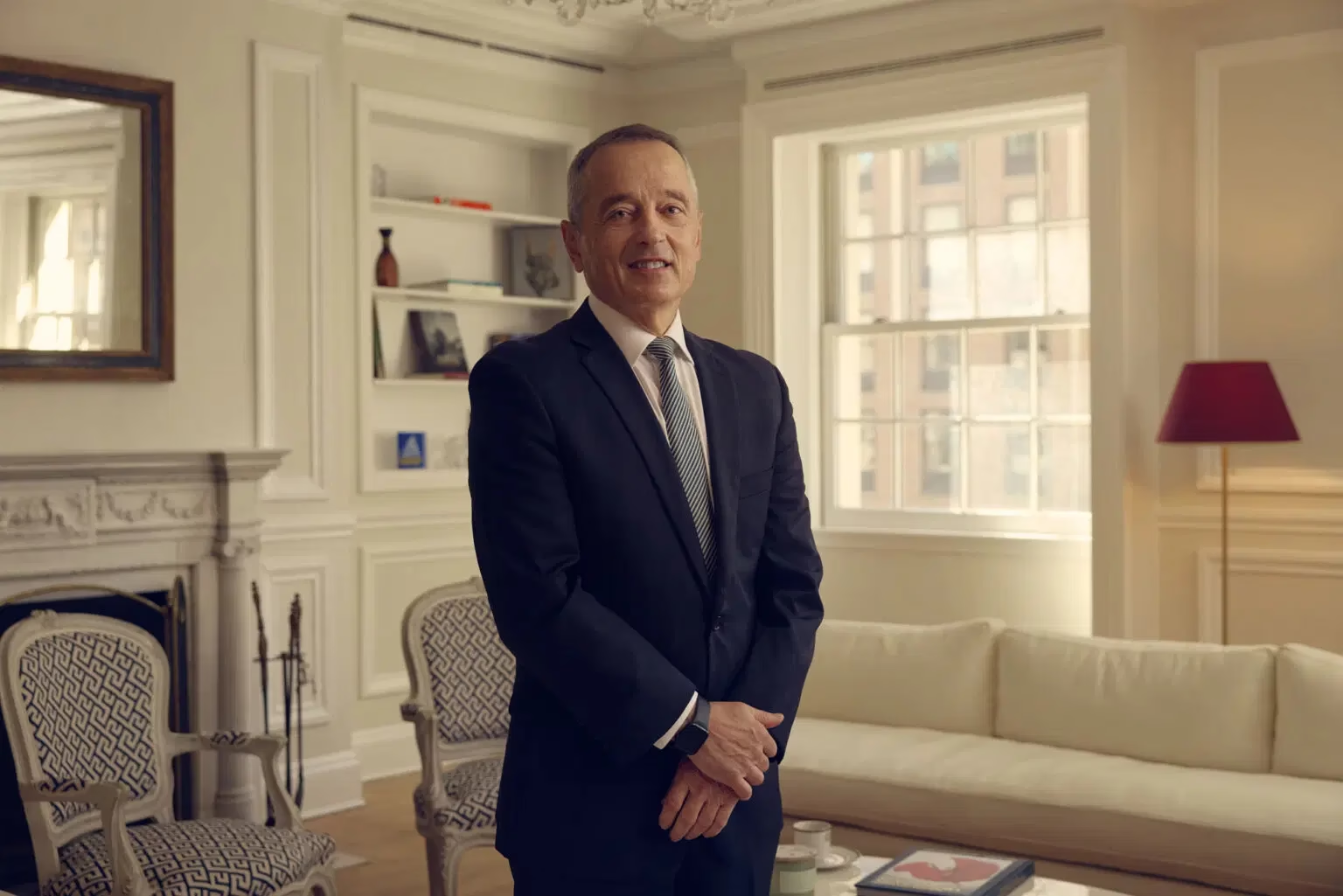
In 2017, a US Marine Corps colonel and senior prosecutor who witnessed the looting of the Baghdad Museum in 2003 established a unit in New York that would radically alter the balances of the global art world: the Antiquities Trafficking Unit. Having recovered more than 5,000 historical artifacts and dismantled a trafficking network exceeding $300 million in total since its inception, this structure asks everyone—from auction houses to global institutions—one single, clear question: “Show me the true and transparent documentation of ownership for this artwork.”
Anatomy of a Unit and the “Provenance” Revolution
Operating under the Manhattan District Attorney’s Office, the Antiquities Trafficking Unit works with a practice of deep “art detective work” rather than a classic police drama. When the academic passion for archaeology of the unit’s founder, Matthew Bogdanos, came together with strict legal enforcement power, the gray areas the art market had been hiding behind for years began to illuminate one by one.
Prior to 2017, the number of auction houses or museums resolutely questioning the provenance of the antiquities they purchased did not exceed the fingers on one hand. Thanks to the aggressive investigations initiated by Bogdanos and his team, provenance documentation transitioned from being a marginal detail in the market to a binding global standard. Many priceless artifacts that giant institutions such as The Metropolitan Museum of Art, the Los Angeles County Museum of Art (LACMA), and the Museum of Fine Arts, Boston had added to their collections over the years were returned to their geographical origins as a result of these investigations.
June 2026: A New Earthquake at The Metropolitan Museum
The latest development in June 2026 sent shockwaves through the art world once again. The Manhattan District Attorney’s Office seized dozens more antiquities from The Metropolitan Museum of Art (The Met), considered one of the world’s most prestigious art institutions.
With this latest operation, the total number of items seized from The Met’s library and galleries since 2017 surpassed 120, and the monetary value of the seized objects exceeded $95 million. This process, repeatedly shaking the world’s largest museum, reopened debates surrounding institutions’ acquisition policies and the dark networks turned a blind eye to in the past. Although The Met’s management announced that they would “deepen provenance research,” according to Bogdanos, this bureaucratic reflex of institutions is still moving much slower than it should.
The Tsunami in the Market and the Vilcek Prize
Bogdanos’s uncompromising stance fundamentally reshaped the structure of the global antiquities market:
-
Auction Houses: Were forced to abandon the habit of selling works with notes like “provenance uncertain” in their catalogues due to legal risks.
-
Collectors: Began incorporating not only aesthetic value but also the legal and ethical history of an artwork into portfolio decisions when acquiring paintings or sculptures.
-
Global Impact: As The Art Newspaper also emphasized, these investigations are forcing museums and collectors to thoroughly question acquisition habits they maintained for decades.
Honoring the contributions of immigrants in the US to the world of culture, the Vilcek Foundation crowned Bogdanos’s historic struggle in 2026 with a prestigious $100,000 prize. However, unyielding in his principled stance, Bogdanos declined to accept the money into his personal account and requested that it be donated to non-governmental organizations.
Frequently Asked Questions About the Bogdanos Unit and the Art Market
When and how was the Antiquities Trafficking Unit founded?
-
Founded in 2017 by Matthew Bogdanos within the Manhattan District Attorney’s Office. Since its inception, the unit has seized over 5,000 looted artifacts with a market value reaching $300 million.
Are all the artifacts seized from The Metropolitan Museum of Art illegal?
-
A large portion of the seized items possess fraudulent, incomplete, or suspicious provenance belonging to looted geographies. While some legal proceedings continue, many works whose documentation cannot be verified are returned directly to their countries of origin.
How did these investigations transform the market?
-
Not just who currently holds the artwork, but the entire historical chain stretching from the excavation site to the gallery has become a necessity. Uncertainty of origin is now recognized as both a commercial and a severe legal risk.
NO-26 Editor’s Note
Matthew Bogdanos and his team have left an irreversible mark on the ethical and legal foundation of the art world. The question “Who owns this artwork?” is no longer answered with fancy gallery invoices, but through a scientific and archaeological chain of evidence. That silent acceptance in museum libraries and private collections has long been shattered; the transformation may not be complete yet, but the arrow has already left the bow!