

Can we build brand-new realms of possibility for ourselves starting from the observation of nature? How can we rethink architecture, the materials we use, and the shared spaces we inhabit? Artists Olaf Holzapfel and Raul Walch, pursuing these fundamental questions, orchestrate a magnificent dialogue on the upper floor and outdoor spaces of Villa Merkel in Esslingen, Germany. On view until October 4, 2026, the exhibition “Ideal Forms and Raw Material” (Ideale Formen und roher Stoff) enables us to look with fresh eyes at elements such as air, water, plants, and soil—elements that surround us, yet which we rarely question because we take them for granted. The exhibition renders visible the slow processes, transformative power, and hidden poetry behind seemingly simple things.
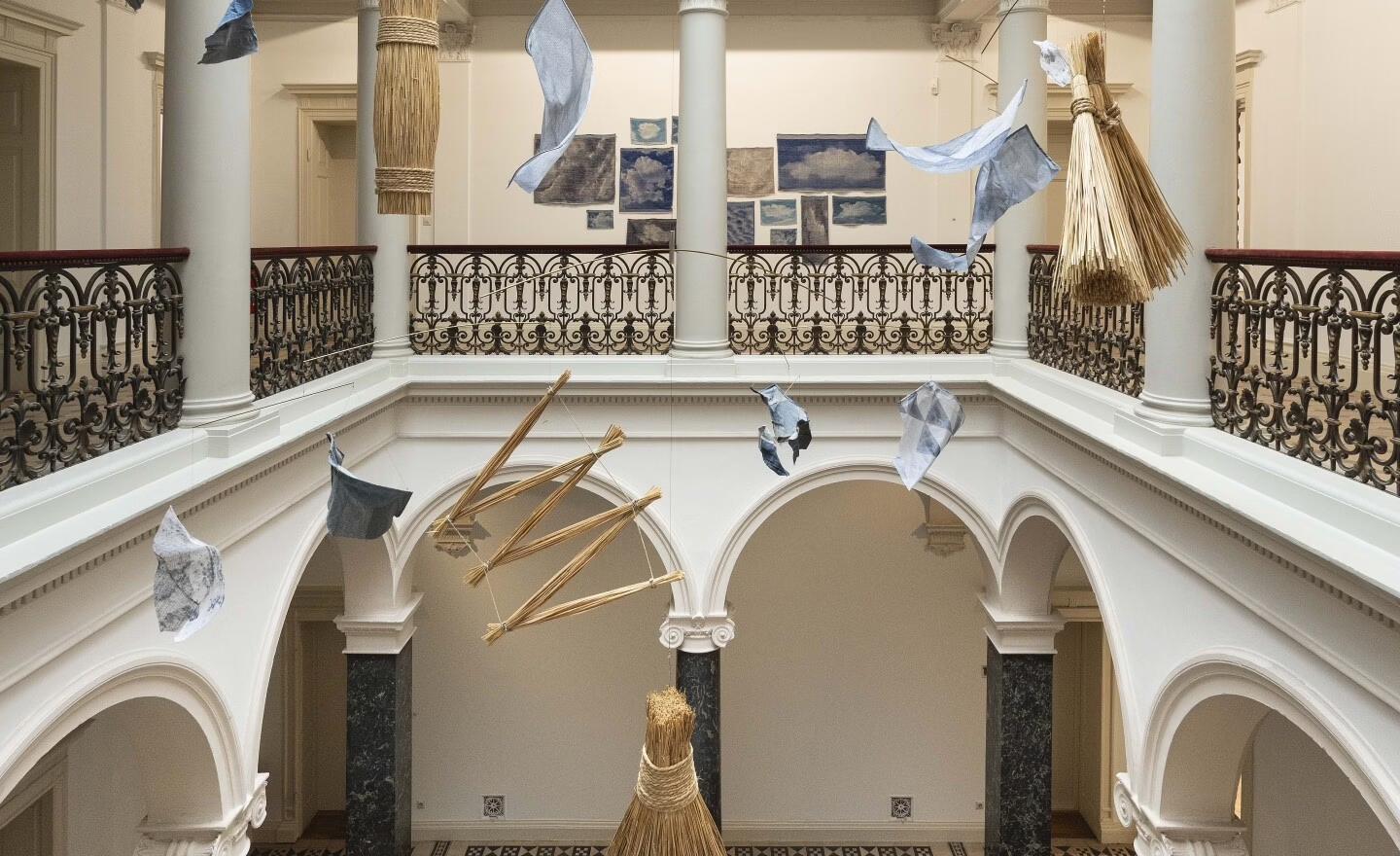
As you step into the exhibition space, open, adaptable, and tactile structures shaped by willow weaves, clay, denim fabrics, and kinetic elements welcome you. Transforming natural materials and fundamental techniques that shape space into artworks, Olaf Holzapfel produces a new visual language rooted in local ties against a globalized and homogenized world. He positions the material spaces where we live and act right at the center of his works. Raul Walch, on the other hand, complements this organic approach with kinetic textile installations, banners, and participatory projects that incorporate wind, movement, and social processes. The harmonious partnership of the duo transforms the venue into a living organism—one that is not merely observed, but directly felt.
In this era of deindustrialization, the question of what kind of space remains from the hyper-technological siege of the modern and postmodern world forms the backbone of the exhibition. In fact, this quest carries a deep-seated ecological sensitivity, akin to the alternative culture of the 1960s and ’70s that produced ephemeral architecture, or Buckminster Fuller’s visionary designs reflecting concern for the Earth’s limited resources. The exhibition also establishes a strong bond with the architectural and craft traditions of its host city, Esslingen. The city’s historic timber-framed (Fachwerk) architecture and weaving tradition—much like the artworks in this exhibition—rely on principles of repetition, structure, and the interlocking of individual parts. The hybrid intermediate zones between nature and society mentioned by philosopher Bruno Latour in his book We Have Never Been Modern virtually become reincarnated between the industrial landscape of the Neckar Valley and the tactile world of the artists.
Following in the footsteps of 19th-century architect and art historian Gottfried Semper—who traced the origins of architecture and ornament back to weaving and knitting techniques—the artists investigate how these traditional modes of construction have endured over centuries. For them, material is not merely a nostalgic tool reflecting the past; rather, it is a carrier harboring memory, bringing building and community knowledge etched into spaces into the present day. “Ideal Forms and Raw Material” awaits to be experienced at Villa Merkel for anyone wishing to break the molds imposed by industrial modernity and draft an alternative future under the guidance of materials, tradition, and nature.