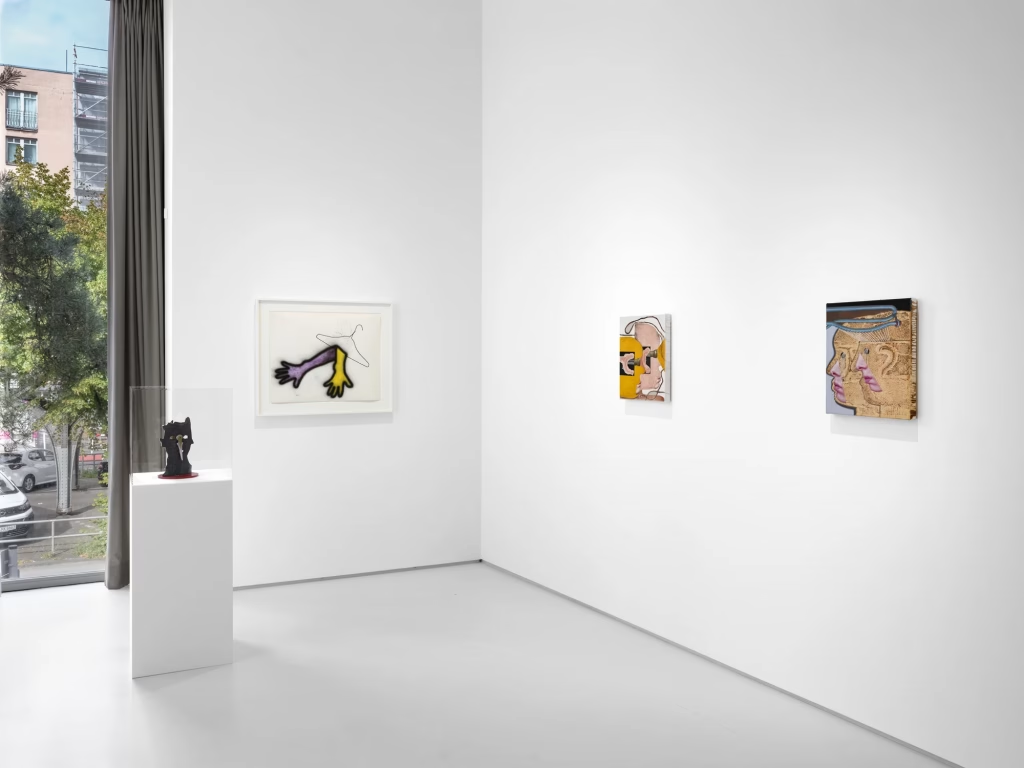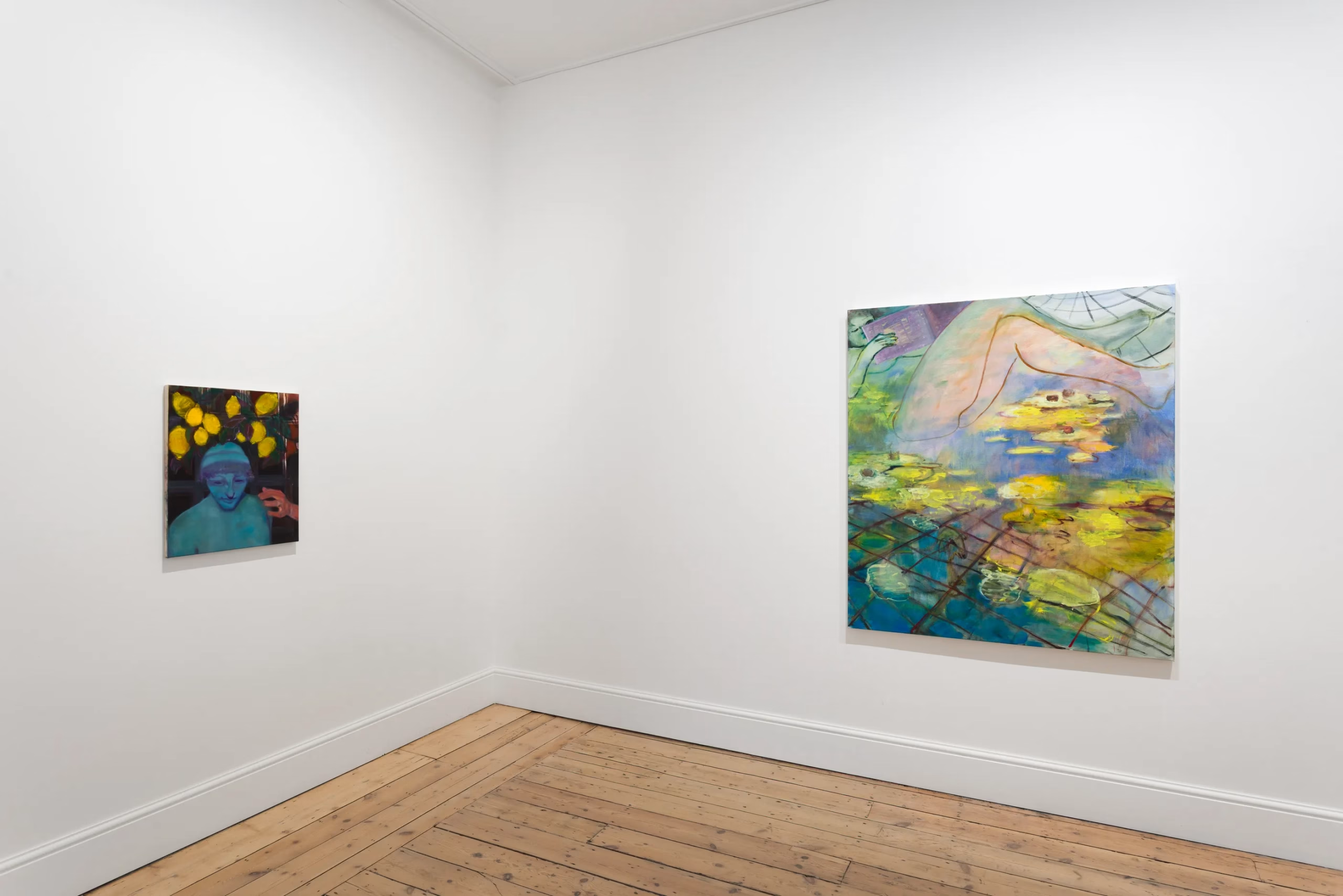


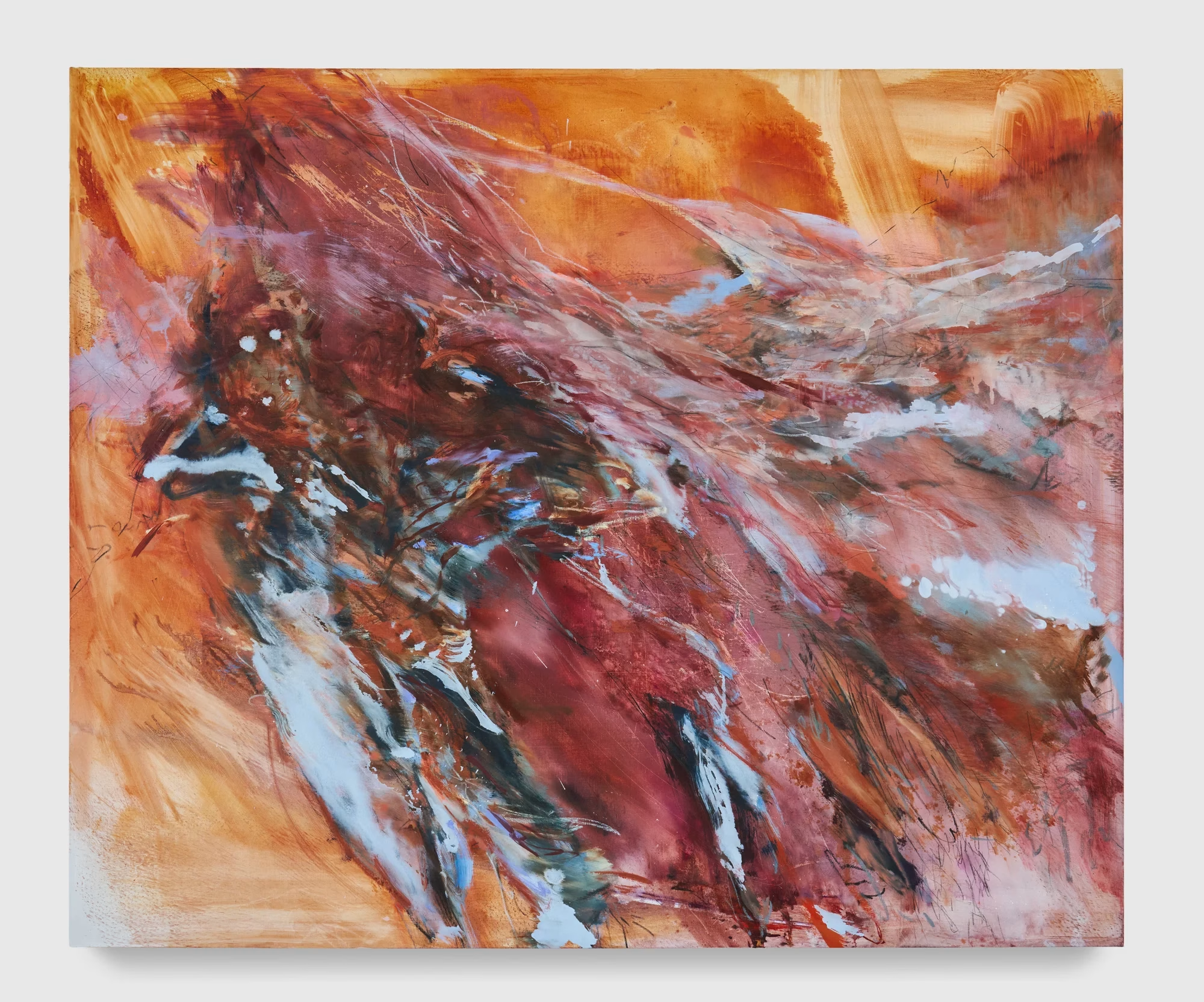
Stepping into Pace Gallery on London’s Hanover Square, one is met with an uncanny, dense, and humid atmosphere that instantly dissolves the brisk bustle of Mayfair outside. New York–based painter Kylie Manning’s inaugural London solo exhibition, The Mudlarkers, takes its title from one of the capital’s oldest vernacular traditions: the mudlarks who, since the late 18th century, have scoured the exposed foreshore of the River Thames at low tide, scavenging for the remnants of yesterday. Yet Manning does not treat this practice as a quaint historical footnote; instead, she grinds actual silt dredged from the riverbed and Hampshire clay directly into her oil paint, folding the earth into the very nucleus of her pigments.
Running from 13 October to 14 November 2026, the exhibition crystallizes through this material alchemy into a tactile archaeology of memory. What registers on the canvas is not merely gestural brushwork, but the reanimated detritus of London itself—centuries of riverbed mud, charred particulates, and minerals resurfacing across the picture plane.
From Alaskan Tides to Thames Silt
Manning’s fixation on dredging through mud and sediment is hardly incidental. The artist spent her formative years along the rugged coastline of Juneau, Alaska—a terrain defined more by subterranean mining shafts than paved highways. It is the visceral, muscle memory of a childhood spent waiting for the tide to recede on her father’s scallop farm, digging through brackish sludge for clams, and learning to read the littoral rhythms of a punishing open sea that articulates itself across these surfaces.
As Manning describes it, the exhibition feels like stepping into the mouth of a cave: “Once you enter that darkness, the only way out is through. You keep digging until the darkness gives you something of value back.” Across the works, passages where the paint has been aggressively scraped down, sanded, and rawly abraded read like the pictorial residue of a life lived alongside miners and fishermen.
Phantoms Behind the Veil and the ‘Infrathin’
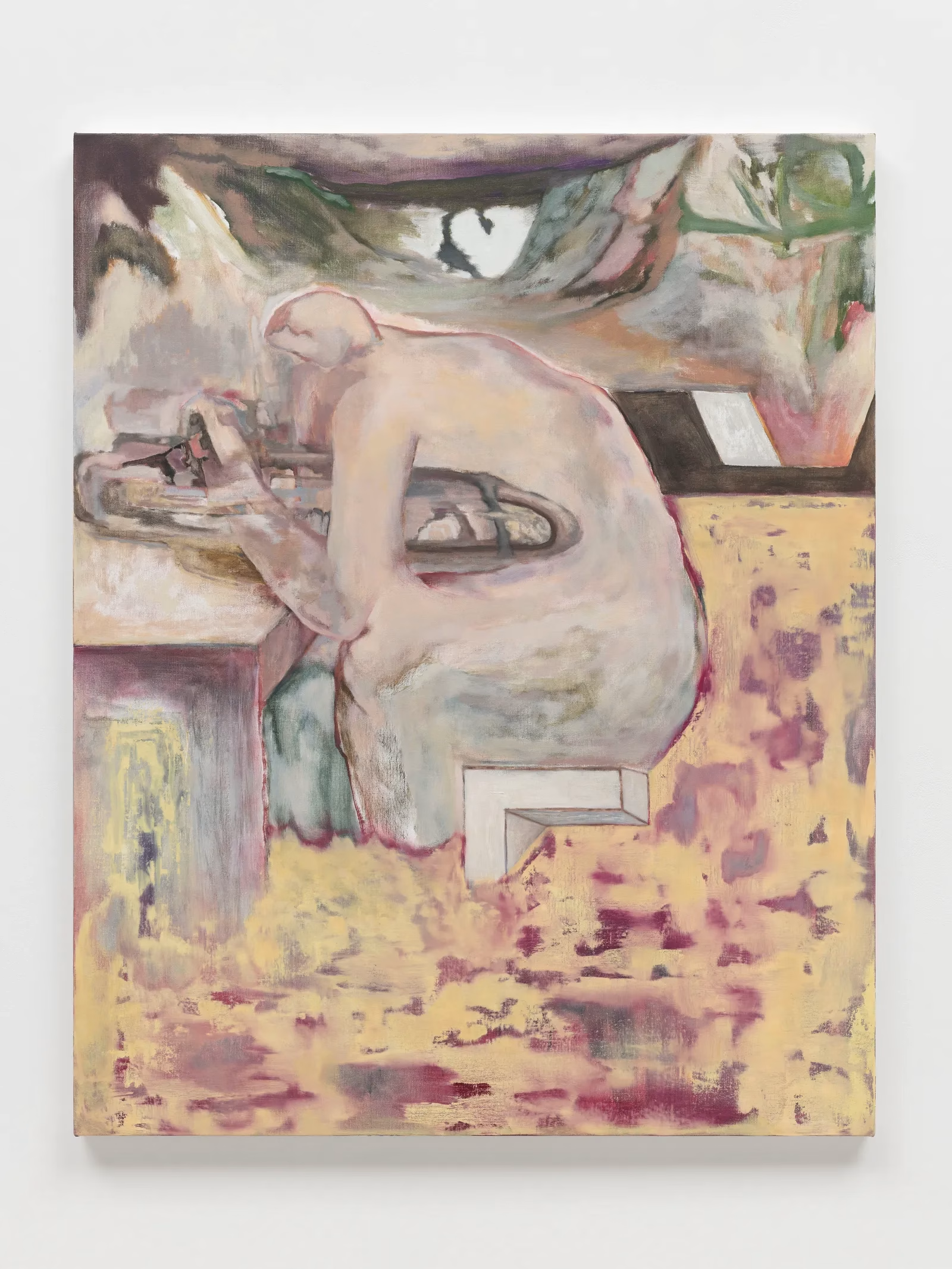
At the core of the exhibition lies an unresolved tension oscillating between presence and absence, legibility and dissolution. In compositions such as Puestero and A mouth open towards the light, Manning initiates her process with life studies sketched directly from models. Yet the successive glazes that follow steadily engulf these human bodies in atmospheric tumult and veils of mist. The figures melt away; what survives is merely the arc of a collarbone, the faintest impression of a hand, or the spectral silhouette of a face.
The effect invokes Marcel Duchamp’s notion of the infrathin—that imperceptible, razor-thin threshold exemplified by the warmth of a seat just vacated, or exhaled tobacco smoke still carrying the moist heat of the mouth that released it. Manning’s figures similarly chase the warmth of absence. Neither entirely present nor wholly erased, they hover upon the threshold between states.
A Turnerian Tempest: The Friction Between Fluidity and Ash
Visually, the canvases operate in a vernacular that fuses the tempestuous skies of J.M.W. Turner, the kinetic brushwork of Frans Hals, and the organic spatial weaving of Ruth Asawa. Slashing, feral marks rendered in powdered charcoal cut across diaphanous, liquid washes of paint, generating an unrelenting friction between the fluidity of the medium and the dry brittleness of ash. Rather than settling into harmonic balance, the palette actively collides: oxidized rusts scrape against abyssal emerald greens, while opalescent flares splinter across murky shadows.
With the horizon line deliberately knocked off-axis, these sweeping compositions refuse the viewer any stable footing. One is suddenly cast onto the shifting silt of an ebbing tide, searching for purchase amid churning waters.
The Mudlarkers refuses to treat the natural world as a passive, pastoral view framed for aesthetic detachment; it approaches the earth as a visceral, material mass in which we are inextricably bound—one that clings to skin and history alike. Across the walls of Pace Gallery, Kylie Manning unleashes the undertows of both the River Thames and her own coastal upbringing, leaving behind the uncanny, luminous sediment that glistens once the water has receded.