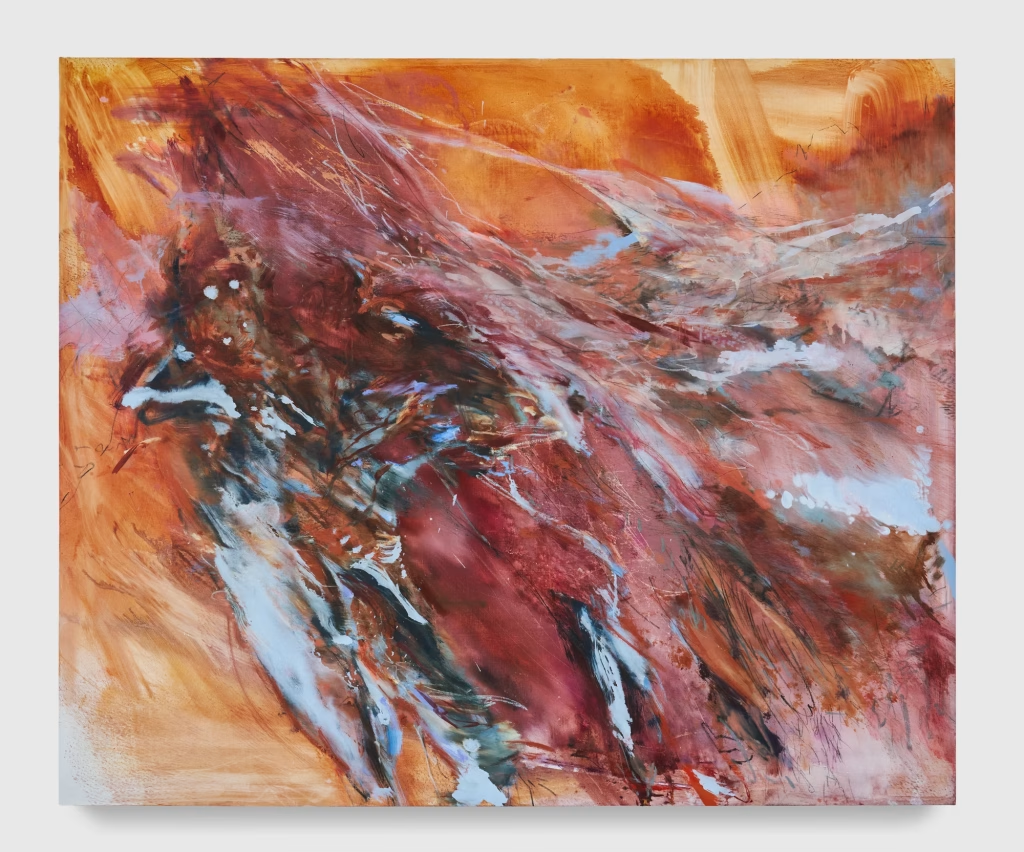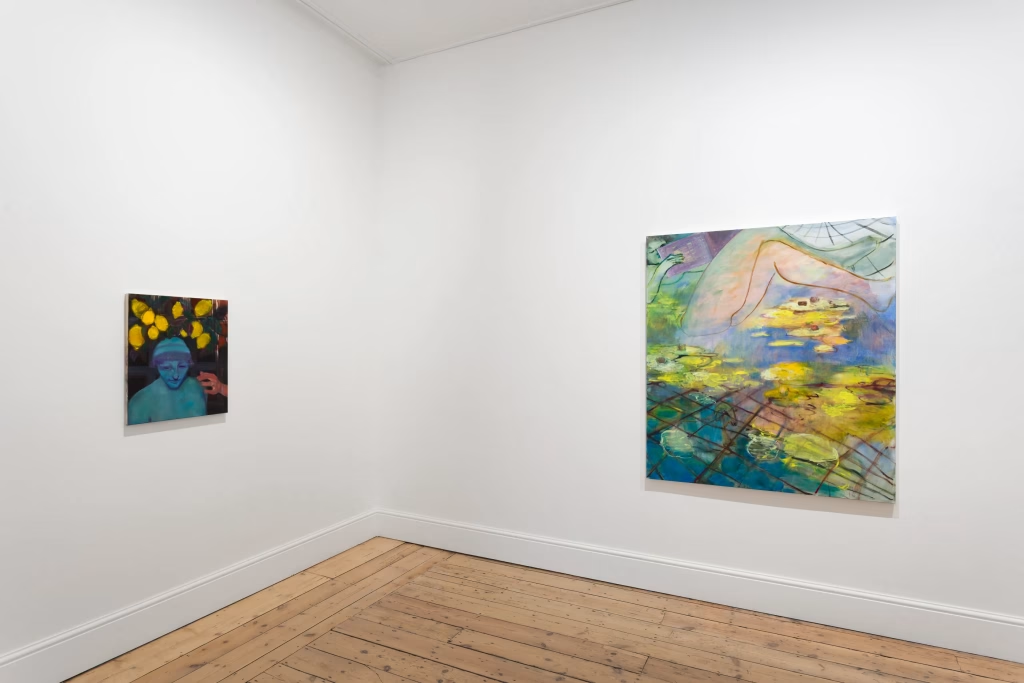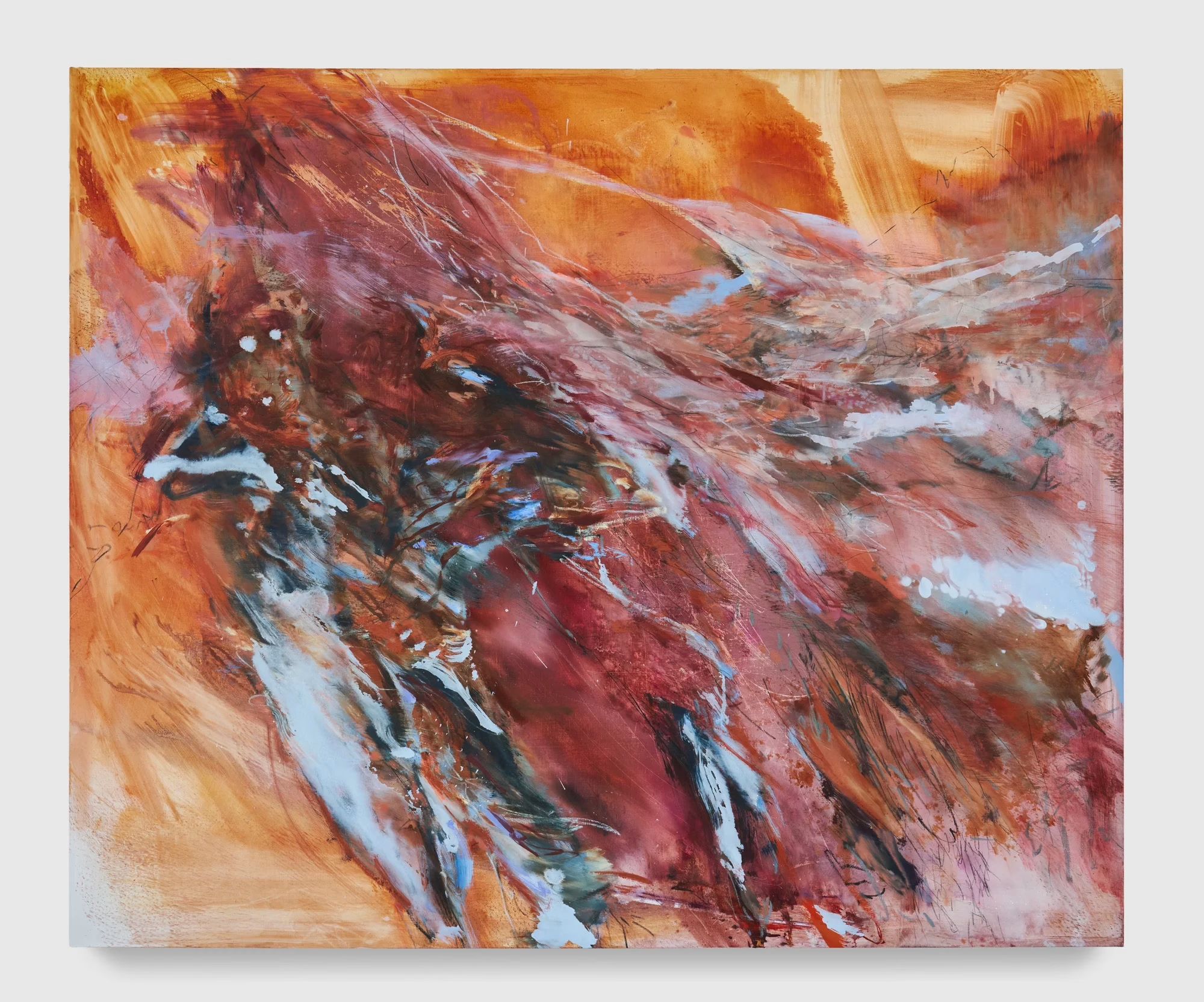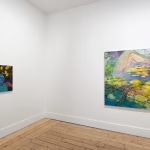


Should you find yourself traversing London on one of its characteristically crisp, overcast autumn afternoons, step away from the lively hum of the streets and make your way toward St. James’s. Inside White Cube Mason’s Yard lies an exhibition that demands to be caught before its final days, one destined to linger long in the mind: North and True North, Firenze Lai’s UK solo debut. Closing on 14 November, the presentation offers one of the most unsparing portraits of our contemporary condition, suspended between the digital and the physical.
Encountering these new canvases—conceived in the Hong Kong-born artist’s London studio—an immediate, disquieting friction takes hold. Anonymous bodies emerge with blurred, effaced features, their contours dissolving and bleeding into one another. They appear as the flesh-and-blood incarnation of that boundless, amorphous digital void into which we tumble while scrolling through a smartphone screen.
What distinguishes Lai’s visual language is her deliberate refusal to treat technology or artificial intelligence through literal iconography—there are no rendered screens, circuits, or silicon chips. Instead, she zeroes in on somatic and psychological mutation: what is actually happening to our bodies and minds. This tension culminates in The True North (2024), the painting that lends the exhibition its title. Here, a colossal hand attempts to rotate its own torso, mimicking the instinctive gesture of orienting a digital map on a handheld device. The underlying disparity between the fixed coordinate of true north and the shifting drift of magnetic north becomes an incisive metaphor for our relentless disorientation in an internet era where locating “absolute truth” feels increasingly precarious.
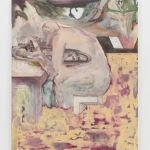
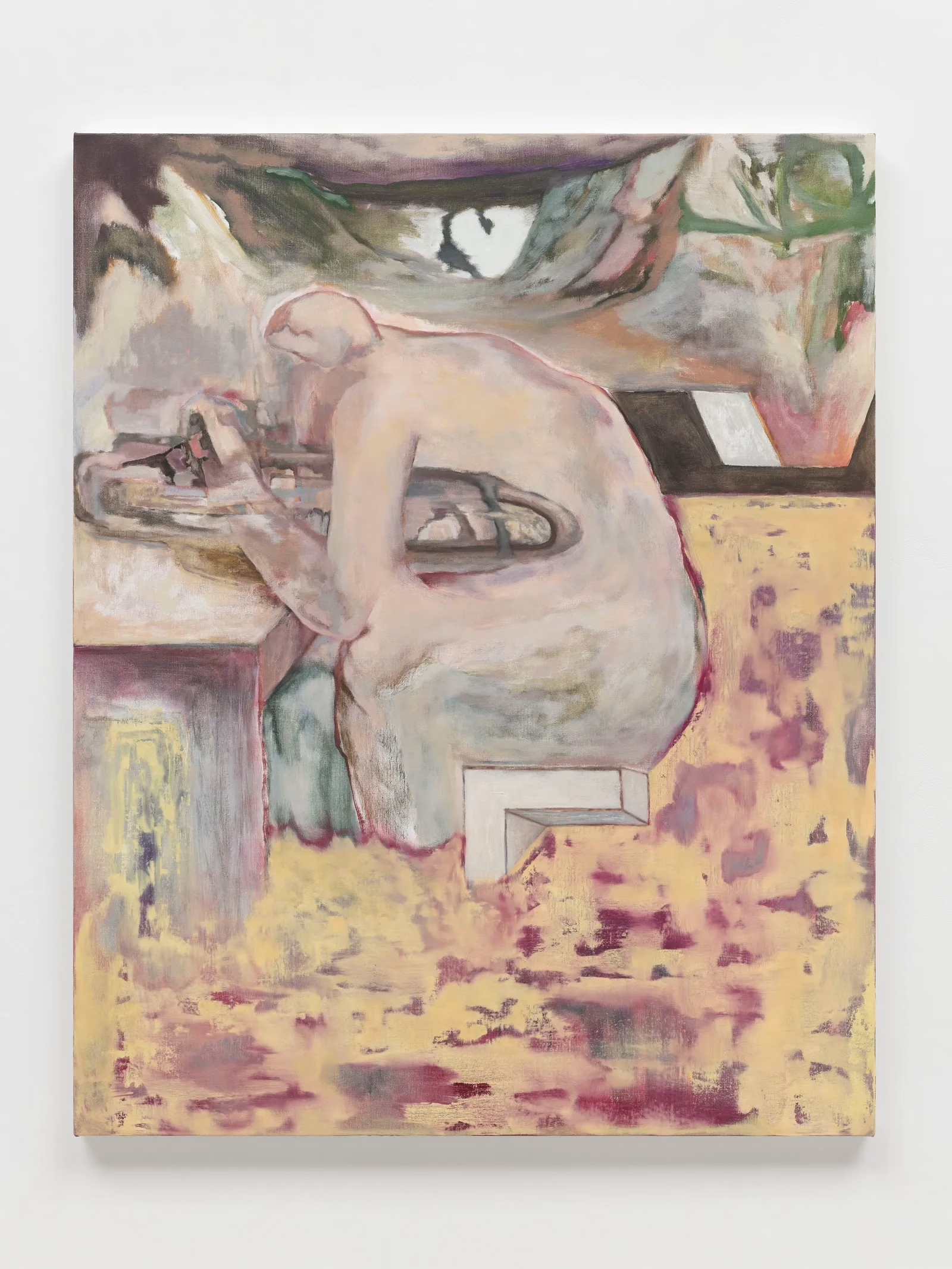
In the muted hush of the gallery, standing before Grey Matter (2026) prompts an involuntary urge to correct one’s own posture. Slumped over an ill-defined table with collapsed shoulders—bearing the unmistakable curvature of “tech neck”—the nameless figure absorbed in a phone is unmistakably a mirror of ourselves. With this work, Lai poses an unsettling question regarding the cognitive remodelling of the self. In an age where artificial intelligence infiltrates every pore of daily life, thought is no longer confined to the cranial cavity, to the literal “grey matter” of the brain. As the artist notes, our cognitive processes have migrated into that liminal expanse suspended between our eyes and our hands.
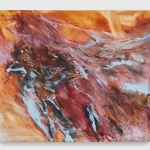
Moving deeper through the gallery, this individual alienation gives way to collective turbulence. In Countercurrent (2026), social media’s paradoxical capacity to bind us together while driving us apart registers with almost tactile physical force. A magnetic pull generated by jarring sweeps of neon yellow, red, and green engulfs a cluster of figures with outsized feet and diminished heads. There is a captivating mastery in how the brushwork—charged with fluid violence—articulates the way disinformation, algorithmic conditioning, and pile-on culture entrap subjects within a closed system. A figure’s arm is wrenched upward as if hauled by an invisible magnetic field; connections rupture, and cohesion disintegrates.
Yet, after navigating these searing, dystopian visions, do we leave the exhibition steeped in despair? Not in the least. While Lai’s figures undergo perpetual mutation and conflation in works such as Versions (2026) and Metamorphosis (2025), what they ultimately telegraph is an extraordinary instinct for survival. Even in a landscape of bent realities and ceaselessly renegotiated identities, a quiet resilience persists. As the artist reflects: “I see that strength in people; what I want to paint is their will to survive. I want to believe the figures in my work are somehow coping.”
For those seeking an incisive, richly layered contemporary art pause in London, this quiet collision of our physical and digital states is essential viewing. On view at White Cube Mason’s Yard through 14 November 2026, North and True North invites you to calibrate your own bearings—an encounter not to be missed before the doors close.