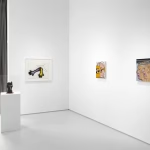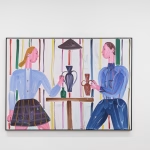


Stepping into GRIMM from the dignified, measured silence of Duke Street in London’s St James’s, one is confronted with one of the most surreal, bizarre, and poignant episodes in recent history. In her first London solo exhibition since her 2020 National Gallery presentation, Rosalind Nashashibi traces the elusive trajectory of an ancient artifact hauled from the Mediterranean seabed, only to vanish into a political quagmire. Running from 13 October through 21 November 2026, Gaza Apollo brings together the artist’s cinematic memory and incisive painterly intuition across a deeply arresting body of work.
At the core of the exhibition lies an occurrence on the Gaza shoreline in 2013. Local fisherman Joudat Ghrab spotted what appeared to be a charred human arm jutting out from the seabed sand. Dragged ashore, it revealed itself as a life-sized ancient Greek bronze of the god Apollo. Soon, a finger was severed and sent for appraisal in the desperate hope of solid gold; the statue briefly surfaced for sale on eBay, only to be seized shortly thereafter by local authorities in Gaza. Since that moment, Apollo’s whereabouts have remained swallowed by complete obscurity.
Yet from that brief episode, a single indelible image leaked online to haunt the cultural imagination: a magnificent bronze god laid out across a foam mattress patterned with blue Smurfs in a dimly lit, makeshift room. Several men stand and crouch around the figure—some inspecting it with raw curiosity, others resting their hands upon the pagan deity’s head and shoulders in rapt awe, as if attempting to draw an unseen power into their own bodies.
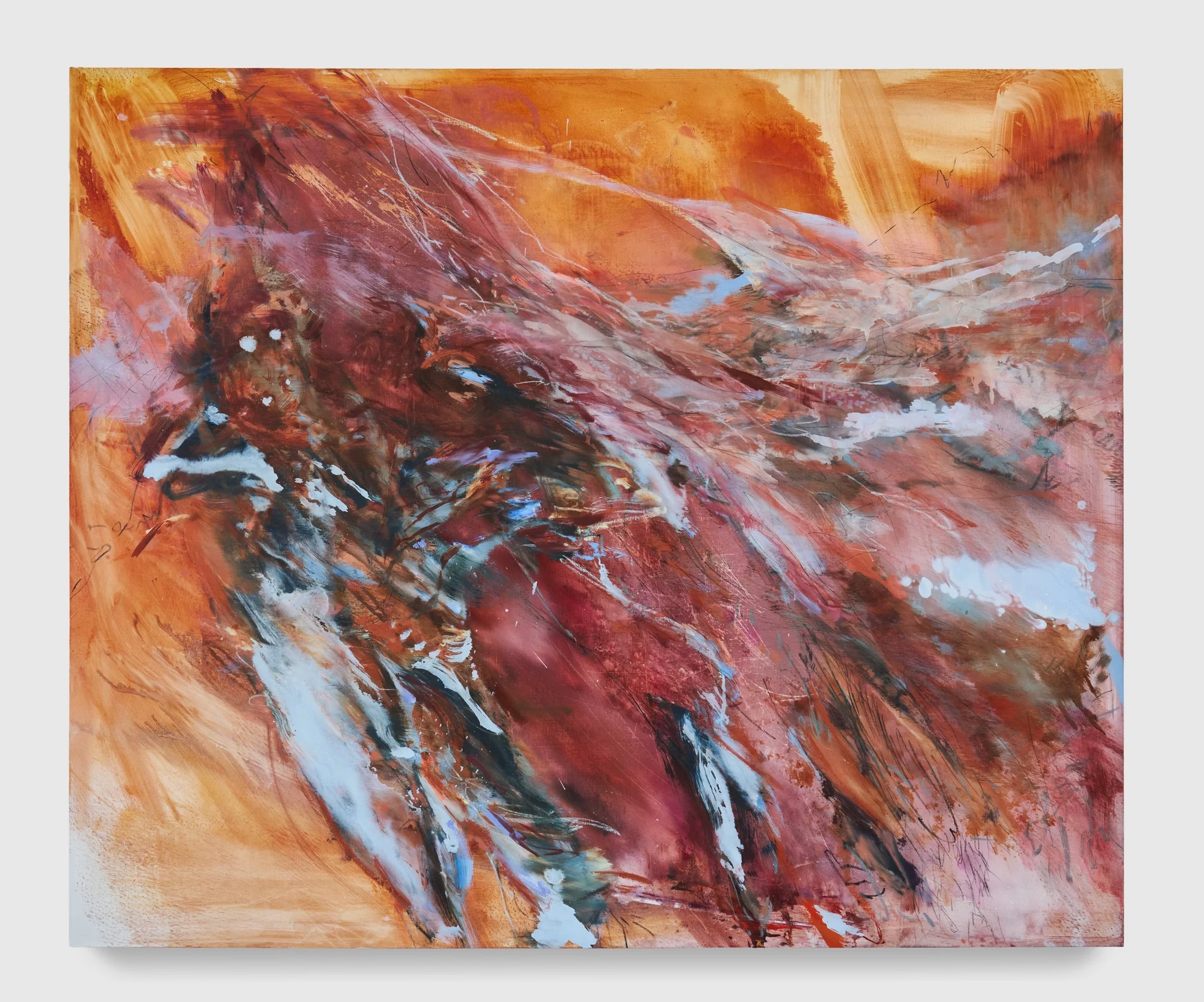
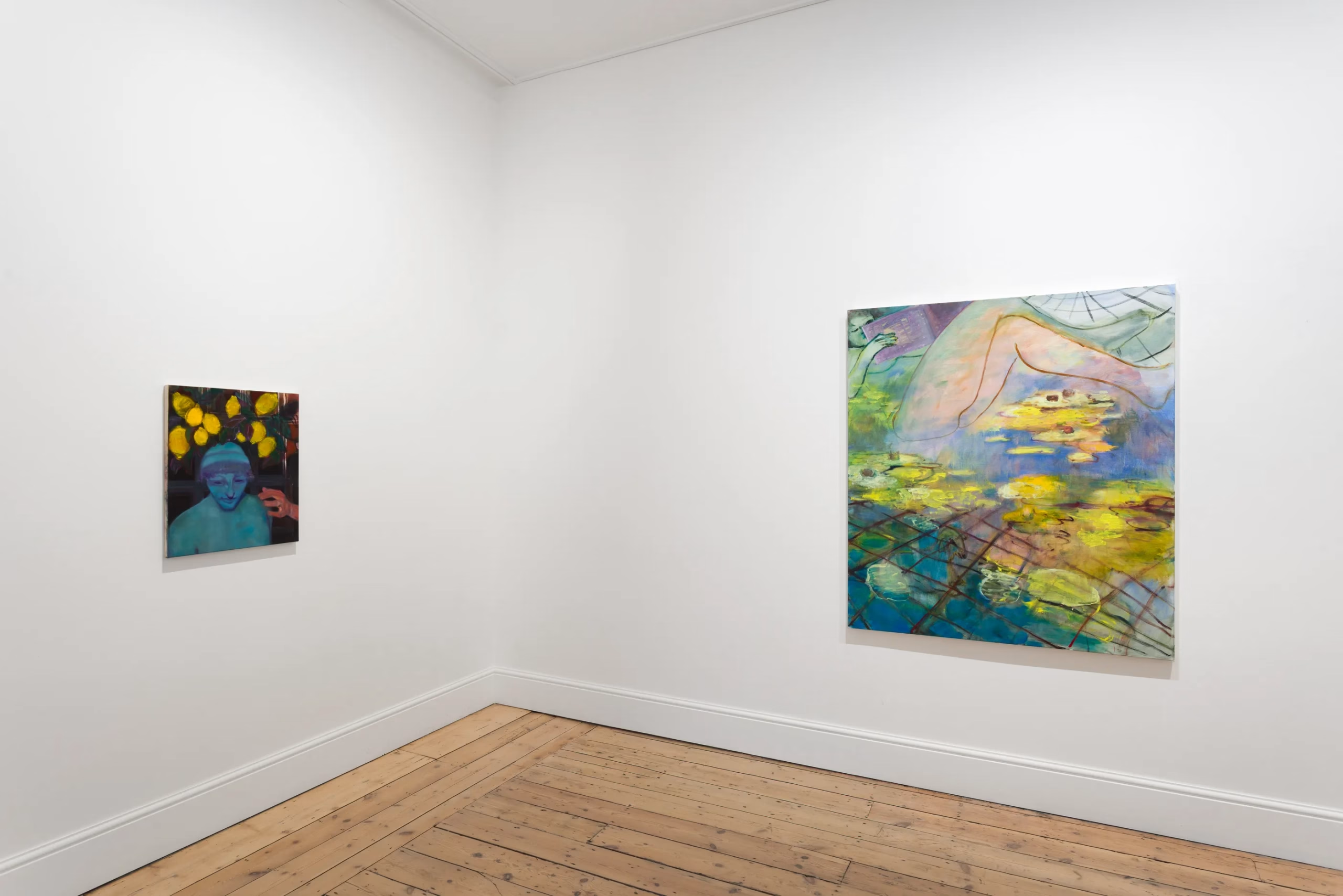
Nashashibi’s five large-scale canvases turn directly toward this tableau and the peculiar, almost tender intimacy struck between the men in Gaza and this relic of classical antiquity. Facing the paintings in the gallery, it becomes instantly clear that the artist does not frame the incident as mere archaeological misfortune. To Nashashibi, this sea-borne Apollo arrived as divine consolation—an almost surreal gift dispatched from the depths of the Mediterranean to a territory forsaken by earthly geopolitics, diplomacy, and international law.
A central motif anchors these compositions: reaching, clasping, and withdrawing hands. These limbs appear at times desperate to hold onto another body, at others straining for one last tactile encounter with an image fading toward erasure. Nashashibi stages these gestures alongside canonical tropes of modern painting—a still-life spread, a reclining female figure, a lamb, a horse, or floating water lilies. This visual bridge between the historic lexicon of painting and a besieged, bleeding landscape avoids collapsing into passive aesthetic nostalgia; instead, it delivers a direct, unsettling confrontation with contemporary violence, subjugation, and abandonment.
In Nashashibi’s hands, a bronze deity resting on cartoon bedclothes and the lived reality of a populace suspended from that god’s severed finger never devolve into didactic propaganda or cheap pathos. Mounted within GRIMM’s quiet interior, these five works read as a visual journal of divine contact washed ashore in a forsaken land, only to be dragged back down into silence. If your path takes you through Duke Street before 21 November, take the time to look closely at this lost Mediterranean god—and the hands reaching out into the dark.