

What Changes When Art Is Produced Collectively? From Individual Genius to Community Practice

The word “artist” in our minds still largely evokes a singular figure: a lone creator working in their room, a single original vision, and that singular signature signed beneath the artwork. However, when we look at the broader picture of art history, we see that this romantic narrative consists largely of fiction.
Throughout history, many art practices were built upon the principles of collaboration, community production, and collective responsibility. Today, a contemporary collective art movement whose sphere of influence is growing steadily directly and courageously questions this myth of “individual genius” etched into our minds.
From Master Workshops to Contemporary Art Collectives
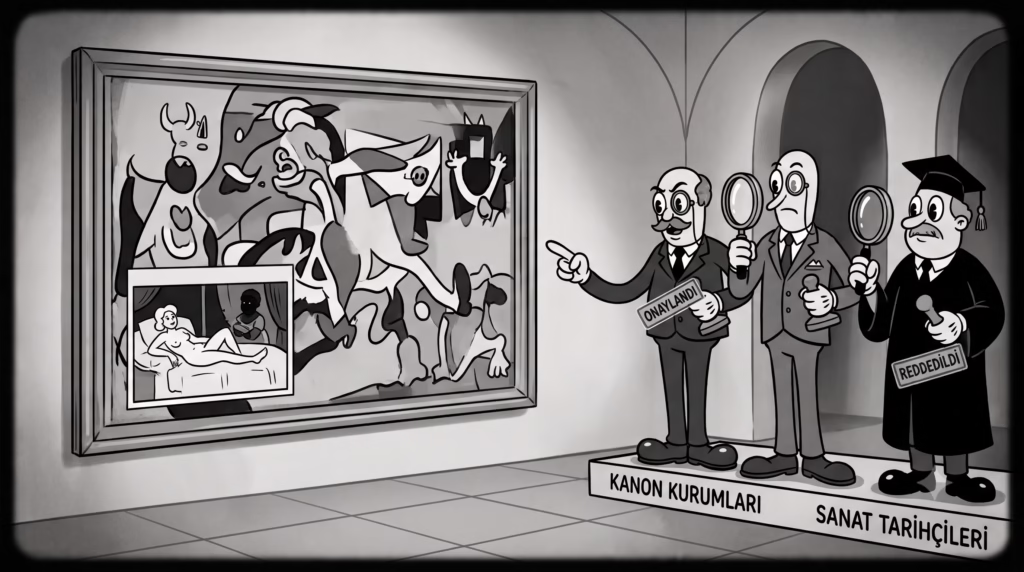
The great masters of the Renaissance were not alone in their studios as commonly believed. Hundreds of works produced in the workshops of Raphael or Verrocchio were shaped under the general direction of the master, but through the labor and contributions of dozens of different hands. Yet, in museums today, these paintings are displayed under only a single name, for instance, signed as “Raphael.”
By the 20th century, Bauhaus revived this collective tradition in a brand-new framework. Resetting the deep-seated hierarchy between craft and art, it positioned every student as both a professional and a creative subject. Bauhaus pedagogy offered an unshakable foundation for modern collective practice.
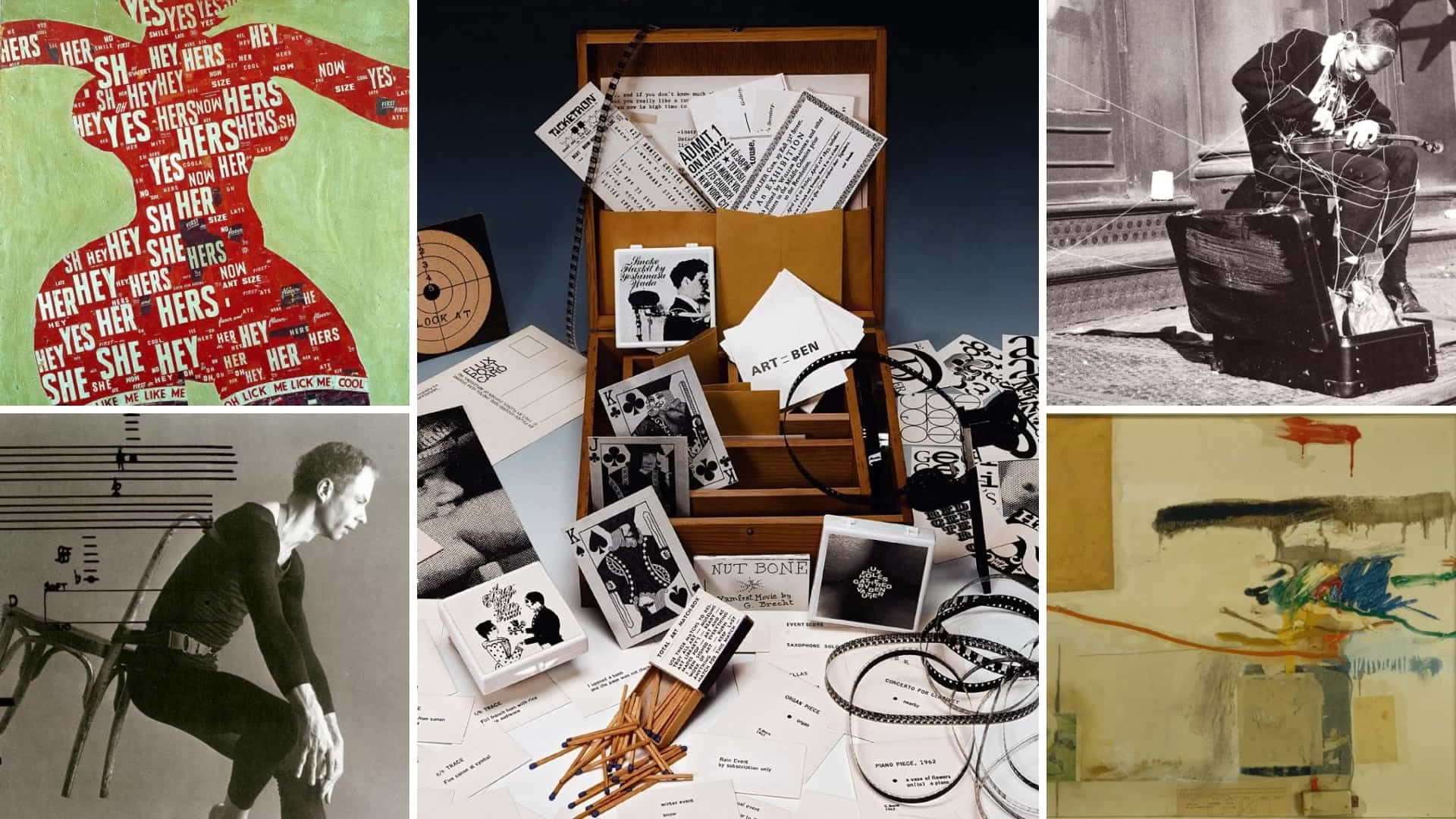
In the following years, new collective models objecting to artistic authority took the stage: the Fluxus movement of the 1960s, Situationist International, and structures today such as Claire Fontaine, Raqs Media Collective, or Postcommodity… Although each feeds on different aesthetic channels, they unite on a common denominator: a radical objection to the illusion of singular creativity.
Collective Production Unlocks the Democratic Potential of Art
The strongest argument offered by the understanding of collective art is quite clear: Art does not have to be under the monopoly of a lone genius. Community-oriented practices liberate art by expanding both the production process and the ownership of the artwork.
The fundamental transformations created by this expansion:
-
Polyphony: Diverse experiences, backgrounds, and perspectives provide a narrative richness that a single mind could never reach.
-
Processes Made Visible: As the creation process itself is shared, that mystical and inaccessible veil of “mystery” surrounding art is pulled back.
-
Solidarity Against the Market: The collective structure increases artists’ bargaining power against gallery and market mechanisms, offering the opportunity for an independent stance within the community.
Risk of Consensus: Can a Collective Structure Suppress an Original Voice?
On the other hand, there is also a strong counter-argument regarding collective production that should not be overlooked: The search for common consensus can trim individual and original voices. The effort to find a community’s common denominator can sometimes file down and flatten the sharpest and most unconventional edges of individual practice.
The Fluxus movement in history is the most concrete example of this tension. Although the movement generated immense energy and diversity, over time some artists felt that the collective identity overshadowed their own original voices. While offering wonderful productivity, the movement shaped around the figure of George Maciunas could not avoid occasionally assuming an authoritarian structure within itself.
Another critical point here is the hidden hierarchies in structures that appear “horizontal.” Questions of whose voice sounds louder or whose labor remains invisible unfortunately persist as fundamental problems that need to be resolved in collective structures as well.
Today’s Collectives: A New Model for the Future?
Today, class exhibitions of institutions like HGB Leipzig or the works of digital art platforms like Rhizome reveal brand-new and flexible forms of collective production. Especially among a new generation of young artists, joining community networks and raising a shared voice rather than building an ambitious individual career is becoming a much more attractive alternative.
Undoubtedly, serious economic realities also lie behind this transformation. The high costs of the gallery system and the difficulty of individual survival direct artists toward solidarity. Therefore, contemporary collective practice stands out not only as an ideological choice but also as a pragmatic survival strategy.
💬 Frequently Asked Questions About Collective Art Production
Whose work is a collectively produced artwork, exactly?
This remains a controversial area both legally and culturally. While the commercial art market naturally desires a single signature, collective practice rejects this desire. While some collectives use a single shared signature, others transparently document every individual contribution.
Can collective art be as original as individual production?
The concept of “originality” has been defined within an individualistic framework in Western-centric art history. Collective practice does not tear down this definition; on the contrary, it expands it. Just as originality can belong to a single mind, it can also belong to the collective consciousness and voice of a community.
Is collective production becoming increasingly widespread in art?
Absolutely. Especially digital mediums and open-source culture technically facilitate collective production while making it more visible. Networks producing and transforming together proliferate day by day.
Editor’s Final Verdict
Collective production successfully deconstructs the myth of “individual genius” woven around art; however, this deconstruction alone does not automatically give birth to “better” art. Fascinating and enduring collective practices are those capable of building flexible structures that can channel that collective energy into the right avenues without crushing individual original voices. Although establishing this delicate balance is not easy, even the setbacks remind us once more why the individualistic myth of art is so deeply rooted.