

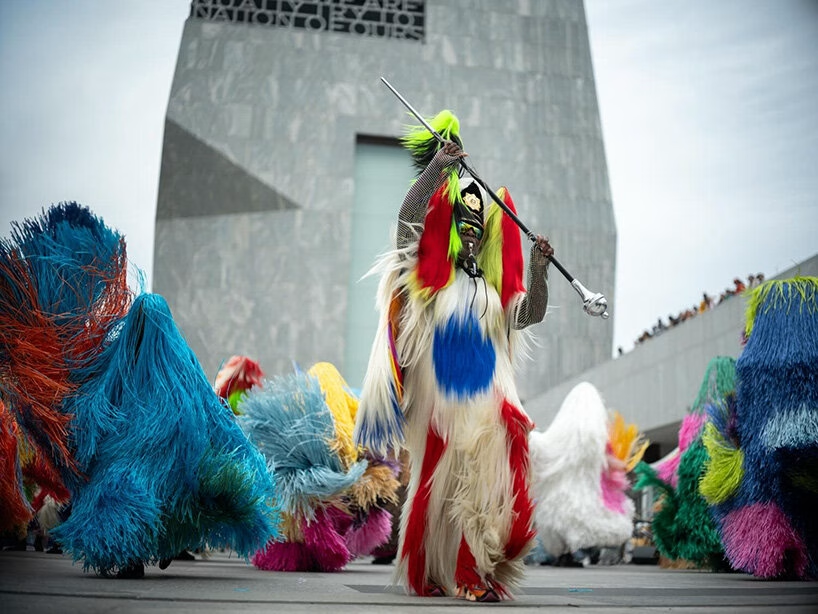
Imagine walking through the ambient din of a train station or the quiet stillness of a gallery when a kinetic sculpture glides past—a monumental silhouette rustling with every step, clad in hundreds of beads and raffia. American artist Nick Cave’s iconic Soundsuit series operates precisely at this threshold, where the body expands into architecture and attire becomes a living, space-transforming environment.
It all began in Chicago in 1992, against the backdrop of the societal fracture sparked by the police brutality against Rodney King and the subsequent acquittals. Profoundly attuned to the vulnerability of existing as a Black man in public space, Cave began gathering fallen twigs in Grant Park, weaving them into a full-body wearable sculpture. Yet the moment he put it on and moved, the sound generated by the friction of the branches altered everything. That sudden rasp was more than a sense of shelter; it became a rhythmic protest—an urgent assertion of presence, a demand to be heard, and a claim on public space.
Described by Cave as “emotional shields” or “armor for protest,” these works obscure the wearer’s race, gender, and class, projecting them beyond societal prejudice. What started with twigs rapidly evolved into a vast material archive of raffia, seashells, vibrant beads, repurposed rugs, toys, gramophone horns, and found objects. Once donned, the suit ceases to be a static artifact, transforming into a sweeping kinetic landscape—a mobile architecture borne by an anonymous shaman. The clatter of beads and the whisper of fabric elevate a visual spectacle into a percussive performance.
Perhaps the most arresting quality of these works is how they collapse the distance between performance and public life. As demonstrated in HEARD NY—which brought thirty horse-shaped suits to New York’s Grand Central Terminal—or The Let Go at the Park Avenue Armory, the boundary between performer and spectator dissolves, abruptly recasting everyday transit into sites of collective celebration.
Born of systemic trauma yet reimagined as collective jubilation and inclusive rhythm, these extraordinary works demand to be experienced in person. Fortunately, Cave’s iconic creations are housed in the permanent collections of major institutions worldwide:
Los Angeles County Museum of Art (LACMA): Features the artist’s Soundsuit 8:46 (2021) within its permanent selection.
Smithsonian American Art Museum: Houses a monumental mixed-media Soundsuit from 2009.
National Gallery of Canada (Ottawa): Holds an iconic 2015 work distinguished by its gramophone horn and ceramic bird embellishments.
Museum für Kunst und Gewerbe Hamburg (MK&G): Includes a signature piece composed of tapestry, fabric, and metal within its permanent collection.
National Gallery of Victoria (NGV, Melbourne) & Denver Art Museum: Feature rich examples of Soundsuits spanning various phases of the artist’s career in their permanent displays.