

Spilling from the Scaffolding of History: Nicola Turner’s ‘I Tear Secrets From Your Yielding Flesh’ at Annely Juda Fine Art

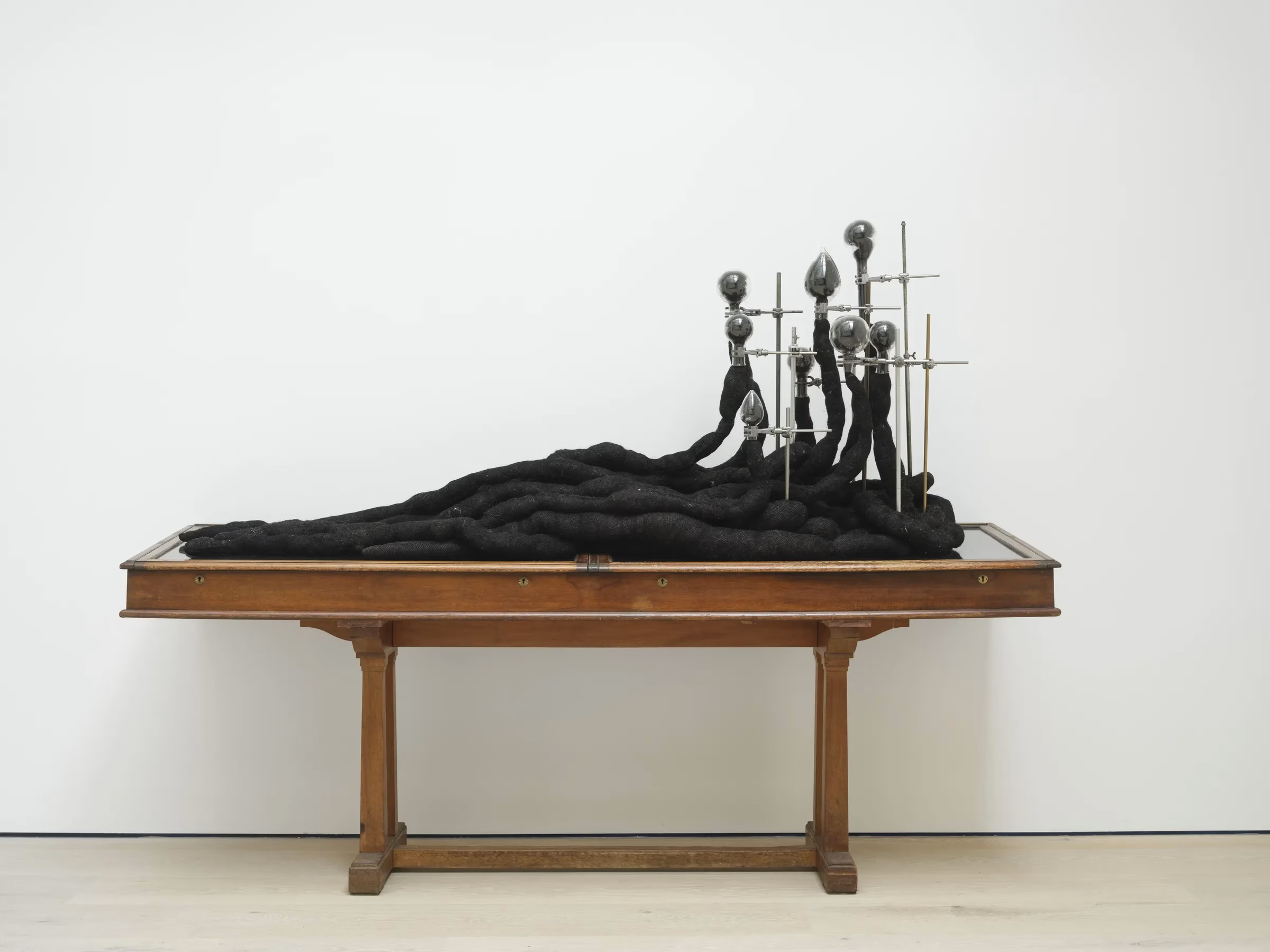
Imagine a colossal organic mass of dark wool and horsehair spilling 12 metres down the façade of an 18th-century Georgian townhouse toward the street below. From 1 October to 7 November 2026, London’s Annely Juda Fine Art presents I Tear Secrets From Your Yielding Flesh, British artist Nicola Turner’s debut solo exhibition at the gallery, which completely overtakes the space. Oscillating between the uncanny rhythm of a wedding procession and a funeral march, this unsettling intervention invites viewers to immerse themselves in a dark, atmospheric tension that is as seductive as it is chilling.
In Turner’s practice, a site’s history is never a mere backdrop; it functions as one of the work’s most vital strata. The gallery’s address at 16 Hanover Square carries a rich lineage: in 1845, it housed the Royal College of Chemistry, where chemist William Henry Perkin secretly synthesized aniline mauve dye under its roof. Decades later, the haute couture house Reville & Rossiter moved into the same building, famously dyeing their entire fabric inventory black for the period of national mourning following the death of King Edward VII, while also designing coronation gowns for the Royal Family. In Turner’s hands, this spatial memory of cloth, pigment, and hidden hues becomes a catalyst that brings the suppressed narratives of the past to the surface.
The exhibition takes its title from a line in a passionately erotic, long-concealed 1918 poem written by author Vita Sackville-West to her secret lover, Violet Trefusis. Centring on female experience, the notion of shame (pudendum), and desires forced into hiding by societal constraints, Turner transforms horsehair salvaged from discarded mattresses, antique furniture fragments, tailor’s shears, and laboratory instruments into sculptural forms. Imbued with traces of birth, death, and slumber, these materials undergo a visceral, organ-like transformation within hand-stitched netting, extending limb-like tendrils that climb the gallery walls like ivy.
Drawing on her background in theatre and costume design, Turner translates processes of loss and grief into a cathartic practice of healing, dissolving the boundaries between life and death, attraction and repulsion. The familiar yet eerie memory embedded within these tactile materials invites us to confront the unseen energies that envelop our existence.