

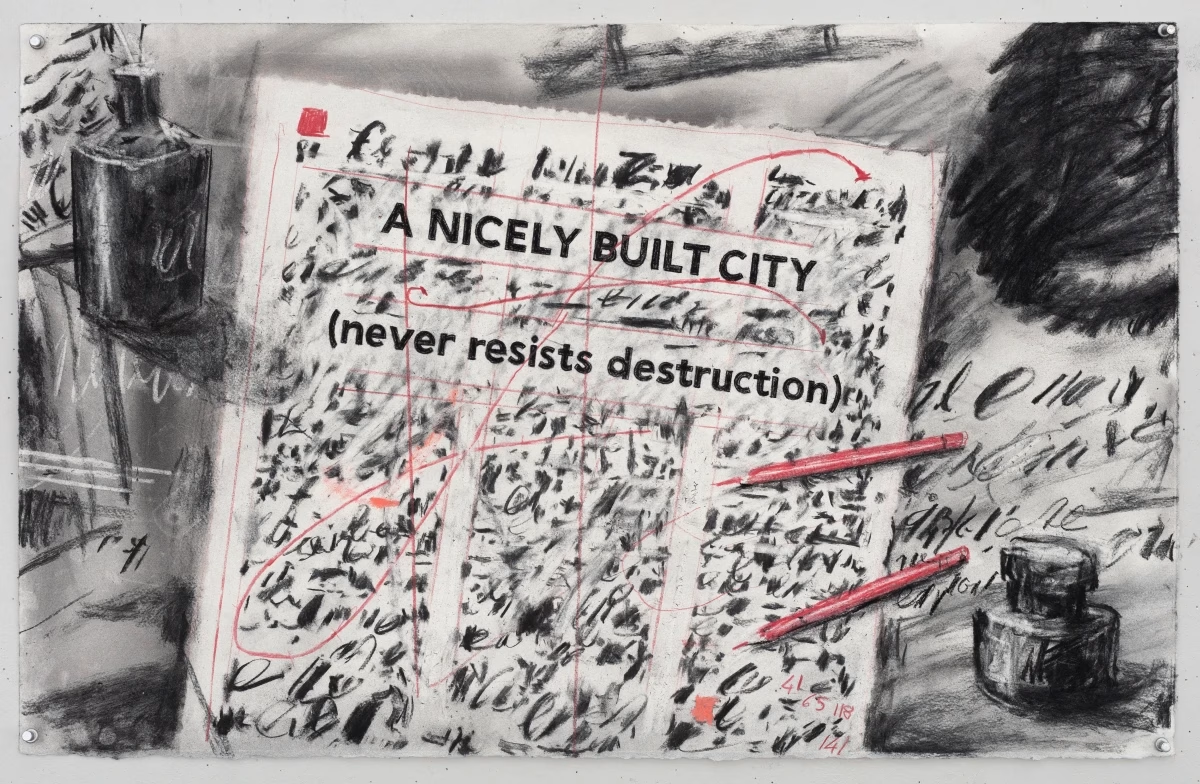
To invoke the name of William Kentridge is to conjure a distinct sensory atmosphere: the resonant rasp of charcoal against paper, giving rise to an endlessly shifting, erased, and re-emerging world of monochrome imagery. Described by the artist as a “return to roots—that is, to charcoal drawing and filmmaking,” his new exhibition, A Nicely Built City, at Goodman Gallery London, offers a compelling testament to the South African master’s creative vitality. The show marks the long-awaited world premiere of A Nicely Built City (Never Resists Destruction), the twelfth installment in his celebrated Drawings for Projection series, an epic body of work initiated in 1989.
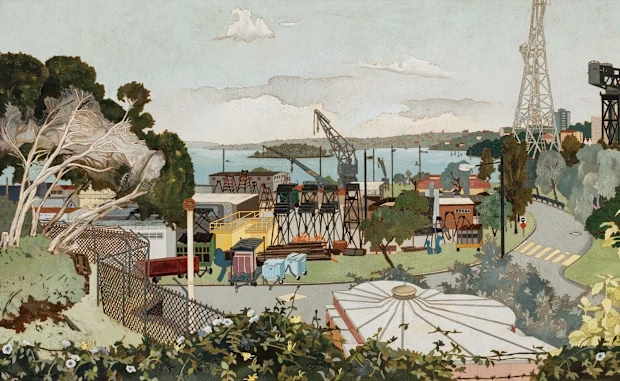
At the heart of the exhibition lies this new stop-motion animation, which draws the viewer into Johannesburg—Kentridge’s birthplace, painstakingly constructed frame by frame over nine months in his studio. Borrowed from a West African proverb “A nicely built city never resists destruction”, the title captures the psychological spirit of the film. Kentridge offers far more than a portrait of a post-colonial metropolis built on gold mines and grappling with contemporary infrastructural decay; he uses his fictional protagonist, Soho Eckstein, to mirror his own passage through age and transformation. Where Soho appeared vastly older than the artist back in 1989, thirty-seven years later, witnessing the artist physically converge with his character lends this autobiographical and civic narrative an uncanny, poignant resonance.
Across the chaotic geography of this city, where destruction and construction remain perpetually entwined, an unexpected protagonist emerges: a black cat. Through Kentridge’s fluid animation, the feline transcends simple motif, shapeshifting into a typewriter, a cash register, a bare tree, and an urn of ashes to dictate the narrative flow. Inspired by a Cecil Skotnes print gifted to him in childhood, Kentridge finds the animal perfectly suited to the medium, summarizing its endless formal potential with characteristic lightness: “To draw a black cat, draw any curved line, smear a bit of charcoal around it, and there it is.” The cat is more than a line drawing, however; it finds three-dimensional weight in Fat Cat, a corpulent bronze sculpture installed nearby, offering a witty homage to Behemoth, the vodka-swilling feline from Mikhail Bulgakov’s The Master and Margarita.
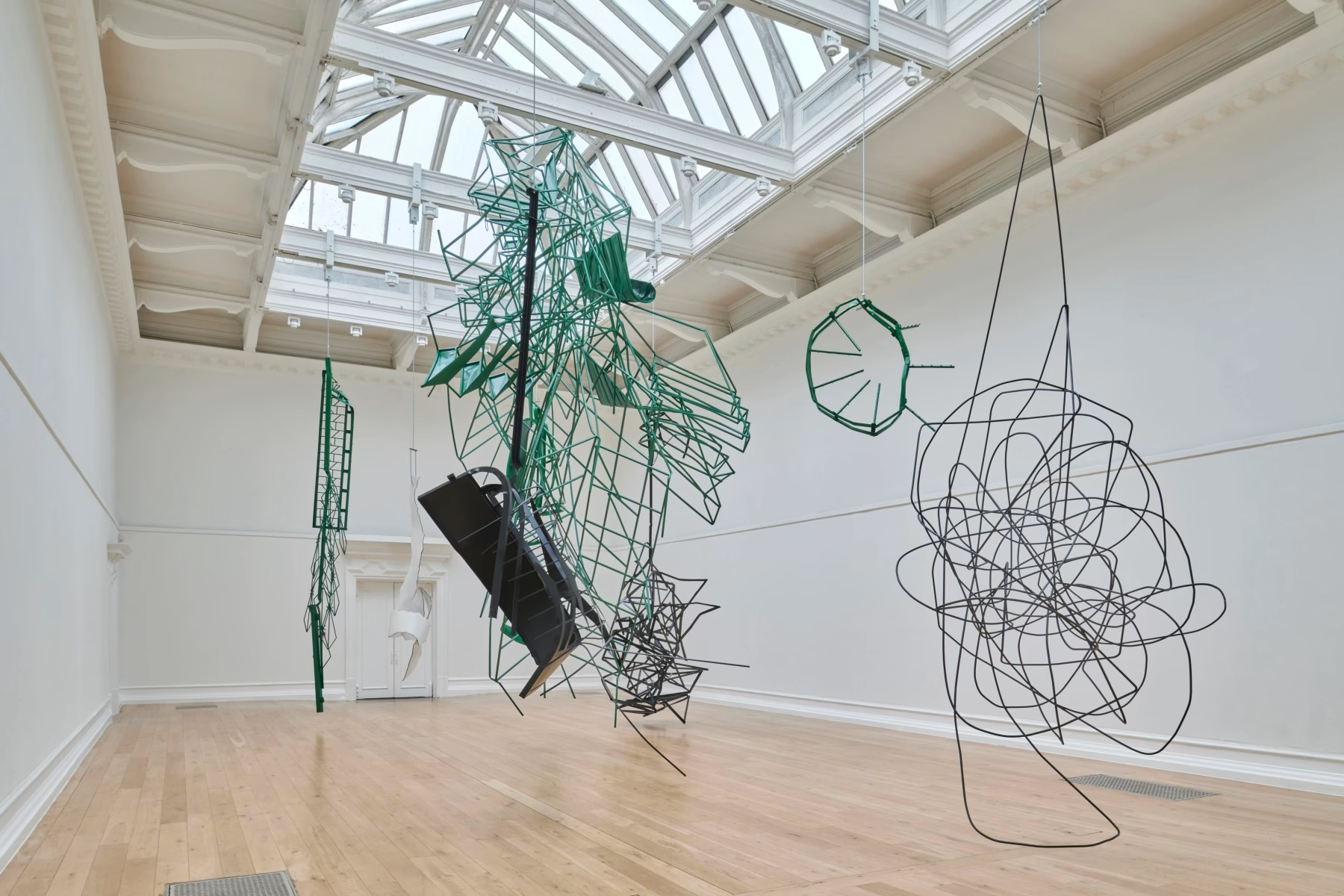
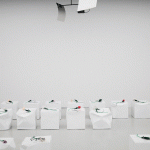
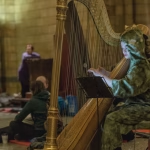
A Nicely Built City extends well beyond the single film. The exhibition expands to incorporate new works developed alongside Kentridge’s production of Claudio Monteverdi’s L’Orfeo for the 2026 Glyndebourne Festival. The show reaches its atmospheric apex with Orpheus, Eurydice, Hermes (2026), a Pepper’s Ghost film installation that merges studio footage with sculptures and drawings. A contemporary adaptation of a nineteenth-century optical illusion, the piece relies on a pane of glass and strategic illumination to make forms materialize and vanish across the stage. These interdisciplinary leaps, alongside sculptures derived from L’Orfeo’s dramatis personae, demonstrate the infinite elasticity of Kentridge’s visual lexicon. If you find yourself in London, immerse yourself in this singular realm of soot-dark lines, uncanny cats, mythic flora, and cities resigned to their own ruin.