

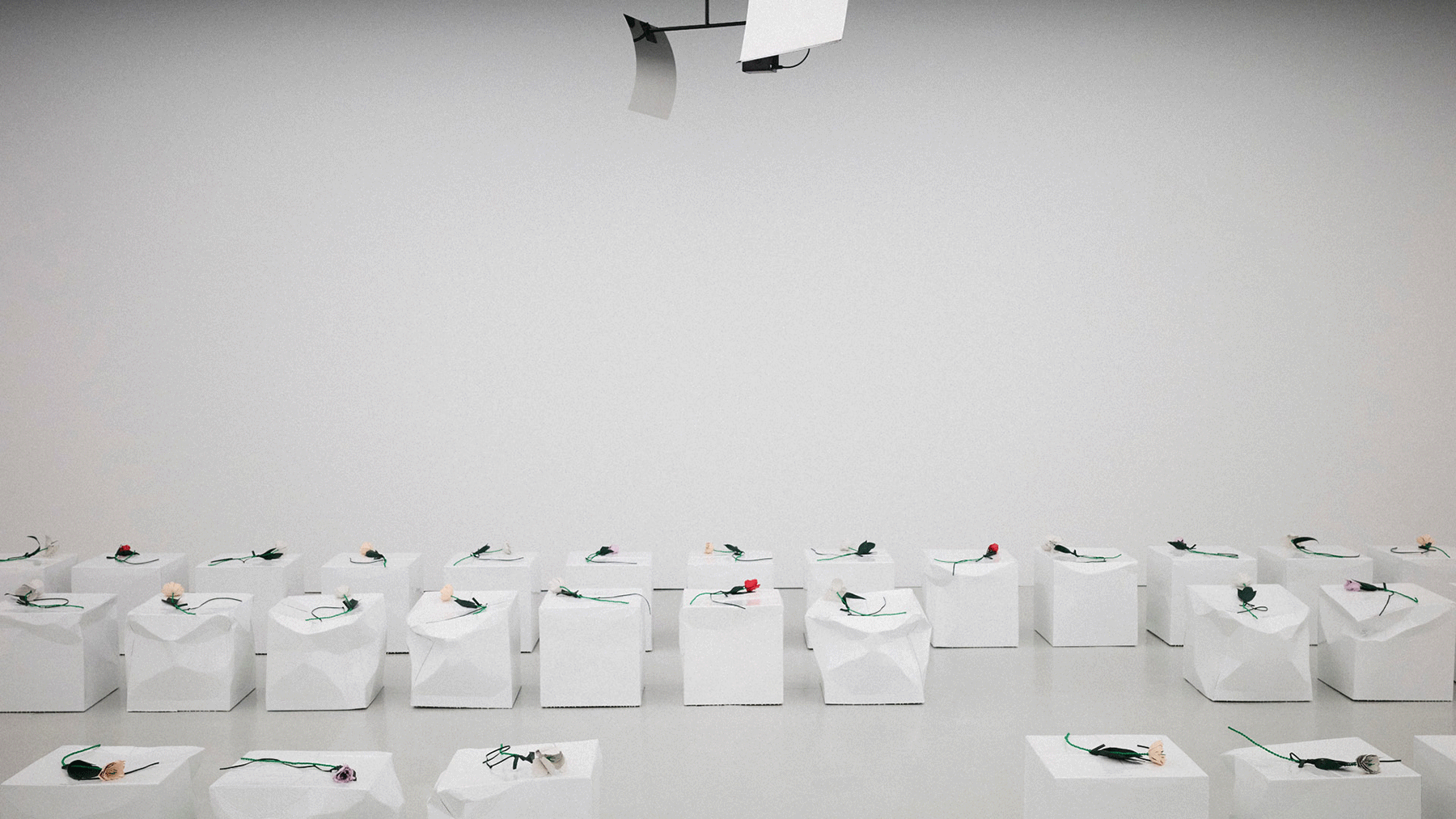
Ordinarily, a cardboard box is a transient volume—stripped of its tape and cast aside, its utility extinguished the moment its contents reach their destination. Ukrainian artist Illya Goldman Gubin, however, grants this humble industrial substrate a second, enduring life through a deeply tactile, almost sculptural confrontation. For Bottega Veneta’s Summer 2027 runway show, Gubin transformed raw cardboard into a series of bespoke stools that formed the visual backbone of the collection, warping and shaping each box using his own body weight and physical embrace.
The process begins as an act of breaking the material’s inherent resistance. Folding the raw cardboard by hand, compressing it against his chest, and crushing it through sheer physical force, Gubin imparts a singular morphology to every piece. Following this visceral encounter, the resulting structures are encased beneath layers of resin and fiberglass to achieve structural permanence. Yet beneath this hardened shell, every trace of that initial contact—creases, deep indentations, and incidental collapses—remains fully legible.
The central conceptual gesture lies in the work’s dialogue with the fashion house’s heritage craft. The interlocking flaps and fold lines of the boxes mirror the rhythmic cadence of the fettucce leather strips defining Bottega Veneta’s iconic Intreccio weave. By slotting the cardboard into itself along its natural joints, Gubin bridges the gap between disposable industrial packaging and luxury leatherwork.
Through this transformative intervention, a vessel once engineered to transport inanimate objects becomes a functional seat designed to support the human body. With their raw textures visible beneath a rigid protective coating and no two surface markings alike, these stools push back against mass-produced uniformity, asserting instead the indelible signature of corporeal contact.