

Dawn of Pop Art: “Warhol / Indiana: On the Origins of Pop” Exhibition at Dellasposa


In early 1964, one of the most iconic moments in art history took place in the legendary Silver Factory studio on East 47th Street in New York. When photographer William John Kennedy asked Andy Warhol about the rolled acetates leaning against the wall, Warhol pulled out the transparent Marilyn Monroe acetate he used for his silkscreens and held it up to the light. In that single frame when the shutter clicked, Warhol and Marilyn Monroe dissolved into the same image; the artist and his artwork merged into one another.
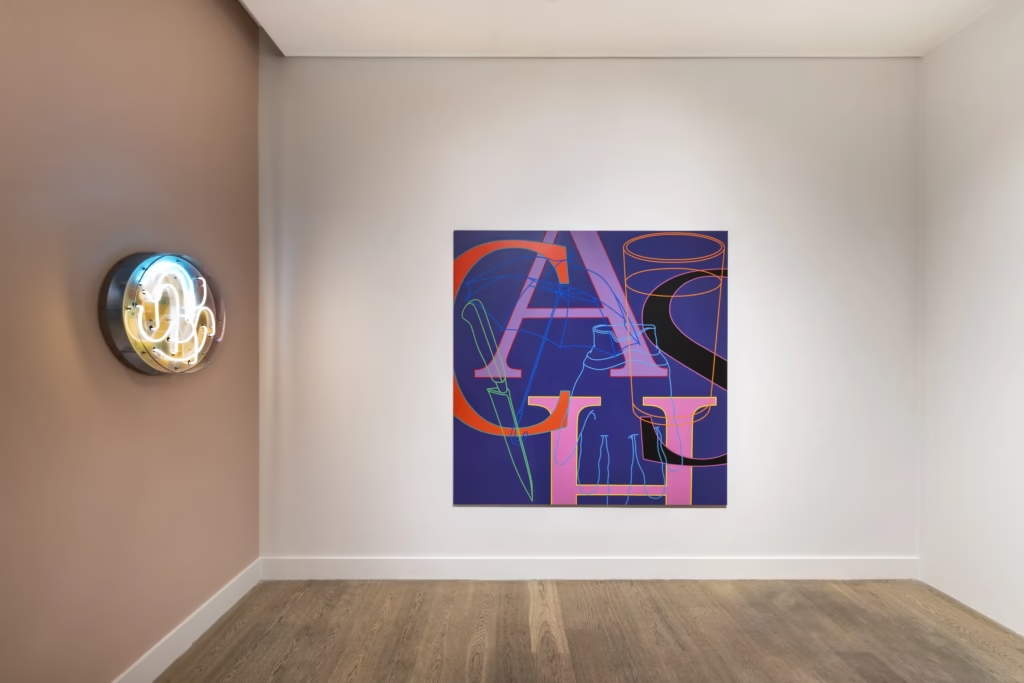
Dellasposa takes viewers on a historic journey through time from July 15 to October 20, 2026, with the exhibition “Warhol / Indiana: On the Origins of Pop,” witnessing the birth of the Pop Art movement and the most intimate moments of two giant figures just before they became legends.
Portraying the Artist From Within Their Work
William John Kennedy’s (1930–2021) photographic practice is grounded in a radical insight: the truest portrait of an artist can only be captured from within the art they create. Rather than photographing Warhol and Indiana as isolated objects, Kennedy placed them both at the very center of their creation, right behind their works.
In the winter of 1963, at the Museum of Modern Art’s (MoMA) Americans exhibition, Robert Indiana introduced the young Andy Warhol—who was not yet widely known to the masses—to the photographer Kennedy. Following this landmark meeting, Kennedy gained unlimited access to both Warhol’s Silver Factory studio and Indiana’s Coenties Slip workshop for a full year.
Two Icons on the Threshold of Legend
The original signed photographs featured in the exhibition—some existing outside the edition as “Artist Proofs” or unique prints—document key moments of Pop Art:
Andy Warhol and Robert Indiana (1963): Capturing an intimate conversation between the two young artists in an informal setting, this is the earliest photograph in the exhibition, documenting the socio-cultural climate in which Pop Art was born.
Warhol Holding Marilyn Acetate I (1964): A masterpiece looking into the camera behind the Marilyn Monroe acetate that gave life to Warhol’s most famous silkscreen works, uniting the artist and the iconic figure in a single frame.
Robert Indiana Holding Love (1964): The only surviving original photograph of Indiana taken with his famous LOVE canvas, which would become one of the most reproduced symbols of American art.
Archival Shots: Collectible works such as Warhol Flowers III and Warhol with Race Riot Sandwich Board, the only printed example from its intended edition.
The Most Intimate Look Before the Peak
“We see Warhol in a fresh light—young, close to triumph, and on the brink of dominating the art world… We see Warhol through his own art.” — Patrick Moore, former director of the Andy Warhol Museum
Eric C. Shiner, another former director of the museum, describes Kennedy’s works as “the most intimate portraits of Andy I have ever seen.”
Originally from LIFE magazine, photographer William John Kennedy’s historic archive today resides in the permanent collections of some of the world’s most prestigious institutions, including the Andy Warhol Museum, the Whitney Museum of American Art, and the Detroit Institute of Arts. Shedding light on the origins of Pop Art, this rare selection awaits discovery at Dellasposa until October 20.