

A pine-scented studio in Sweden’s Kinnekulle mountains; thousands of miles away, a secluded workspace blanketed in quiet on the slopes of Mount Seoraksan, South Korea. Having retreated from urban clamour, two artists spanning distinct generations and cultures make extended, solitary mountain walks the foundational spine of their painterly practice. At neugerriemschneider in Berlin, the exhibition painting the path (11 September 2026 – 6 March 2027) brings together Andreas Eriksson and Kim Chong Hak in a poetic dialogue governed by nature’s hidden rhythms.
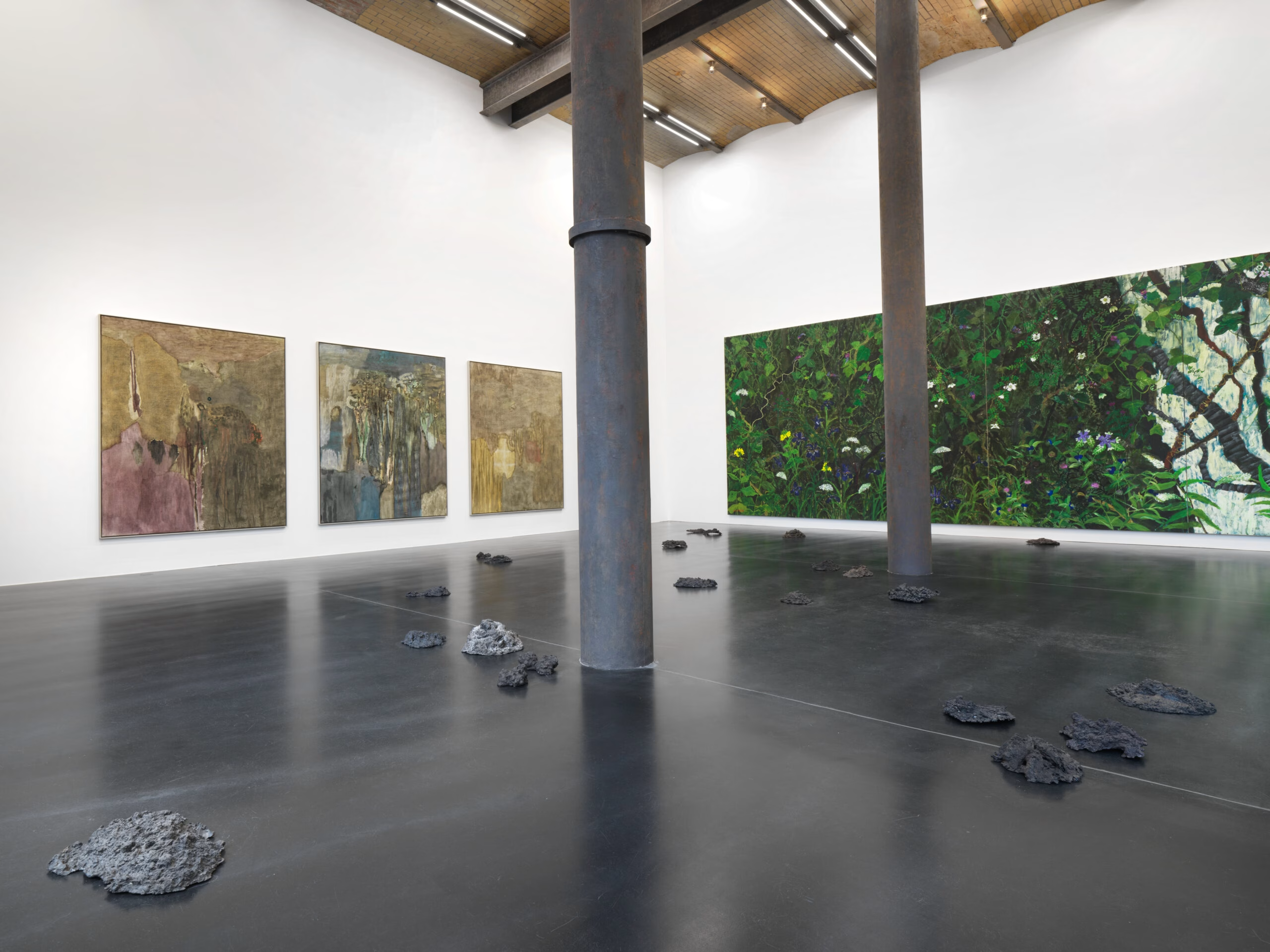
For Eriksson, painting begins long before canvas meets brush, originating in aimless wanderings across the Swedish countryside. Filtered woodland light, the aroma of damp soil, and serendipitous moments are brought into the studio, stripped of rigid pencilled blueprints. Surrendering pigment to its natural flow, gravity, and variable drying times, the artist constructs sculptural surfaces ranging from quiet earth tones to assertive synthetic hues. Alongside the canvases, bronze casts from his Molehill series preserve the ephemeral, fragile footprints of the terrain.
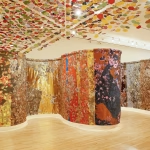
Shaped by Korea’s turbulent history, Kim Chong Hak (b. 1937) has resided at the foot of Mount Seoraksan since 1979. Channeling Eastern mysticism, the calligraphic minimalism of Mono-ha, and traditional Korean woodcarving through an expressive eruption of colour, Kim translates the untamed splendour of the natural world onto canvas. Anchoring the show, his monumental work Landscape (2019) curves along 18 metres of gallery wall, enveloping the viewer in a layered sea of wildflowers that evokes the timeless cycle of the seasons.
For both artists, traversing the trail transcends mere conceptual preparation to become the act of painting itself. Emerging from contrasting geographies, this shared visual memory redefines landscape not as a passive view to be observed, but as a site of encounter where human consciousness meets the earth on equal footing.