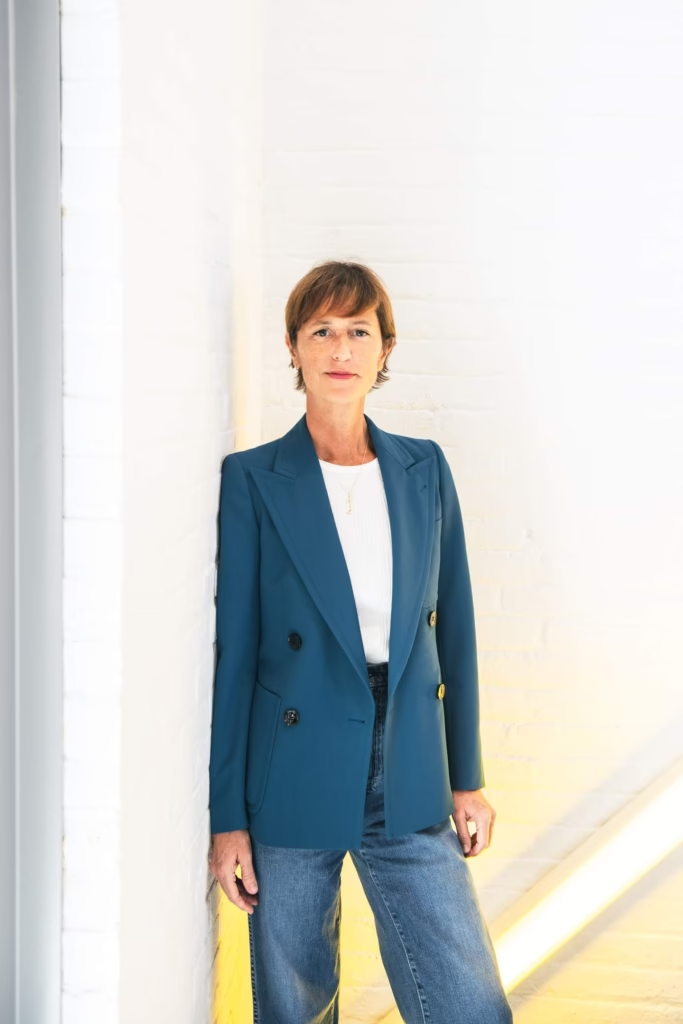


The art world often resembles a massive playground woven with sharp hierarchies, where winners and losers are clearly distinguished. However, in the practice of Berlin-based artist Kasia Fudakowski, this rigid structure yields to an entirely different concept: the ethics of play.
Fudakowski focuses on the cracks between the truths we take for granted, on absurdities, and on the aesthetic boundaries created by these cracks. Moving the viewer away from being a passive observer, she invites them into uncanny and fun playgrounds governed by her own absurd rules.
“Playing House” (2026): A Social Experiment Born from a Minimalist House
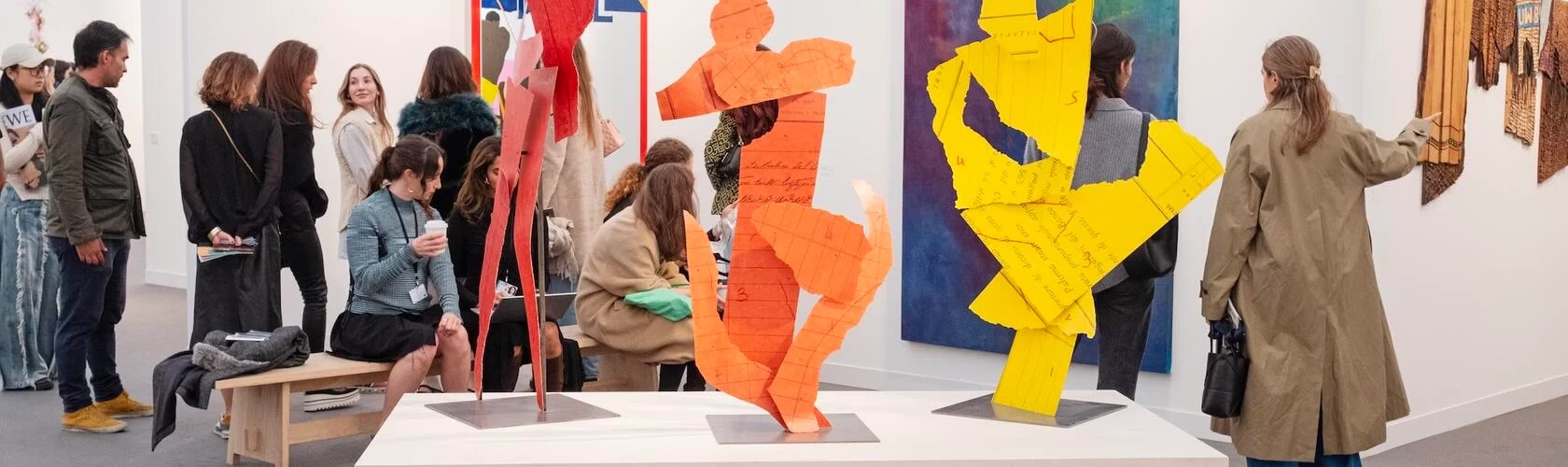
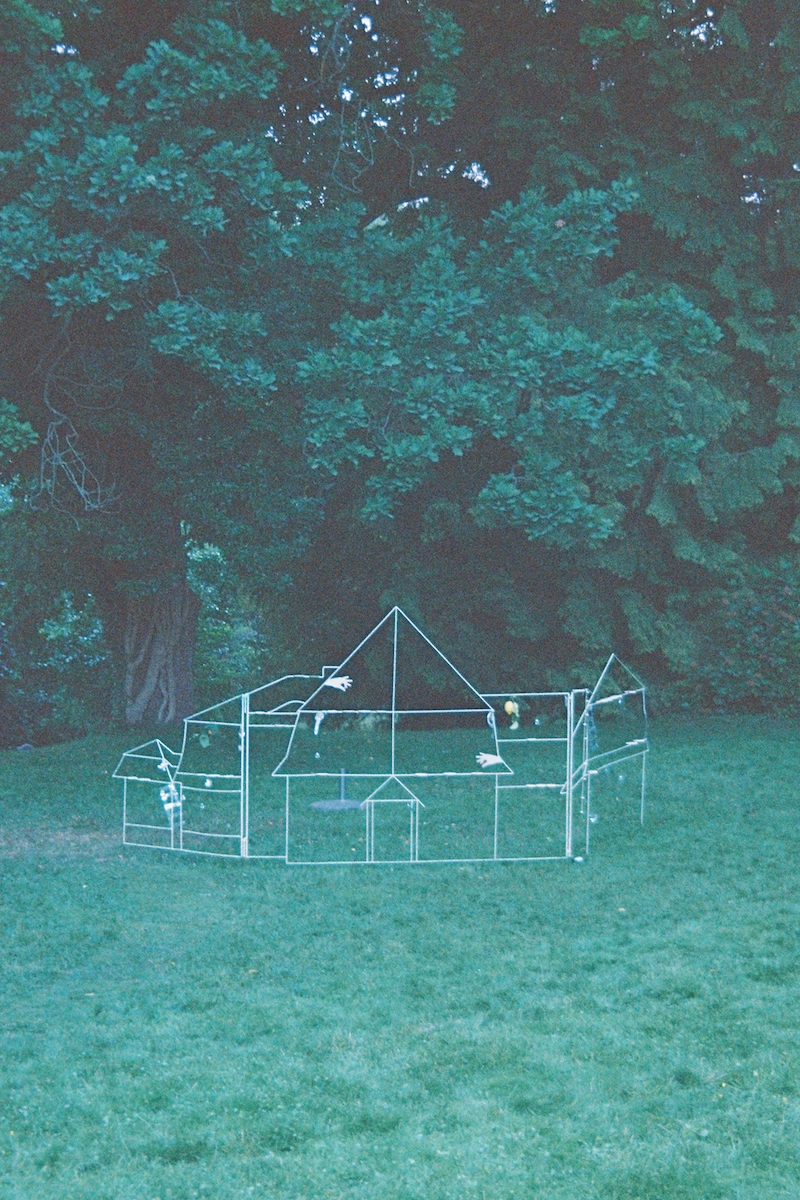
The artist’s installation “Playing House” (2026), created together with chef Ayami Awazuhara for the 80th anniversary of Haus am Waldsee, is one of the freshest examples of this play aesthetic. Consisting of a shaky and abstract house structure built from thin steel rods, this work transformed into an interactive installation where gourmet delicacies were served to guests.
Departing from Fudakowski’s idea of feeding people like birds, this installation quickly evolved into a mini social experiment:
-
Hunger and Protocol: The classic stampede that usually occurs at a normal exhibition buffet was replaced by a calm and distant waiting, thanks to the intervening wire barrier in the form of a house.
-
Playground Dynamics: Instantaneous tensions arose between adults and children trying to grab a limited number of special Japanese treats. The gallery garden gained a real playground dynamic, with two hands reaching for a single plate at the same time and those trying to break the rules being warned.
Decision Mechanisms and Ludic Geography
In Fudakowski’s works, rules and dualities function not as impositions, but as tools that grant a space of freedom to the viewer. In her “Decision Pieces” series, which she will bring together in her upcoming book “Catalogue Reasonné,” the artist continuously offers options to the audience. For example, viewers reading a list of reasons to have or not have children instantly start discussing their own decisions with those next to them. The work becomes personalized by burdening the viewer with the responsibility of their own choices.
A similar search for a ludic geography appears in the artist’s other spatial installations:
-
Die Brücke Der Zwei Wege (The Bridge of Two Ways – 2025): Placed in a garden in Eisenstadt, Austria, this bridge features a large split right in its center. People taking a walk together are forced to separate when they reach the middle of the bridge, turning right or left, and watching each other’s decisions from afar.
-
Double Standards: A Sexhibition (2017): An exhibition design that forces the viewer to enter through either the left or right door, forbidding entry to the other once one is chosen. Here, Fudakowski feeds on the human reflexes displayed by those who break the rules—those who say “I don’t care about the artist”—or those who follow the rules to the letter.
The Dark Side of Play and the “Berlin Art Game”
While many designers or brands take refuge in childish play clichés when they run out of ideas, playing games is not always a safe haven for Fudakowski. On the contrary, she believes that opening up playgrounds in the adult world has an uncanny, dark, manipulative, and controlling aspect. According to her, for an adult to be able to play a game, they need to feel extremely secure and powerful within themselves.
One of the most ironic projects the artist is working on with chef Ayami is a board game about the career steps of an artist in Berlin. Of course, this game has no winner:
“Even if you reach the summit, namely the Hamburger Bahnhof museum, a card you draw can tell you, ‘The game is over, but you didn’t win.’ Or you encounter cards like, ‘Did you die 15 years ago? In that case, the value of your works skyrocketed, move 5 steps forward.’”
The serious motivation behind the game is based on the sexist income inequality faced by female artists over 40, Künstlersozialkasse (KSK) audits, or the disruptive effects of processes like pregnancy on careers.
NO-26 Note
Stating that social media and modern politics imitate the tactic book of avant-garde artists when it comes to bending rules and being non-conformist, Fudakowski underlines that art must protect this freedom of trial-and-error and failure.
Kasia Fudakowski’s art serves as a cleverly constructed mirror that confronts us with social rules, allows us to bend them, and ultimately enables us to discover honest realities about ourselves.