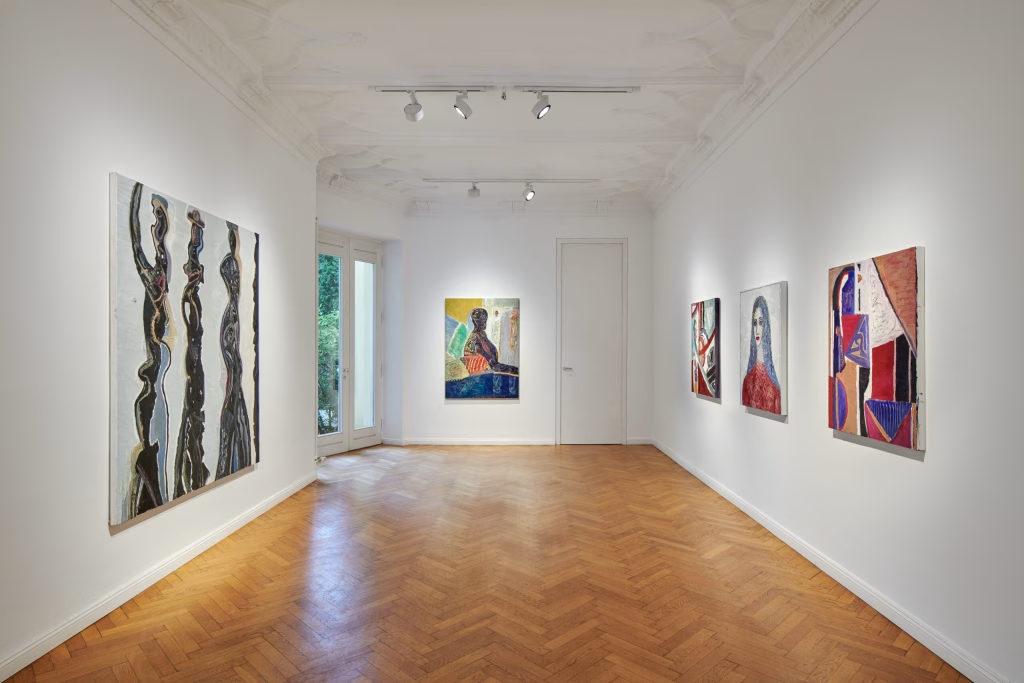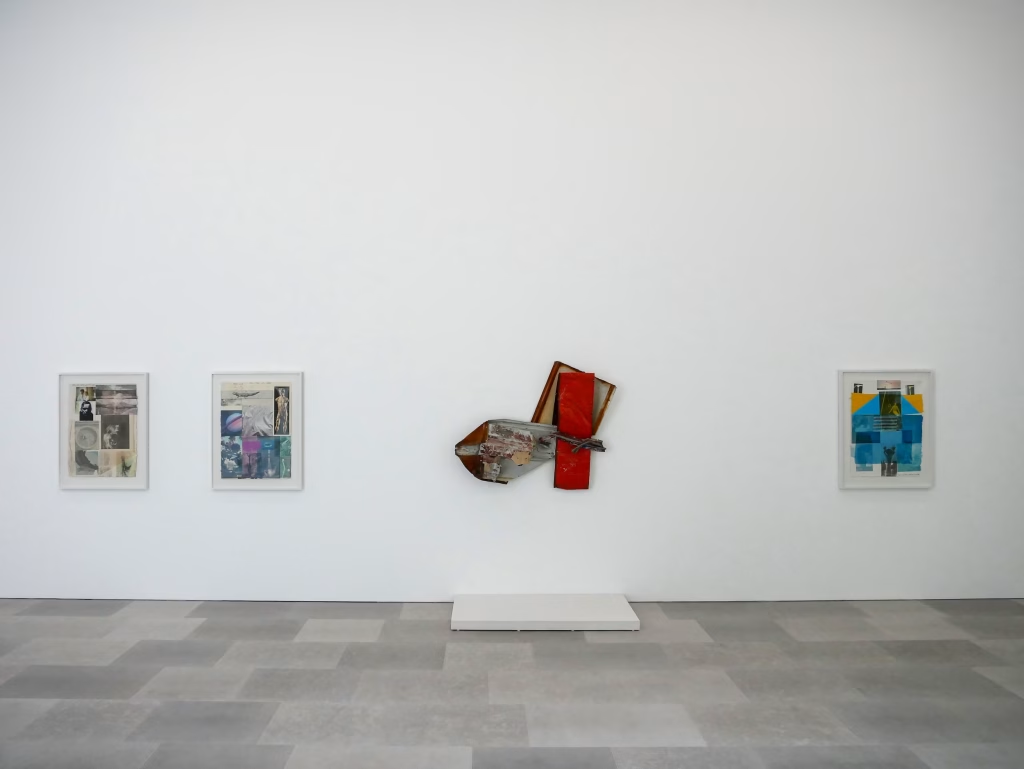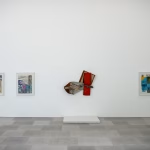


When writing a diary, one does not explain everything. Whatever one saw, felt, or remembered that day is recorded. Sometimes a single glance, sometimes a sentence, sometimes a color whose reason we do not fully know is enough. Moira Cameron’s exhibition titled DAILY approaches painting precisely with this state of keeping a diary.
Marking Vigo Gallery’s second exhibition with the artist, DAILY opens on May 15, 2026, at Wellington Arch in London. The exhibition brings together new paintings created by Cameron based on experiences, emotional states, and fleeting impressions.
From Unseen Notes to Canvas
At the inception of Cameron’s paintings lie notes that the viewer will never see. The artist begins every work by writing her emotions and quotes beneath the surface. These initial notes and preliminary drawings remain hidden within the painting; however, examples of preparatory sketches can also be seen in a display case at the exhibition.
This detail moves the DAILY series to a more personal space. For the paintings before us are not composed merely of the faces, colors, and gestures we see. Beneath each lies a small record belonging to the day that painting was made, a personal state of mind, and a silent conversation the artist holds with herself.
Cameron converts this process starting with words into paint. Rather than turning into a directly visible story on canvas, the private note in the diary reemerges as a face, a glance, a posture, and a color.
Women Returning from Art History
Female figures lie at the center of the exhibition. While these characters carry traces of Cameron’s own life, they also come from within art history. The artist re-examines female figures who were seen, depicted, and defined by male artists in the past. But this time, she does not leave them merely as passive images constructed through the gaze of others.
When these women return to the paintings, they hold a greater say. Ceasing to be models or silent muses, they transform into carriers of their own stories. Cameron’s contemporary female gaze opens up a new space of movement for these figures.
Repercussions of figures reproduced time and again throughout art history—such as the odalisque, the muse, the mysterious woman, and Salome appearing as a “fatal beauty”—are felt in the exhibition. Yet Cameron’s women do not fit into a single role. They can simultaneously be a femme fatale and a witness, a subject and a narrator.
A Glance, a Piece of Jewelry, a Color
Cameron’s way of working pursues encounters rather than telling a planned story from start to finish. Someone’s glance, a posture, a small detail of a piece of jewelry, or a specific color can become the starting point of a painting. Museum visits, images encountered in daily life, and references from art history come together; then, these fragments blend into one another on canvas.
The artist likens this process to characters wandering between different scenes of a story. A face encountered one day can transform into the beginning of the next painting. A figure reappears in another canvas, yet each time slightly altered and clothed in another emotion.
For this reason, the characters in the DAILY series do not stand as fixed icons. They are living, feeling, and time-evolving entities. Rather than trapping them in a single identity, Cameron’s paintings enable them to exist freely in their own worlds.
Painting, a Record of Lived Days
DAILY records time through painting. Every work remains faithful to the day it was created. Cameron does not attempt to revise the painting later to reach a completed, flawless result. Just as a diary carries the state of mind of the day it was written, these paintings preserve the emotion of the moment they were executed.
This approach imparts an intimate dimension to the exhibition. For here, painting appears not merely as an aesthetic outcome, but also as proof of a day lived. Each canvas is like a silent sentence saying, “I was here that day, I saw this, and I felt like this.”
Cameron’s powerful and expressive brushstrokes support this feeling as well. The artist converts the female body from a passive image observed from afar into a body in action. Thus, both the subject of the painting and the hand making the painting gain visibility as active subjects.
Return to a Personal Practice
Born in London, Moira Cameron grew up in an artistic family. Her father was figurative sculptor Ronald Cameron, and her mother Dorothy Cameron was also a sculptor. Cameron’s works re-examine the position of women in art and artistic heritage from a contemporary female perspective.
Years ago, the artist engaged in collaborative works with artist David Spiller, with whom she shared her life, and later with their son Xavier Baxter. Returning to her independent practice following these long collaborative processes, Cameron establishes her own painterly language more distinctly today.
Her figurative self-portrait A Life Lived, painted in 2025, won the National Portrait Gallery’s Herbert Smith Freehills Kramer Portrait Award. According to the information in the press release, the work is currently being exhibited at the Laing Art Gallery.
A Stroll Through a Diary at Wellington Arch
DAILY is not a comprehensive biographical exhibition telling an artist’s life from beginning to end. Rather, it demonstrates how glances and emotions selected from within days come together in painting. Touring the exhibition, rather than following a single story, it is possible to wander among different female figures and perceive how faces, colors, and references link to one another.
According to Vigo Gallery’s exhibition announcement, DAILY can be viewed at Wellington Arch, Apsley Way, London W1J 7JZ. The venue is open Wednesday through Sunday from 10:00 to 16:00; the last entry time is 15:30. Tickets are available via English Heritage. The opening date specified in the press release is May 15, 2026; the closing date is not included in the announcement.
Moira Cameron’s DAILY exhibition reminds us that painting is not merely an image viewed from the outside. Every portrait holds a share of an encounter, every color a mood, and every brushstroke the relationship the artist established with that day. Rather than giving grand and definitive answers, it invites us to reflect upon how long a glance can linger in the mind.