

Picture a swimming pool: the water is blue, the surface still, no one inside. Or perhaps someone is there, but you can’t see them just the trembling reflections in the water and a faint landscape behind. When you look at Hurvin Anderson’s paintings, this is often the feeling: you are not encountering a visible presence but the trace left by an absence. Tate Britain’s first major solo retrospective, open until 23 August, brings more than eighty works spanning his entire career together for the first time.
The Youngest of Eight, the First Born in England
Hurvin Anderson was born in Birmingham in 1965. His family had left Jamaica for England in the 1960s; he was the first of eight siblings to be born in the UK. That position — neither fully English nor fully Caribbean, inside both and at the centre of neither — generates the fundamental tension in all of his work.
The spaces that recur in his paintings: swimming pools, barbershop interiors, road trips, tropical landscapes, English gardens. These are not direct symbols — Anderson does not explain. But each one carries a question of memory and identity quietly. The barbershop has historically been a space of cultural gathering, transmission, and social life for Caribbean and African-American communities. The swimming pool, in England, carries 20th-century memory as a very concrete site of racial division.
Colour, Light and Productive Ambiguity
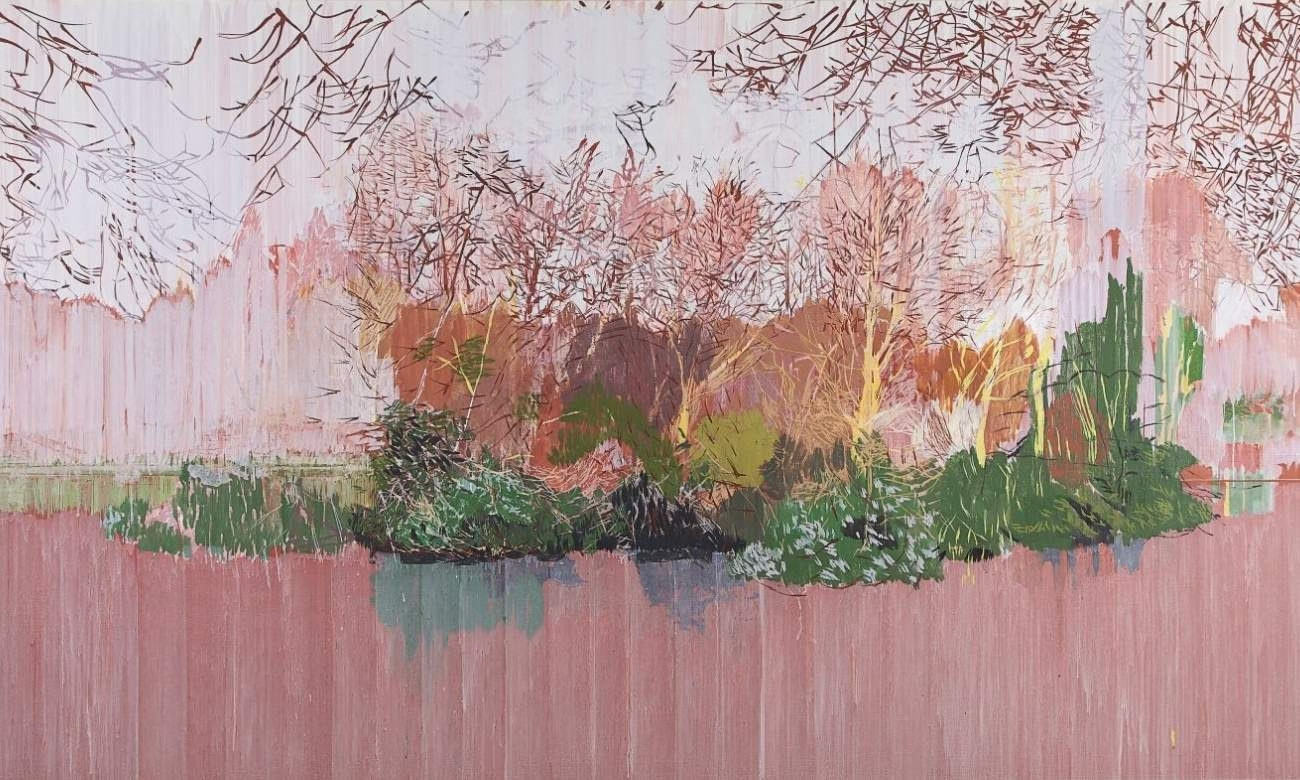
Anderson’s technique draws on both traditions: English landscape painting and Caribbean light. That intersection is what makes his paintings simultaneously familiar and unsettling. Pale green, pastel blue, open yellow — the colour palette is initially reassuring. But when you look inside, something is missing. Figures are absent or incomplete. A scene appears to have been abandoned on the verge of completion.
This ambiguity is programmatic: Anderson works consciously with the unreliability of memory and the tensions of cultural heritage. To layer one location onto another — Jamaica onto Birmingham, the Caribbean onto the English landscape — is his way of processing both personal and collective experience.
Eighty Works, Thirty Years, the First Major Retrospective
The exhibition spans more than thirty years of Anderson’s practice, from his student years to the present. More than eighty works. New, never-before-exhibited paintings are included. Tate Britain describes this as his first major solo presentation — implicitly acknowledging how long recognition at this scale took to arrive.
The press response has been strong. The Guardian awarded five stars, describing the show as “haunted, hazy, beautiful — like stumbling through someone’s memories.” The Times called the barbershop paintings “unmissable.” Wallpaper: “Mesmerising.”
FAQ: Hurvin Anderson at Tate Britain
- When, where and how much?
Hurvin Anderson runs from 26 March to 23 August 2026 at Tate Britain, Millbank, London SW1P 4RG. Tickets £18; Tate Members free; concessions available; Tate Collective (ages 16–25) £5.
- Why does Hurvin Anderson matter?
His practice interrogating British and Caribbean identity, memory, and diaspora experience through colour and landscape — makes him one of the most important painters of his generation working in Britain. This retrospective is the first exhibition to make thirty years of that practice visible as a whole.
- What is in the exhibition?
More than eighty paintings from his student years through new, previously unseen works. Swimming pools, barbershop interiors, tropical and English landscapes.
NO-26 Note
This is one to see before it closes at the end of August. Anderson’s paintings don’t accept hurry you need to stay inside them for a while. When something stops you in front of the barbershop pictures, let yourself look a little longer before moving on.