

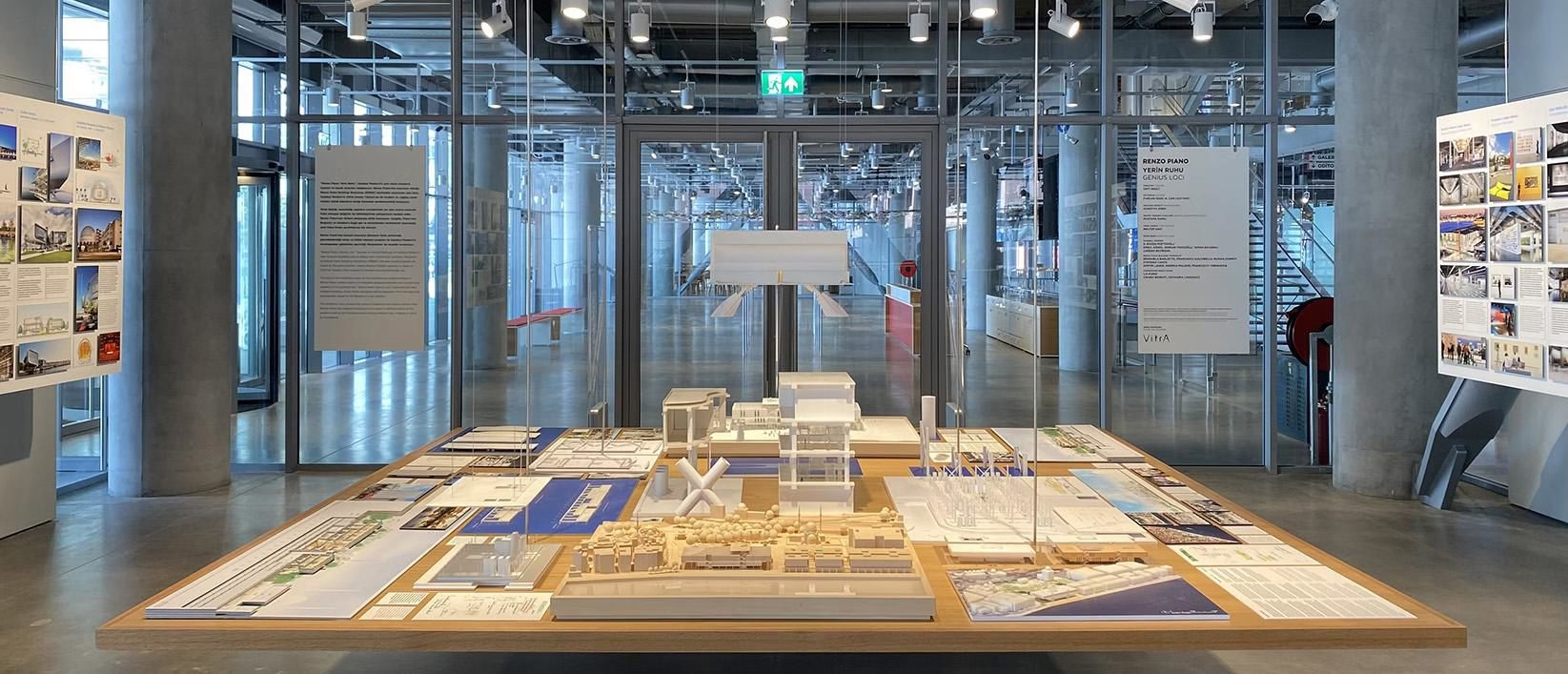
When you enter Istanbul Modern, you feel that you are inside a building — but at the same time you are inside the light of the Bosphorus. This is the moment when Renzo Piano’s intention is realised: the building is designed to function as a transparent membrane between outside and inside. *Renzo Piano: Genius Loci* tells the story of how those decisions were made, how this design took shape, and how this construction was carried out over six years. And it is free to visit.
“Genius Loci”: Reading the Spirit of a Place
The concept of *genius loci* entered architectural theory through the Norwegian architect and theorist Christian Norberg-Schulz in the 1980s — but its roots are much older: in ancient Roman mythology, the spirit protecting a place, the essential identity of that location. Renzo Piano places this concept at the centre of his thinking; he argues that every building must first listen to the place in which it stands.
Tophane offers Istanbul Modern an exceptionally rich context: a waterfront that opens onto the Bosphorus, carrying multiple layers of history, bearing the traces of the sea, the city, and different eras simultaneously. Piano read this trace and built the building upon it. The transparency created by the glass facade, the freedom of light to enter the interior, the integration of the Bosphorus view with the exhibition experience — all of this is an architectural language of respect toward place.
A Six-Year Process
Istanbul Modern opened its first museum building at the Tophane quayside in 2004. The new building, at the same location, opened after a six-year design and construction process. *Genius Loci* is an archive documenting that process: drawings, models, decisions, adjustments, transformations.
Curator Ümit Mesci organises this document thematically. The exhibition is not only the technical file of a building; it is a joint account of an architect’s intellectual practice and an institution’s transformation. The change Istanbul Modern has undergone since 2004 runs parallel to the change in the building itself.
Renzo Piano Building Workshop and Istanbul
Renzo Piano Building Workshop (RPBW) has designed some of the world’s most prestigious museums and cultural buildings: the Centre Pompidou in Paris (with Richard Rogers), The Shard in London, the new Whitney Museum of American Art in New York, the Stavros Niarchos Cultural Centre in Athens.
In every project, Piano’s signature is similar: transparency, light, dialogue with local context, and maximum experience at minimum friction with the visitor. The Istanbul Modern building is a Bosphorus-specific version of that practice.
Free and Accessible Every Day
The exhibition is located at the library entrance on the ground floor. The library is Istanbul Modern’s space open to the public free of charge. This means you can visit *Genius Loci* without purchasing a ticket for the Semiha Berksoy exhibition — a detail that makes every visit both richer and more practical.
FAQ: “Renzo Piano: Genius Loci” at Istanbul Modern
- Is the exhibition free and where is it?
*Renzo Piano: Genius Loci* is on view free of charge from 1 January to 31 December 2026 at the library entrance on the ground floor of Istanbul Modern. Address: Kılıç Ali Paşa Mahallesi, Tophane İskele Caddesi No:1/1, 34433 Beyoğlu. Note: Istanbul Modern is closed on Mondays.
- What does “Genius Loci” mean?
The spirit protecting a place in ancient Roman mythology, or the essential identity of that location. The concept has been used in architectural theory since the 1980s to describe the idea of designing a building by reading the spirit of its site.
- What is in the exhibition?
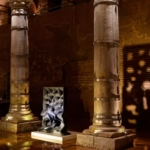
Drawings, models, and documents recording the design and construction process of Istanbul Modern’s new building, alongside a broad panorama of other projects and cultural buildings from Renzo Piano’s international career.
NO-26 Note
You can visit this exhibition on the same day as the Semiha Berksoy show — no ticket required. An archive of a museum’s own birth process; thinking about the building while inside the building is an unusual experience.