

Concepts Instead of Palettes: A Yoko Ono Retrospective at the Sakıp Sabancı Museum

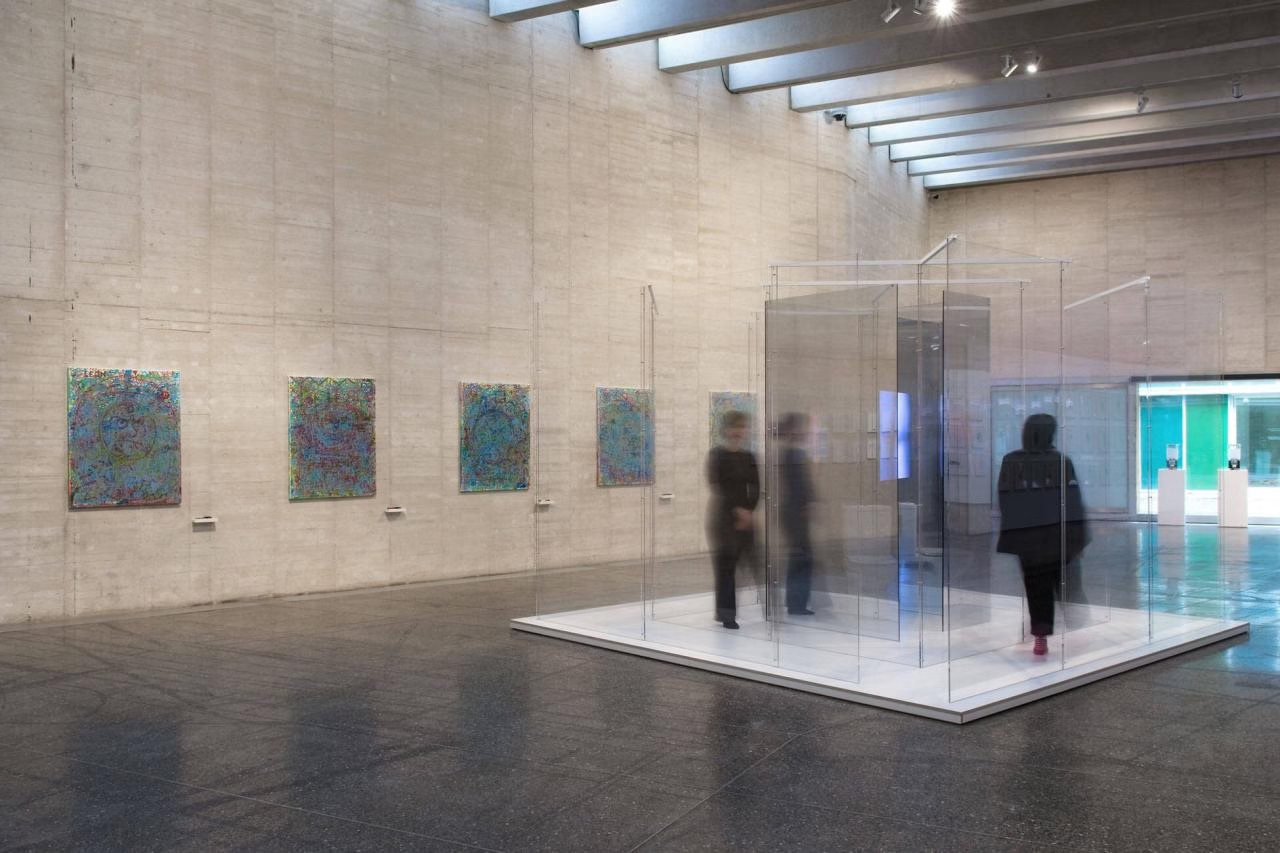
Is art a finished object hung on a white wall in a gallery and admired from a distance, or is it a fluid experience waiting to be completed in your own mind, hands, and actions through an instruction whispered by the artist? Yoko Ono, who has deeply influenced the course of contemporary art, Fluxus, performance, and the feminist avant-garde for more than seventy years, is making a landing in Istanbul with her most comprehensive retrospective in Turkey. Realized with the support of Akbank and in collaboration with the contemporary art museum MUSAC in Spain, the exhibition İçses ve İçyapı (Inner Sound and Inner Structure) transforms all areas of the Sakıp Sabancı Museum (SSM) overlooking the Bosphorus into a living conceptual laboratory.
Far beyond being a touring exhibition, İçses ve İçyapı is the fruit of a deep-rooted inter-institutional dialogue, taking its name from the conceptual framework that Ono first put forward in Kyoto on July 20, 1964. Without following a chronological order, the exhibition presents 67 works from the artist’s career spanning over 70 years in thematic layers that converse with one another.
Using Language as a Medium: In the Footsteps of Grapefruit
The heart and primary reference point of the exhibition is Grapefruit (1964), Ono’s landmark cult book containing mental scores and instruction pieces written between 1953 and 1964. Instead of paints and brushes, Ono uses language as a medium and concepts as a palette. She demands that the viewer imagine, execute, or physically complete the work within their own mind.
The most important examples of this early conceptual rebellion greet us on the gallery floor:
-
White Chess Set (1966): This playing area, where all pieces and squares are painted entirely white, collapses the militaristic, winning-and-losing-oriented structure of chess, uniting opponents on a ground of absolute peace and partnership.
-
Mending Piece (1966): A participatory action symbolizing the collective healing of traumas and resentments, where visitors mend broken cups and plates through their own creative methods.
The selection also includes early avant-garde masterpieces that destroy the sterile distance between the viewer and the work, such as Painting to Draw a Circle (1964), Bag Piece (1964), and Sky Ladders (1968).
A Fluxus Garden Overlooking the Bosphorus
Yoko Ono’s art refuses to fit within the rigid walls of the museum building, spilling out into the greenery and open air of Emirgan. Serving as one of the main arteries of the exhibition throughout the summer and autumn months, the SSM Garden hosts monumental installations that invite the viewer to take action:
-
Wish Tree (1996): A living organism where visitors write their personal hopes and wishes for peace and hang them on its branches, turning into a collective memory repository throughout the exhibition.
-
Amaze (1971): An uncanny labyrinth made of transparent material, experienced with a sense of movement, perception, and discovery.
In the garden, large-scale installations such as Imagine Map Piece (2003), Invisible Flags (2015), and Invisible People (2009/2017) stand side by side with instruction-oriented billboard works like IMAGINE PEACE, FLY, and YES. At the museum entrance, we are greeted by ACTION TIME (2012) banners in Turkish and English.
“Yoko Ono is a wonderful artist. She uses concepts instead of a palette. She moves from song to film, from words to installations; poetry is always there. She is an artist who transcends eras.” — Jon Hendricks
A Call to Women: Participate in the “Arising” Project
Undoubtedly, the most political, striking, and contemporary backbone of the exhibition is Ono’s 2013 work titled Arising. This installation is a collective space of testimony against the ongoing systemic violence against women worldwide.
On the occasion of this exhibition, Yoko Ono extends a direct invitation to all women in Turkey and around the world: women of all ages who have experienced violence can participate in the project by sending a written text describing their experiences along with a photograph showing only their eyes, either by mail to the museum address or digitally to yokoono.ssm@sabanciuniv.edu. These confidential testimonies and gazes collected will become a living, growing part of the installation throughout the exhibition.
Performance Documents and Calligraphy at Atlı Köşk
The exhibition does not forget Ono’s pioneering role in the history of cinema and performance. The documentation videos of her famous Cut Piece, first performed in 1964, where she allowed the audience to cut her clothes with scissors, are featured in the exhibition with recordings of its 1965 New York and 2003 Paris performances. Experimental cinematic works like Film No. 5: Smile (1968) and RAPE (1968) can also be viewed.
As a surprise stop, the artist’s fascinating calligraphy series titled Four Winds (1991/1992), which flirts with traditional calligraphy aesthetics, is exhibited in the Arts of the Book and Calligraphy Collection gallery inside Atlı Köşk.
no-26 Viewing Note
Yoko Ono: İçses ve İçyapı is a magnificent exhibition of long-overdue recognition that restores the foundational, disruptive authority in the history of Fluxus, conceptual art, and feminism to a genius woman hidden behind popular culture and tabloid history. Moving the visitor away from being a passive eye and making them the actual producer and completer of the exhibition, this living experience is Istanbul’s most essential art route until the end of December. Travel to Emirgan this summer, take your place at the chess board, mend a broken plate, and most importantly, listen to Yoko Ono’s invitation to discover your own power to act.