

An Exploration on the Forking Paths of Time: “Forking Paths” Exhibition at Esther Schipper Berlin

Esther Schipper gallery in Berlin hosts an impressive group exhibition titled “Forking Paths,” taking viewers through the non-linear layers of time, space, and identity until August 26, 2026. Shaped by the curatorial design of Giulia Gelmini and Muchi Shaw, the exhibition takes its name and fundamental inspiration from Jorge Luis Borges’s famous 1941 short story The Garden of Forking Paths. Borges’s literary approach—treating time not as a single straight line, but as a labyrinth splitting into simultaneous possibilities—forms the starting point of the exhibition as well. Supported by the Senate Department for Economics, Energy and Public Enterprises and the Tianmei Art Foundation, this selection embodies in the gallery space the idea of a universe where every choice creates new paths rather than erasing the old.
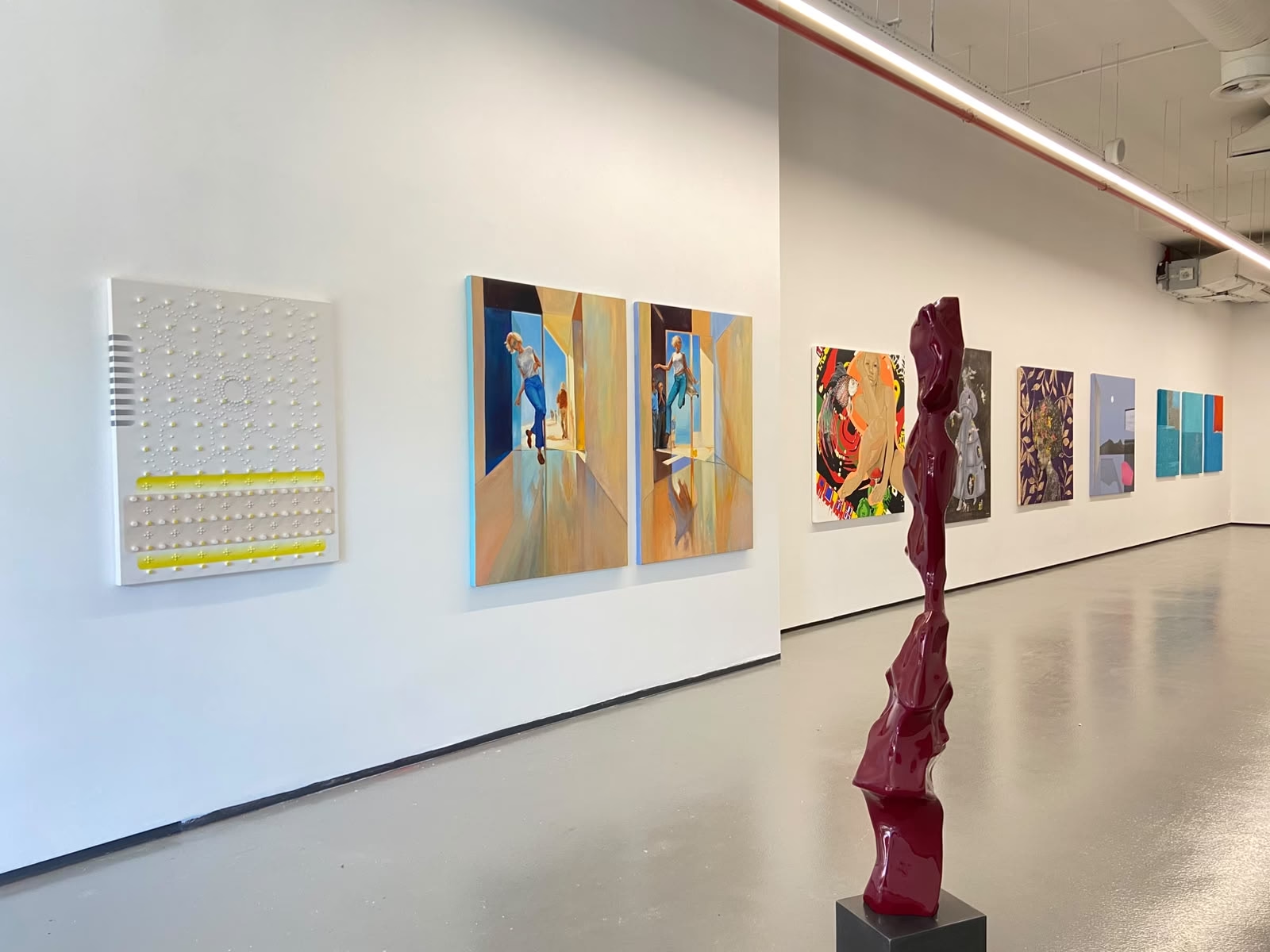
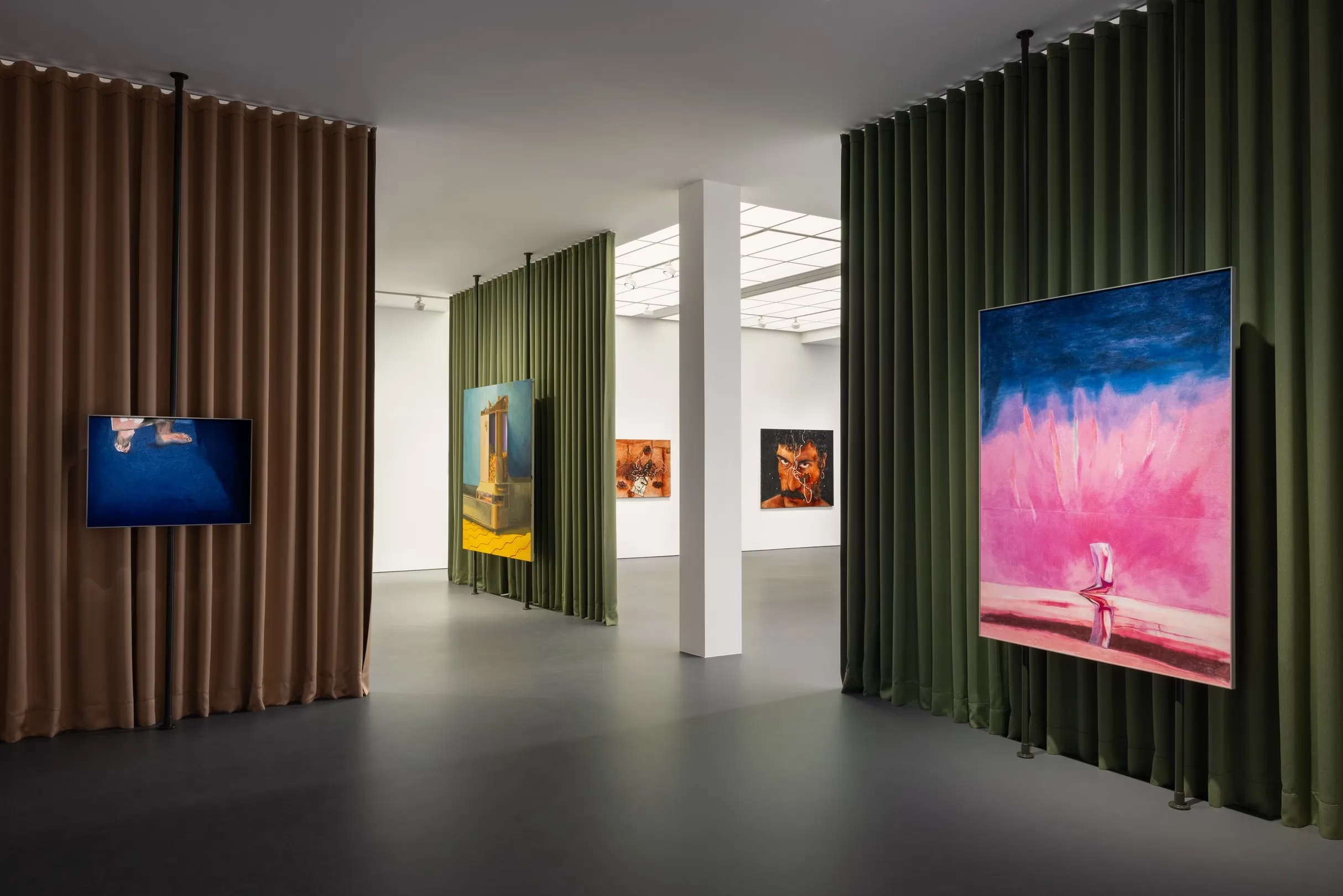
Borges’s literary premise finds its exact counterpart in the spatial architecture of the exhibition. Rather than presenting artworks in a fixed, sequential order, Forking Paths creates a fluid relational field where perspectives constantly shift. Earth-toned curtains dividing and shaping the gallery space offer permeable thresholds that reveal views on one hand while concealing them on the other. Inspired by East Asian and Italian garden traditions, this spatial design transforms walking into a mode of perception through winding routes and framed landscapes. As visitors progress through the space, they are invited to constantly reconstruct the relationships between the artworks by pausing or changing direction.
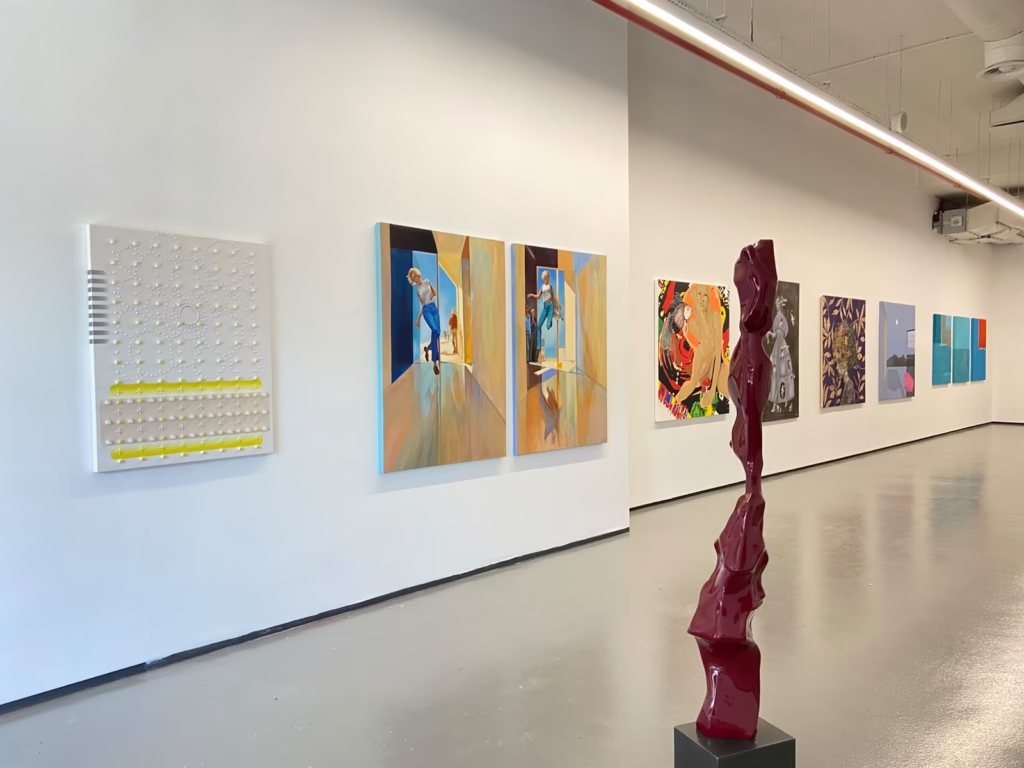
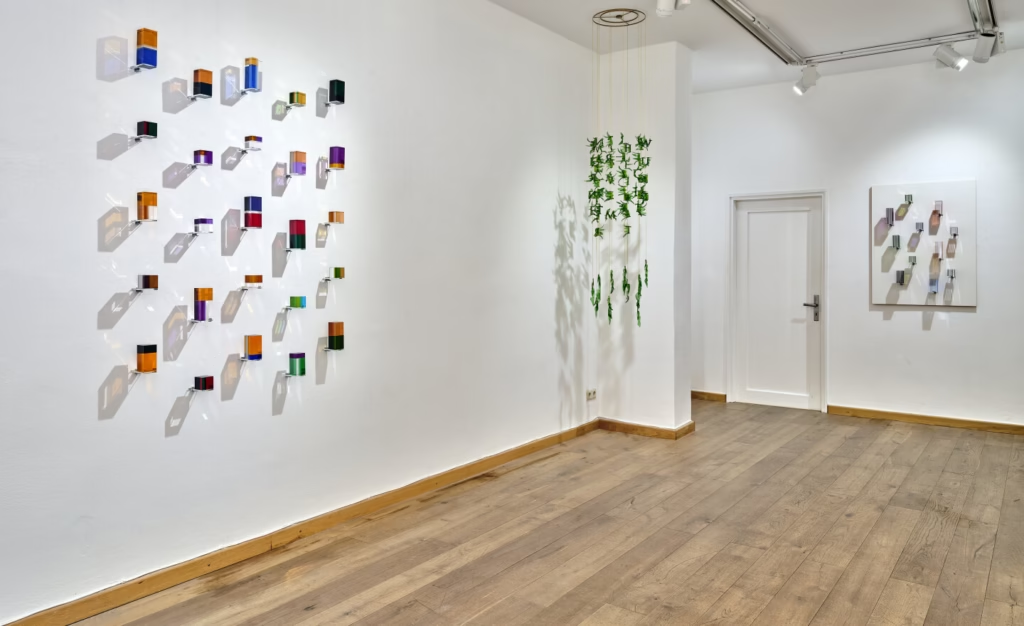
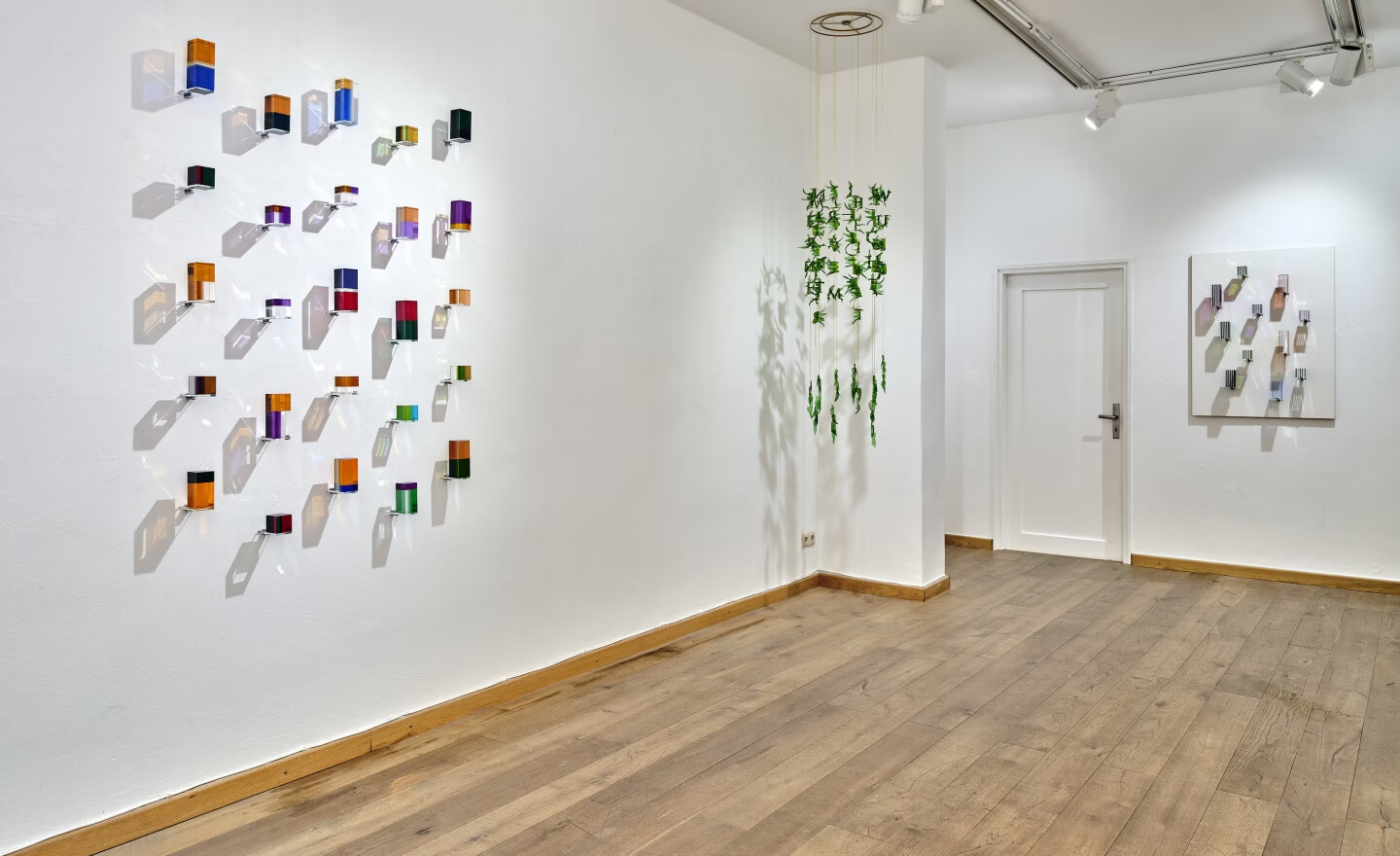
The exhibition brings together eight young artists: four from Taiwan (Chiu Chien-Jen, Hsu Chia-Wei, Tsai Yi-Ting, Tseng Chien-Ying) and four from Italy (Beatrice Marchi, Valerio Nicolai, Roberto De Pinto, Federico Tosi). Born between 1981 and 1996, these artists of the same generation produce in a world shaped by global connections, technological transformations, and fluid cultural exchanges. Working across diverse disciplines such as painting, drawing, sculpture, video, and installation, the group treats the image as a domain where identity, history, and experience are constantly reconstructed. For instance, Hsu Chia-Wei’s video installations constructed with natural rubber sheets and TV screens, Rubber Balls (2025) and Bound Images (2026); Roberto De Pinto’s canvases merging beeswax, pastel, and oil paint (Come lacrime, Groviglio); and Federico Tosi’s terracotta sculptures (Very happy old man talking to a bird) rank among the most striking pieces of this multicultural dialogue.