

In Noksan, a photographic series presented at LEE Art Project, Ahmet Mümtaz Taylan turns his focus away from objects that fill the frame, directing it instead toward what has been excluded, excised, or drawn behind a veil of haze. Rather than foregrounding the tangible presence of the visual world, the work traces a quiet sense of absence burgeoning just at the frame’s edge.
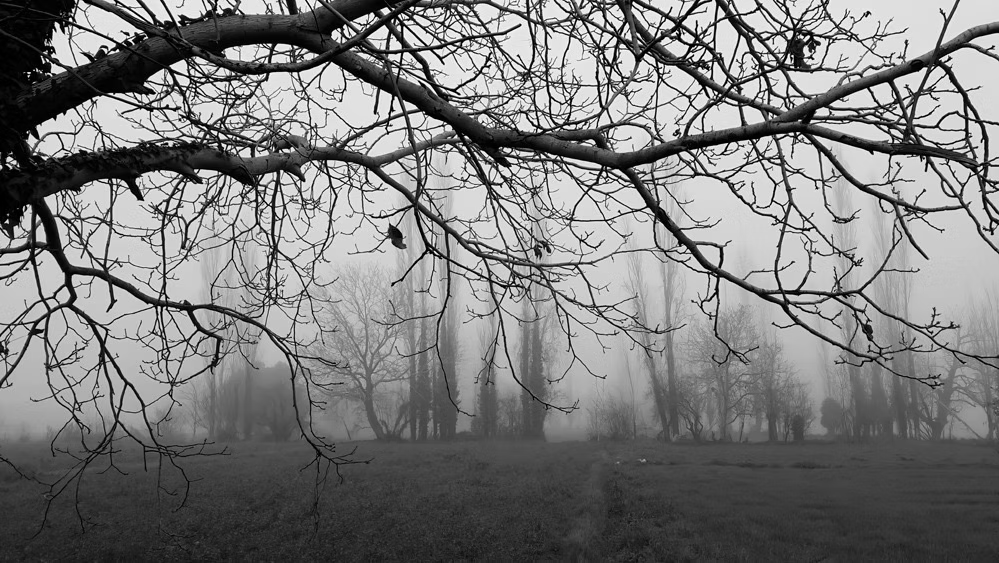
The selection charts an expansive geographic terrain—spanning plains engulfed in dense fog and frozen lake shores to derelict urban nooks and claustrophobic architectural enclaves. Unifying these landscapes across their varied atmospheric registers is the uncanny void lurking behind the visible surface, marked above all by the complete withdrawal of the human figure from the scene.
The sense of lack—noksan—that emerges in these photographs is neither a flaw to be mended nor a simple void; it is, rather, the very mechanism through which object and space achieve their own truth. An armchair left alone against the horizon; votive strips tied to pruned branches beside frozen water; trinkets waiting out time before peeling plaster… Devoid of physical human presence, these compositions resound with the invisible traces left behind. Stripped of its subject, the object begins to articulate its own narrative through the freedom offered by this very emptiness.
A solitary tree rising over a plain where fog blurs every detail, or roots dissolving into water, compel the viewer to deepen their gaze. Invisibility does not erase space; rather, it endows it with an enigmatic dimension. Viewers can forge an authentic connection with the landscape only insofar as they dare to confront the unfillable void within themselves and endure its ache.
This sense of an uncanny threshold evokes the temporal sensibility of Theo Angelopoulos’s film Eternity and a Day. Just as lost time reawakens within the folds of an old letter or in the memory of a warm summer day, the objects in Taylan’s photographs occupy a delicate balance between disappearance and persistence. Nothing is entirely lost; instead, it shifts form, anchoring itself to another entity, an object, or a memory.
The series also builds a rhythmic tension between desolate stretches of nature and overlapping urban textures: on one side, the quiet echo of abandonment; on the other, the claustrophobic weight of architectural compression. These two distinct layers of memory invite viewers to complete what lies beyond the frame through their own imagination, rather than passively consuming pre-packaged visual imagery.
Enriched and further layered by Ömer Çeşit’s accompanying text, the selection ultimately whispers a simple yet arresting truth: what completes an image and endows it with soul is rarely what falls within the frame, but rather the very absence harbored within it.