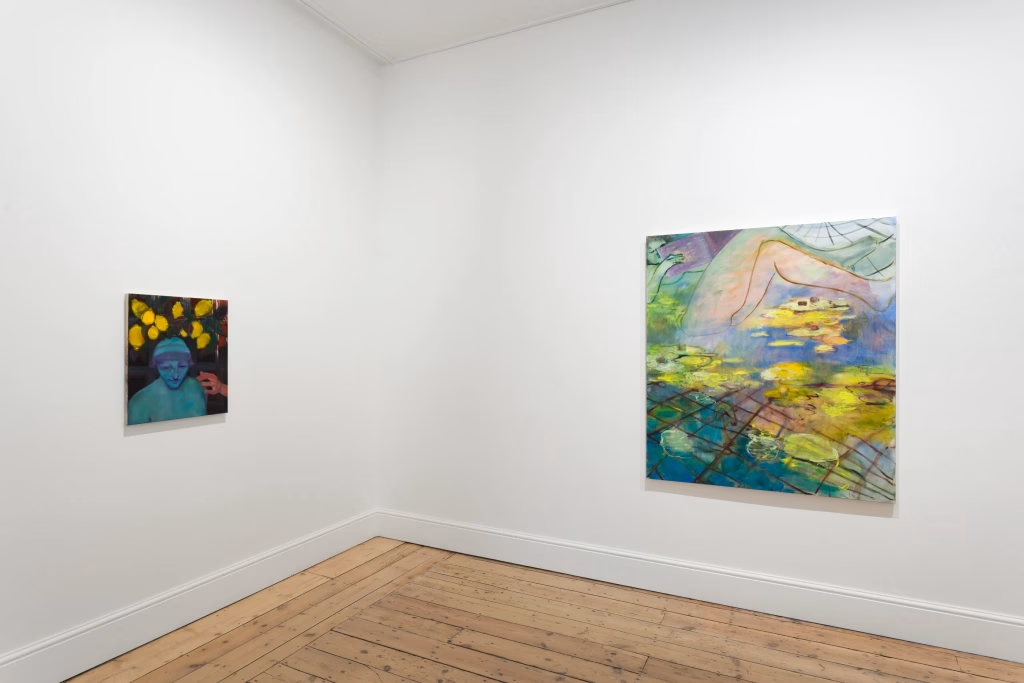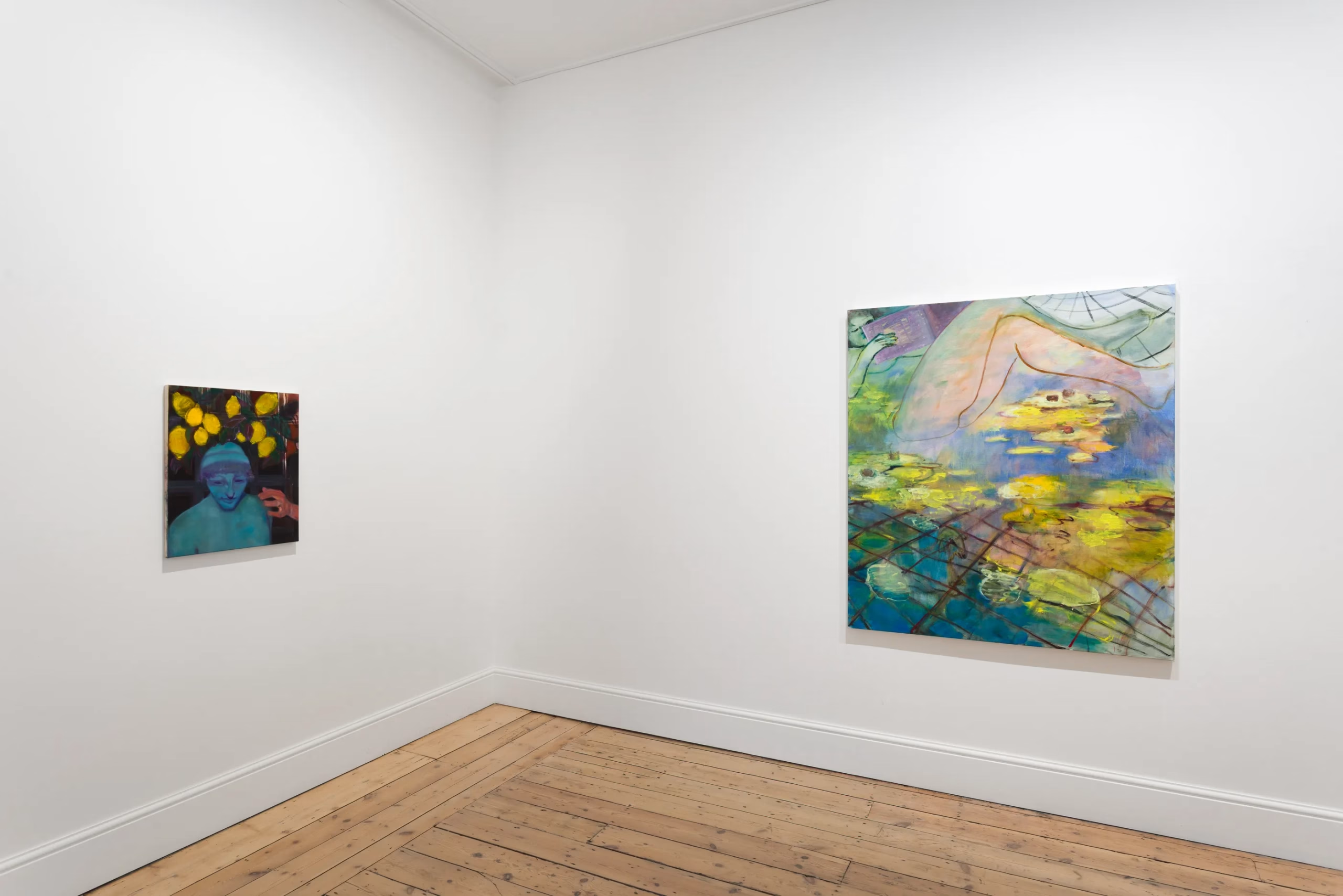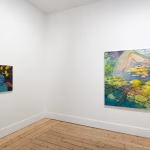


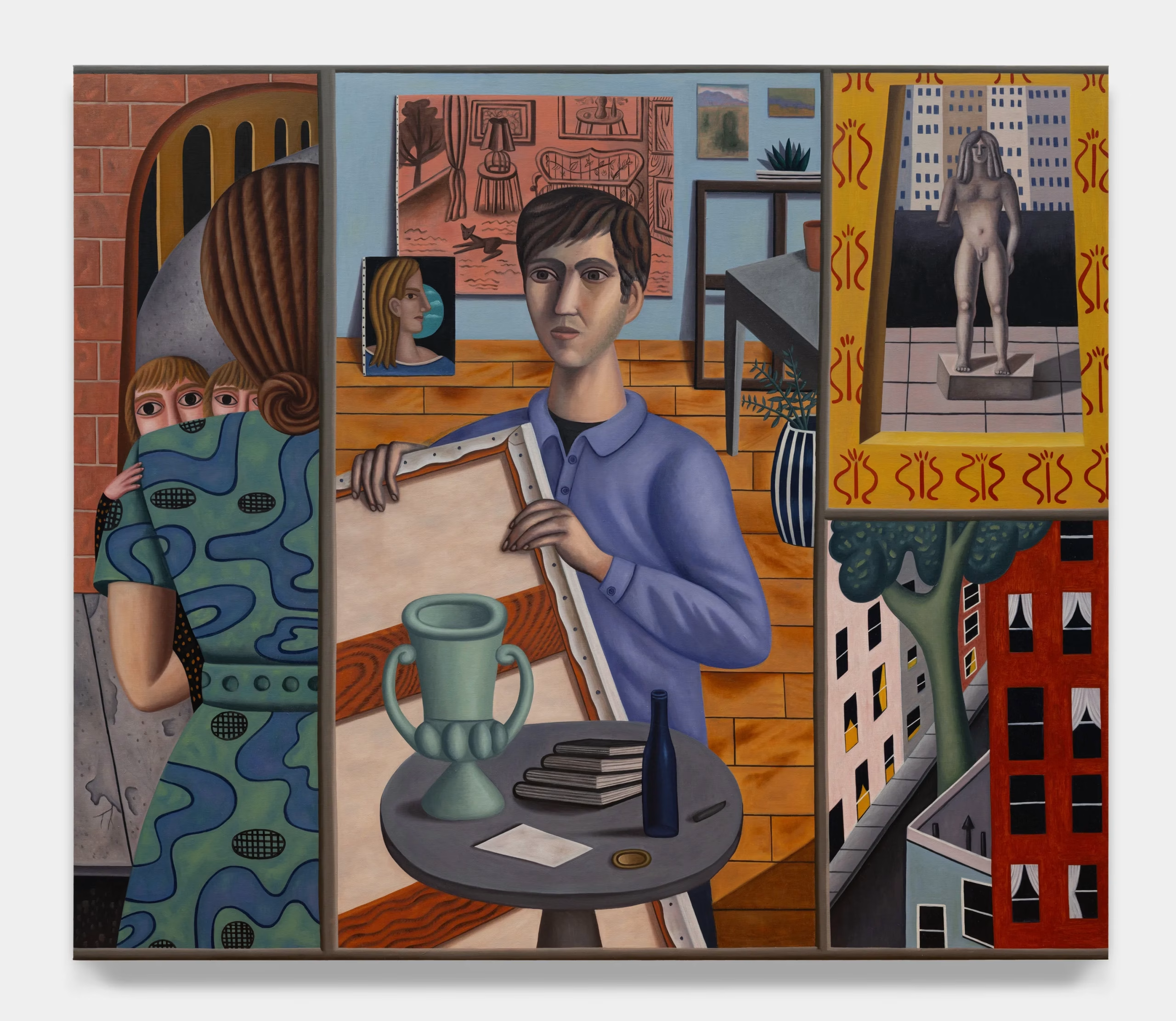
Step into MASSIMODECARLO off London’s cool, grey autumn streets, and physical reality quietly unspools the moment you cross the threshold. Opened on 12 October and running through 18 December 2026, ‘The Studio’ serves as an enigmatic portal straight into the mental sanctum of American painter Jonathan Gardner—his atelier in the truest, most psychological sense.
Yet consider this a fair warning: Gardner’s studio is no conventional workroom circumscribed by four walls, easels, and discarded tubes of paint. Rather, it is a realm of nested chambers, canvases blooming within canvases, and an interior architecture governed entirely by dream logic.
Dreaming in the Same Room as Matisse and Magritte
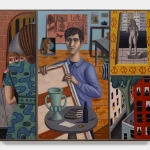
Moving through the exhibition feels like stepping onto a hushed theatrical stage where time has stalled and pigments settle across the surface in deliberate, clean-edged fields. The foundational genres of Western art—the nude, the still life, the landscape—are stripped of their three-dimensional bulk under Gardner’s brush, resolved instead into immaculate, flattened decorative planes. Look at a wall, and it abruptly dissolves into a vista; an easel softly morphs into a tree. The compositions feel at once eerily familiar and surreal, staging a whispered colloquy between Henri Matisse’s buoyant chromatic register and René Magritte’s unsettling illusions. In Painter in the Studio, the easel positioned before the window offers an overt, impeccably stylish nod to Magritte’s iconic The Human Condition.
Autobiographical Fragments and the Passage of Time
Gardner furnishes this studio with fragments culled from personal memory, unfettered imagination, and the canon of art history. In one corner lies a familiar family heirloom rug; across from it sit vintage guitars collected with quiet devotion—each staged with the meticulous precision of a still life. Yet beneath these static, impeccably engineered interiors runs a subtle, continuous undercurrent. To keep time from congealing entirely, the artist charts rivers cutting across his imagined terrains, rendering deserts—archetypal sites of solitude and introspection—as uncanny voids that clear ground for fresh beginnings.
The exhibition’s most compelling resonance lies in the tender, anxious pulse beating just beneath this polished poise and immaculate painterly finish. In Painter in the Studio, the female figure cradling a vessel is far more than a classical motif; she stands as an ancestral bearer of fertility, embodiment, and, in the artist’s words, “whatever is brewing inside.”
In another composition, Painter, set against an arcade recalling the desolate, melancholic vistas of Giorgio de Chirico, a maternal figure carrying two infants recedes toward a shadowy portal. That darkened doorway reads with ambivalence—both a harbinger of approaching peril and the threshold of an unwritten chapter. Nearby, a fractured classical kouros evokes splintered masculinity, fleeting youth, and the psychic freight carried forward from the past. Gardner never raises his voice; he leaves this delicate tension between hope and disquiet to the viewer, handled with cool, deliberate painterly detachment.
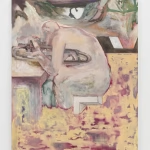
For Jonathan Gardner, the studio is less a geographic address than a state of mind. In his own phrasing, the works are “part memory, part imagination, and part art history.” Paintings such as Sleeping in the Studio, Imaginary Nude, and Glazing the Vase coax the viewer one step further from the clamour of the outside world, drawing them deeper into an introspective, melancholic, yet undeniably seductive reverie.
If your travels take you through London before 18 December, make time for this chamber of the mind conjured purely from pigment and recollection; you might well discover a fragment of your own memory mirrored within its dreamscape.