

Music Discovery of the Day: Anthony Hopkins’s Lifelong Accumulated Melodies “Life Is a Dream”


When we think of Anthony Hopkins, his distinctive acting comes to mind first: calm yet intense gazes, a voice that turns a single sentence into a scene on its own, and characters that have been etched into our memories for years. But in Hopkins’s life, there is another passion as old as the camera: music.
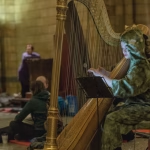
Now, this passion stands before listeners with the album Life Is a Dream. Released on August 21, 2026, under the Decca Classics label, the album consists of orchestral compositions written by Hopkins over a period of more than six years. Gustavo Dudamel conducts the album; the recordings come to life with contributions from the Philharmonia Orchestra, pianist Sergio Tiempo, cellist Gregorio Nieto, The Bach Choir, and the Winchester Cathedral Choir.
A Passion Predating Acting
Hopkins’s relationship with music is not a recently acquired hobby. According to Gustavo Dudamel’s official announcement, Hopkins began playing the piano at the age of four; he was performing Beethoven and Chopin as a child, improvising at six, and composing music for local plays during his youth. In short, although his acting career became more visible to the world, music is a much older story in his life.
For this reason, viewing Life Is a Dream merely as a famous actor’s classical music album falls short. The album stands as a personal musical diary bringing together Hopkins’s memories, his love for his family, his connection to Wales, and the melodies he carried in his mind over the years.
Memories Turned into Sounds Rather Than Just an Album
Some of the tracks on the album reach directly into Hopkins’s childhood and his native Wales. “Bracken Road” is nourished by childhood memories of the surroundings of Margam in South Wales. The origin of the piece is also quite delightful: Hopkins created the initial version of this melody in 1963 while improvising on the backstage piano before rehearsals as a young actor at the Liverpool Playhouse.
“My Fatherland,” on the other hand, is a homage written to Wales and his modest beginnings. Hopkins’s father was a baker; the composition carries this family story and the enduring bond with his homeland. “Stella Aria” is dedicated to his wife, while “Tara” is dedicated to his niece. These details make the album all the warmer: Before us are not merely works written for a grand orchestra, but small musical letters left to the people and places in his life.
The Dudamel Touch and a Surprise on the Charts
Hopkins’s compositions acquire an expansive and cinematic color with the Philharmonia Orchestra under the direction of Gustavo Dudamel. This partnership brings together Hopkins’s storytelling with Dudamel’s approach of guiding the orchestra in a vibrant and dramatic fashion. Decca Classics notes that the recordings were made in April 2026 at Alexandra Palace in London.
The real pleasant surprise of the album came after its release: according to a news report by The Independent on August 31, Life Is a Dream rose to number one on the official UK Classical Music Chart. Thus, Hopkins added a remarkable musical success alongside his cinema career.
Is there anything surprising about this? In one sense, yes; because it is not a common story for an 88-year-old actor to reach the top of the charts with his first major composition project. But looking at the history behind the album, the result does not seem so surprising after all. Hopkins did not write this music overnight; he finally brought the ideas, memories, and emotions he accumulated over decades together with listeners.
What Lingers While Listening
Perhaps the most alluring aspect of Life Is a Dream is that it does not claim to be a flawless “celebrity actor album.” Instead, it conveys the feeling of an intimate work bringing together sounds from different periods of his life. Childhood streets, family, homeland, love, and melodies that stayed at the piano over the years… All meet in the same album.
Anthony Hopkins’s story serves as a gentle reminder here: sometimes a person’s oldest passion finds its way at just the right time. For Hopkins, this path extended from the stage and screen to the concert hall. And for this very reason, Life Is a Dream is not merely an album title; it is the manifestation of different moments of a lifetime transformed into music years later.