

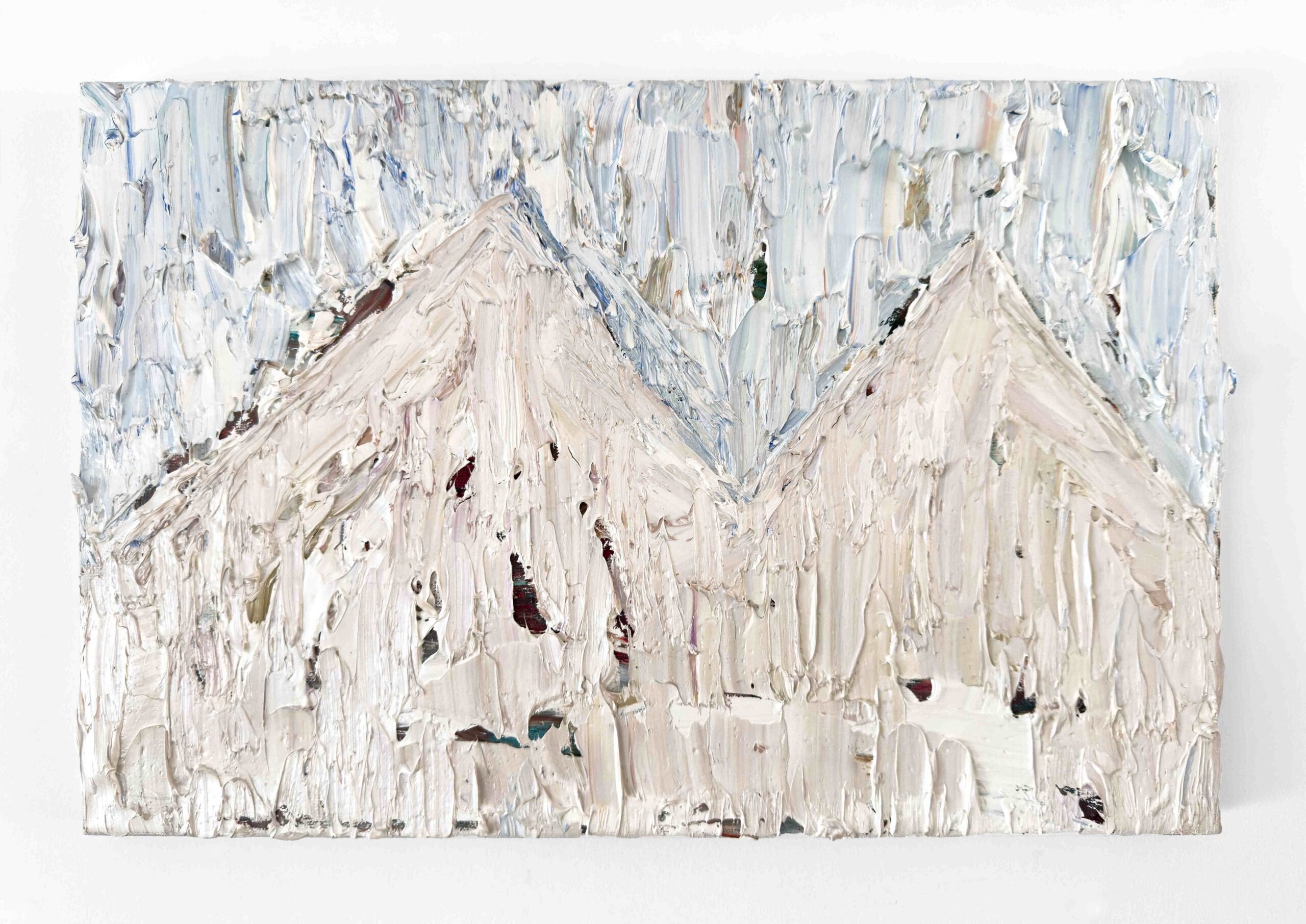
Berlin-based artist Clemens Krauss is best known for his signature sculptural impasto—laying down dense, tactile reliefs on canvas that verge on the three-dimensional. Having long probed the fraught entanglements between the individual and the collective, the self and the other, Krauss pivots for the first time from the human figure to the silent realm of objects in Sediments, his latest body of work on view at Galerie Crone. Presented as part of Berlin Gallery Weekend and running through 31 October 2026, the exhibition brackets an anthropocentric gaze to trace the somatic memory of architecture, the urban past absorbed into concrete, and the lingering residue of inanimate things.
In Krauss’s vernacular, paint is neither mere chromatic veneer nor an instrument of depiction; it is time congealed across the canvas. Building up thick strata of oil paint, the artist yields heavily encrusted surfaces that evoke geological accretion and natural sedimentation. These stacked material layers speak directly to Krauss’s psychoanalytic sensibility: meaning refuses to declare itself at first glance on the immediate surface, taking shape only as what is buried beneath gradually seeps upward. As light and shadow fracture across the fissures of the canvas, painting mutates into objecthood, while sudden flashes of dominant underpainting break through the outer crust—much like a long-submerged memory unexpectedly piercing through consciousness.
Anchoring his inquiry in Freud’s assertion that “the ego is first and foremost a bodily ego,” the artist approaches stone, mortar, and concrete as somatic repositories governed by temporalities of their own. Distilled from the urban fabric, these compositions thrive on a taut dialogue between construction and erosion, geometric order and unrestrained gesture. With Sediments, Krauss dissolves the boundaries separating the organic from the inorganic, psychic processes from the brute object, inviting the viewer to look deep into the material strata itself.