

A Manifesto Capturing the Zeitgeist: Final Hours Today for “Museum in Motion” at Hamburger Bahnhof


Hamburger Bahnhof, the contemporary art heart of Berlin, bids farewell today at 18:00 to one of the most ambitious collection presentations in the museum’s history, running for nearly two years. Conceived on the occasion of the reopening of the museum’s legendary industrial exhibition space Rieckhallen, “Museum in Motion: A Collection for the 21st Century” closes its doors for the final time today following a radical process shaping the museum’s permanent memory.
What Does a 21st-Century Museum Seek?
Hamburger Bahnhof hosts one of Europe’s richest contemporary art holdings. However, the concern of the “Museum in Motion” exhibition was not merely to present a rich collection inventory, but to directly pursue this burning question: What exact role should a 21st-century museum assume? Which voices, which forms, and which institutional decisions ensure a museum stays “current”?
Rather than providing sterile theoretical answers to this question, the exhibition invited the viewer to become part of the answer itself. Rieckhallen’s massive-scale installation halls have functioned like an urban thought laboratory for the past two years, featuring works pushing the boundaries of sound, space, performance, and video art.
From a Temporary Exhibition to Permanent Museum Memory
“Museum in Motion” did not remain merely a temporary exhibition; it also transformed into a daring process that thoroughly reshaped the museum’s acquisition policies. Supported by the Verein der Freunde der Nationalgalerie and Hamburger Bahnhof International Companions, many iconic works featured in the exhibition were acquired for the museum’s permanent collection:
Cevdet Erek — Bergama Stereo – Berlin Fragment (2019–2024): A monumental work bringing together sound, rhythm, architecture, and historical heritage.
Elmgreen & Dragset — Protruding Gallery, Powerless Structures, Fig. 223 (2024): A conceptual installation humorously questioning institutional architecture and power relations.
Anne Imhof — Room IV (2021): A performance-oriented installation centering on the tension between body, discipline, and space.
Jeremy Shaw — Phase Shifting Index (2020): A jarring multi-channel video installation examining humanity’s collective states of trance and ritual.
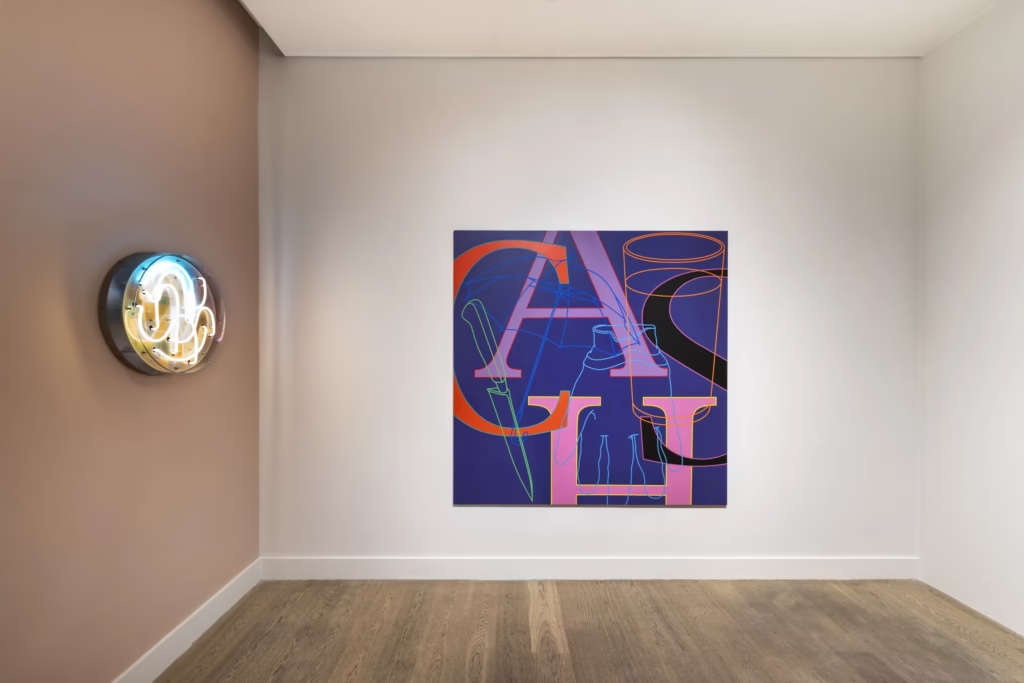
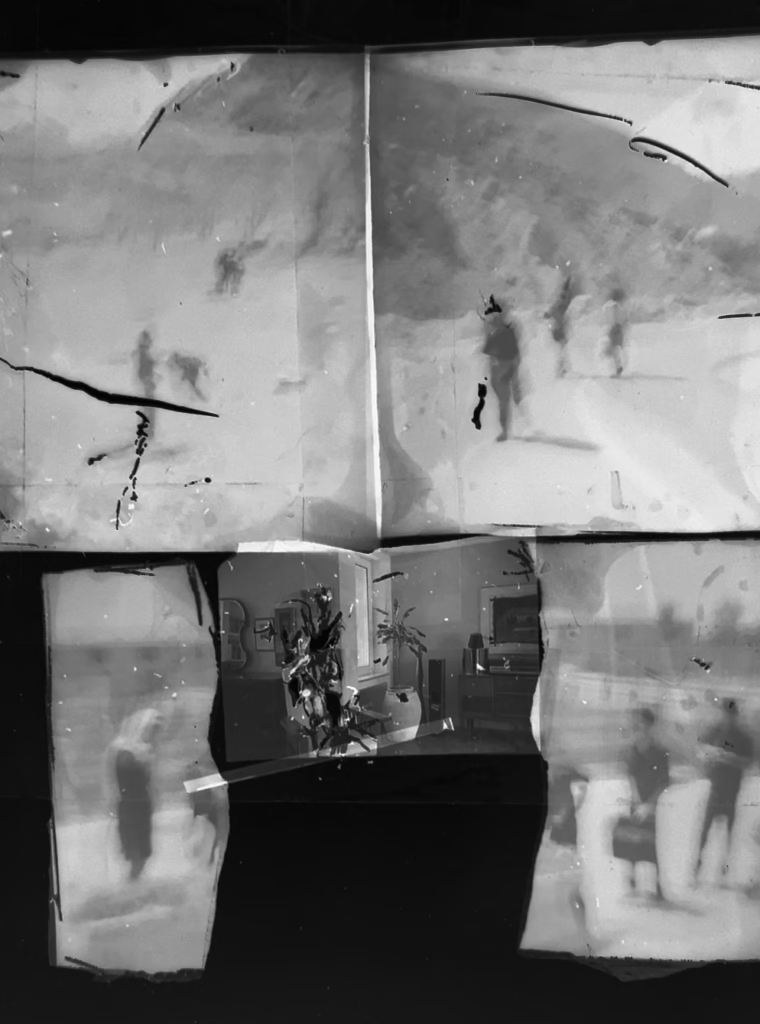
Along with other names featured in the selection—Manaf Halbouni (war memory and the city), Maurizio Nannucci (neon and language), and Ricarda Roggan (photographic spaces)—the exhibition curated by museum director Sam Bardaouil and assistant director Gabriele Knapstein succeeded in archiving the tomorrow of contemporary art today.
Turning the Page at the Museum as Rieckhallen Closes
This grand farewell at Rieckhallen does not mean the museum is sinking into complete silence. On view in the main halls of the museum since June 12, the exhibition “A Thousand Times Berlin. The Collection Hamburger Bahnhof – Nationalgalerie der Gegenwart” continues to welcome visitors with works by masters such as Tracey Emin and Carrie Mae Weems.
Frequently Asked Questions About “Museum in Motion”
Until what time can the exhibition be visited today?
The exhibition closes its doors completely at 18:00 on Sunday, July 26, 2026. The museum is open on Sundays between 11:00–18:00.
What are the ticket prices and admission conditions?
Admission tickets are €16 full, €8 reduced. Staatliche Museen zu Berlin annual museum passes are valid.
What can be seen at the museum after the exhibition closes?
The collection exhibition “A Thousand Times Berlin”, which opened on June 12, as well as the museum’s ongoing programs “Forum Hamburger Bahnhof” and “Endless Exhibition”, can be visited.
NO-26 Editor’s Art Route Note
If you are in Berlin right now and have a few hours until 18:00, turn towards Invalidenstraße without hesitation. This is your last chance to simultaneously experience Cevdet Erek’s sound sculpture settling scores with ancient Pergamon Altar architecture, Jeremy Shaw’s immersive trance videos, and Anne Imhof’s uncanny atmosphere. Doors close at 18:00; hurry up to witness these pieces of a two-year manifesto that may physically never come side-by-side again!