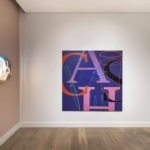


A Future Woven Knot by Knot: “Interweave” Exhibition Bringing Tradition and Technology Together at Gazelli Art House

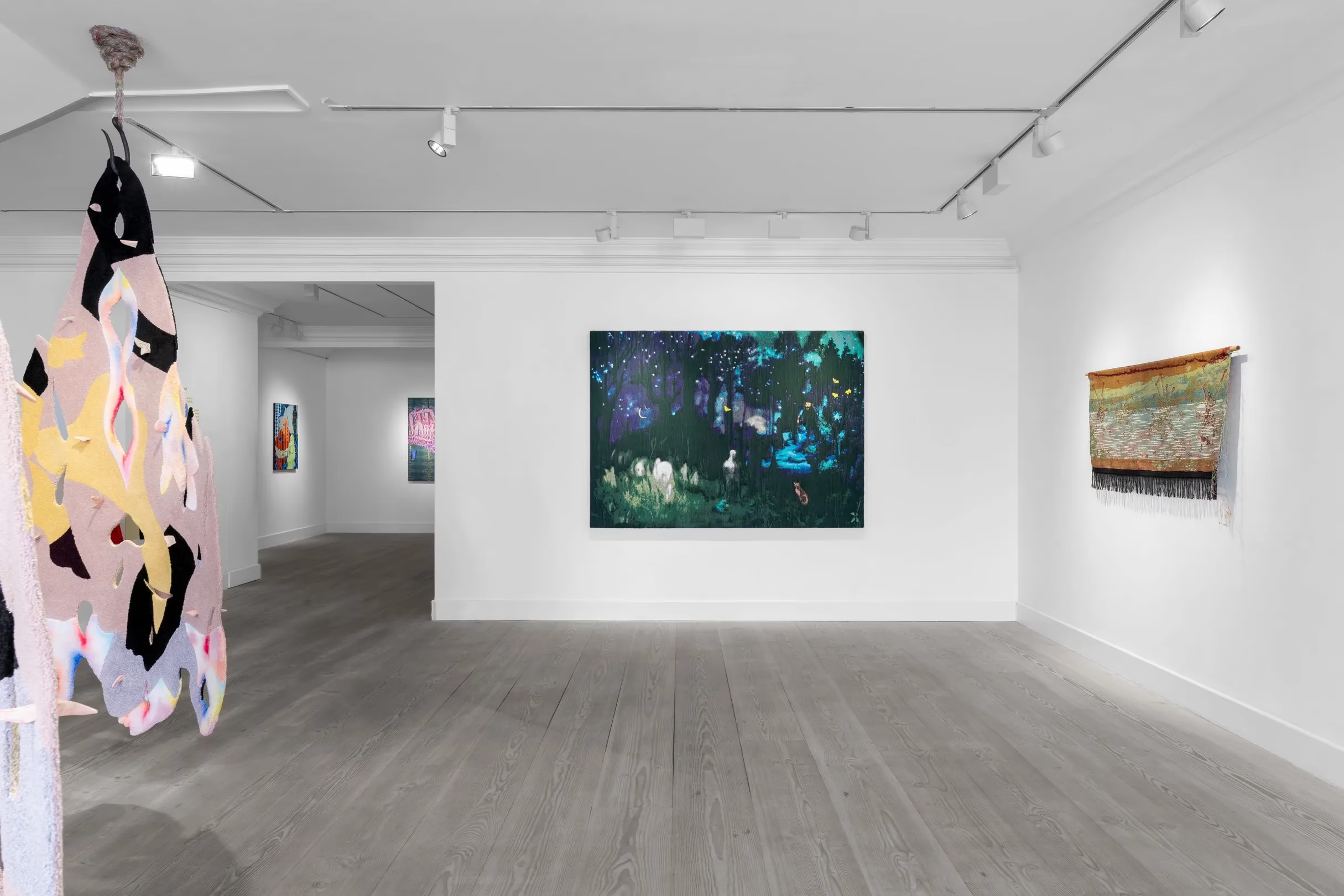
Is textile merely a material formed by bringing fabric threads together, or is it a living way of thinking where civilizations, memory, and technology intersect? London-based Gazelli Art House pursues precisely this question with its group exhibition “Interweave,” carrying textile traditions into today’s contemporary and digital avenues.
Covering a broad spectrum ranging from batik to tapestry weaving, Jacquard techniques to carpet embroidery, and digital image production to artificial intelligence, the exhibition treats weaving as a mindset built on connection, accumulation, and transformation beyond being just a single material. Taking its name from the most fundamental act of weaving—different threads intersecting to form a whole greater than the sum of its parts—Interweave expands this idea with cultural histories, personal narratives, mythologies, and ecological networks.
From Ancient Craft to Algorithms: The Layered World of the Artists
The works included in the exhibition place handmade processes and machine-assisted production, traditional craft techniques and computational systems, and ancient knowledge alongside emerging technologies at the same table. Five international artists and art collectives highlighted in the release redefine textiles as a living and constantly evolving language:
Bea Bonafini: Feeding on mythology, spirituality, and ecological thought, the artist brings together different materials such as carpet carving, corkboard painting, tapestry weaving, and ceramics to create highly synthetic archetypes shifting forms between human, animal, and dreamlike worlds.
Adam de Boer: Blending traditional batik techniques of the Java region with Western painting traditions, de Boer investigates questions of personal belonging and cultural heritage. In his works, he passes the visual urban landscapes of Los Angeles and Indonesia through a layered historical lens.
LoVid: Experimenting on analog and digital materiality for over two decades, the NY-based interdisciplinary artist duo transforms electronic signals and networked visual noise into layered surfaces. In doing so, they blur the boundaries between the virtual and the physical, the handmade and the computational.
Joan Truckenbrod: A pioneer of digital art since the early 1970s and considered one of the first artists to merge computer programming with digital textiles, Truckenbrod renders visible hidden systems in nature, such as fungal networks and sound patterns, using Jacquard weaving, hand-dyed fibers, and metallic threads.
aurèce vettier (Paul Mouginot): Works produced under this moniker created with an artificial intelligence algorithm in 2019 feed on custom AI models trained on personal archives. Transforming algorithmically generated dreams and memories into tactile textile forms, it expands the boundaries between artificial intelligence and traditional craft.
A Living Language Beyond Disciplines
Interweave challenges artificial distinctions between art and craft, analog and digital, and tradition and innovation. Positioning textiles as a flexible narrative tool carrying stories across generations while adapting to new technologies and perspectives, the exhibition promises the audience a deep exploration between layers.
17 July–19 September 2026