

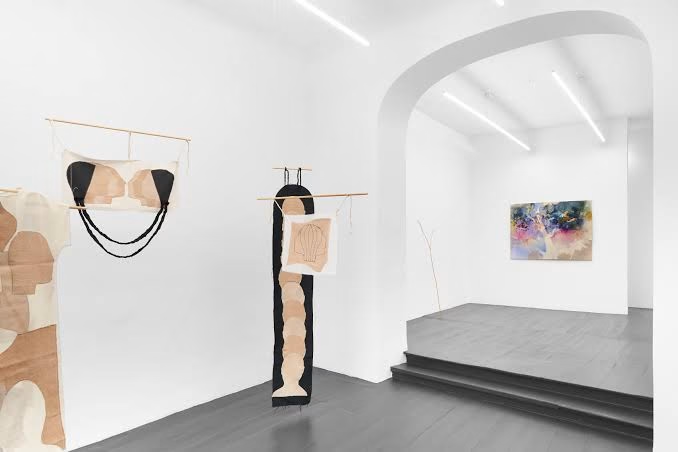
The long-standing Western illusion of matter as something fixed, quantifiable, and sharply delineated undergoes a metamorphosis at Berlin’s Galerie Tanja Wagner. While the drive to dissect the world into manageable fragments laid the groundwork for scientific breakthroughs, it simultaneously emerged as the invisible architect of ecological devastation, casting humanity in opposition to nature. Running from 11 September to 31 October 2026, The Seed Is the Tree Is the House enters a radical objection to these rigid premises.
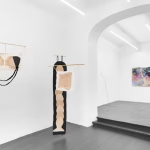
Bringing together works by Šejla Kamerić, Verena Melgarejo Weinandt, Grit Richter, Cielo Saucedo, Anna Steinert, and Angelika J. Trojnarski, the exhibition blurs the artificial divides constructed between nature and culture. The cyclical trajectory invoked by the title—the transformation of seed to tree, and tree to house—becomes a political invitation, reminding us that objects are not static entities, but participants in an uninterrupted flow and a web of unseen connections.
Porous Boundaries Between the Animate and Inanimate
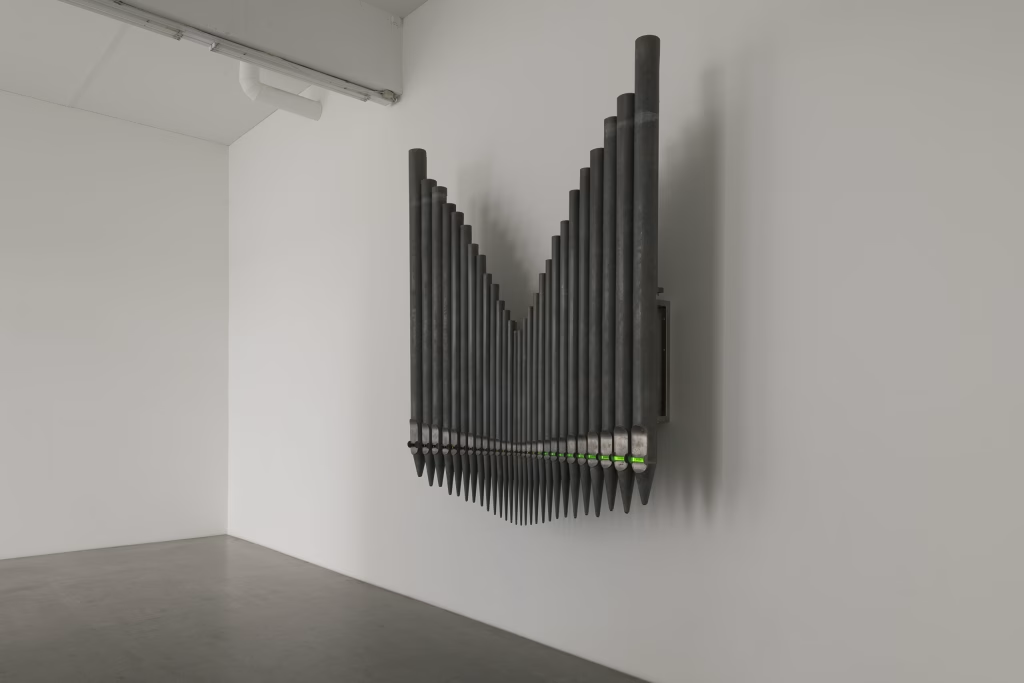
Drawing on ecology, cybernetics, posthumanism, and non-Western philosophy, the six female artists investigate the reciprocal ways in which organic, mechanical, and social systems nourish one another. Within the exhibition space, the world appears not as a passive landscape to be observed, but as a living organism in continuous contact, reaction, and mutual transformation.
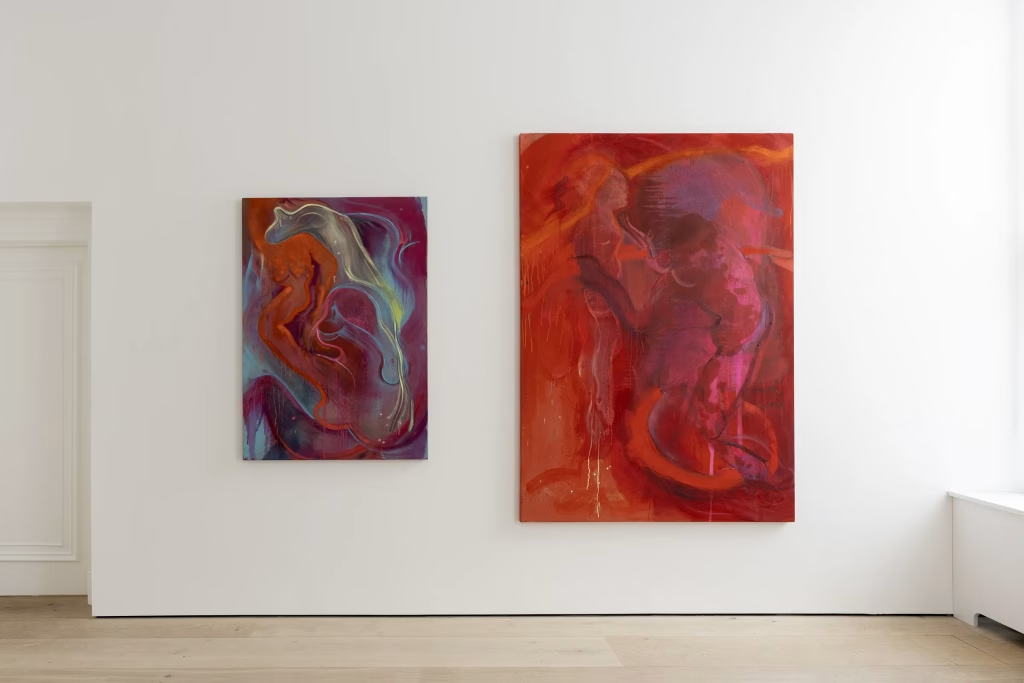
As exemplified in Angelika J. Trojnarski’s Spirit of the Forest (2026)—shaped on linen through interventions of spray paint, oil, and bleach—the material’s internal processes of chemical decay and layering generate an ecosystem of their own across the canvas. Across the gallery, the artists treat the surface not as a finalized endpoint, but as a temporary station where inter-material dialogue remains dynamically underway.