

On the Threshold of a Biological and Technological Future: Anne Hardy and Her “Feelings” Exhibition at Talbot Rice Gallery


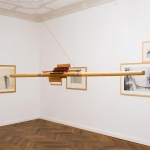
Attached to the University of Edinburgh and recognized as one of Scotland’s most established art venues, the Talbot Rice Gallery has been hosting the spellbinding world of British-Irish artist Anne Hardy since June 27. Open to visitors until September 27, 2026, this new installation titled “Feelings” treats the gallery space as a colossal object in its own right, spreading the physical and spiritual impact of the sculptures across the fabric of the entire building. Creating a living, responsive atmosphere through the synthesis of light, sound, data, and spatial composition, Hardy greets the viewer on that mysterious threshold where our biological evolution intersects with the inevitable future of technology.
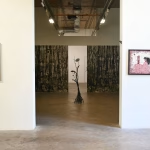
Transforming the atmosphere of the historic Georgian Gallery—formerly a natural history museum—with her imagination, Anne Hardy conceives a vibrant community of “beings” at the center of the space, composed of cast elements, gathered waste, steel armatures, and soil drawings. Bronze and ceramic elements merge with worn clothing, rubber hoses, bronzed living tree branches, and spine-like scales cast from studio debris, symbolizing that delicate balance between human vulnerability and resilience.
Right in the center of the space, a solitary figure catches the eye, kneeling as if frozen mid-ritual. Born from the combination of complex sculptural processes and scavenged waste materials from nature, this figure deepens the sense of transformation alongside the soil drawings surrounding it. Meanwhile, rising on the threshold of the room, two massive sculptures named Being (Warrior) and Being (Guardian) stand as ambiguous, totemic entities—serving both as guardians and warnings to greet the viewer—like the first and perhaps last relics of the exhibition.
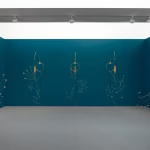
This post-humanist universe created by Anne Hardy offers far more than just a visual experience; featuring light sculptures flickering in sync with real-time meteorological data from Marfa, Texas, and a custom sound design that weaves together the whisper of wind through dry grass, rain falling on concrete, and electronic frequencies, it transforms the gallery space into a fully synthetic and natural ecosystem. Pointing toward a future where our biological existence is intertwined with artificial intelligence and technology, you can explore this striking exhibition in Edinburgh until autumn.