

From Cinema Screen to Eyelid: Emerald Vysions Translates Film Stills onto the Skin

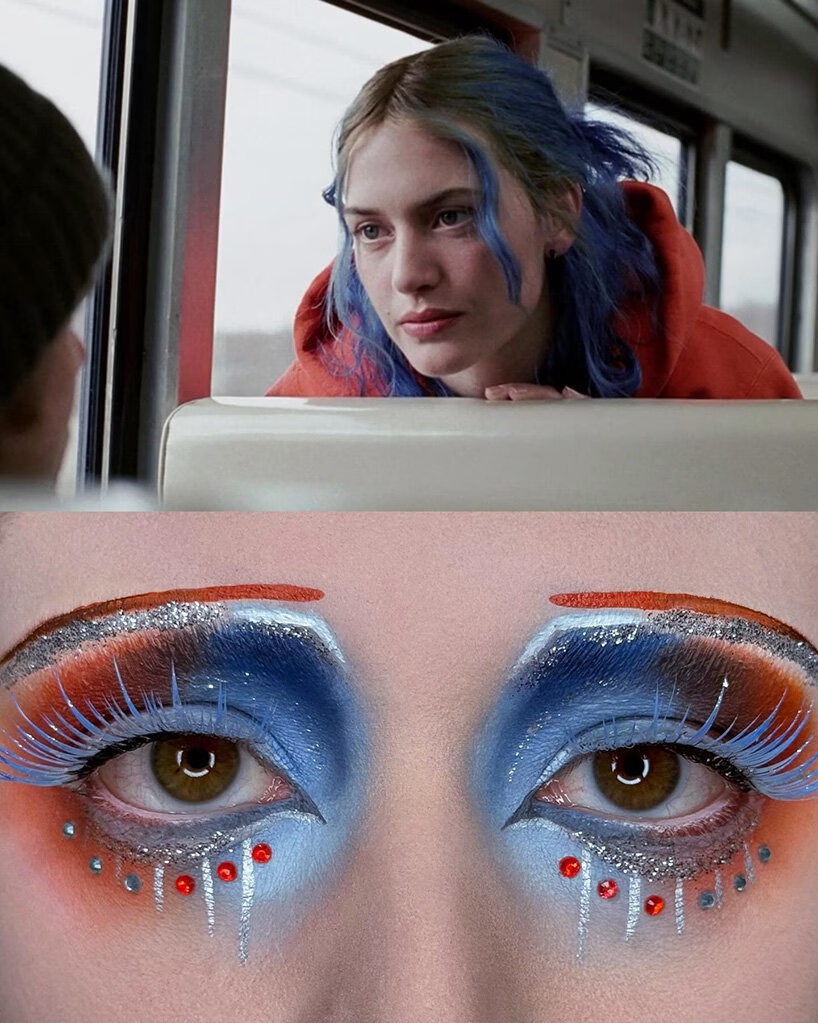
The indelible film stills encountered on monumental screens in darkened auditoriums are, for Toronto-based makeup artist Emerald Vysions, far more than passive images to be observed; they are living narratives reshaped across the contours of the human face. Transforming her own visage into an intimate stage, the artist reinterprets visual memory culled from distinct eras of film history through hyper-saturated pigments, razor-sharp graphic lines, metallic textures, and hand-sculpted lashes.
Cinema, by its very nature, addresses the viewer across a measured distance, offering a collective viewing experience circumscribed by a rectangular frame. Vysions dismantles that cinematic spectacle, translating its grandeur directly onto the body. Elaborate set design is distilled into pure color and texture across an eyelid; period-defining wardrobe re-emerges in the form of crystal embellishments or exaggerated plumage. An expansive world once held within the camera’s frame collapses into a concentrated visual lexicon, legible in a single gaze.
From the Silver Screen to the Memory of Texture
While cinema provides the initial impulse, the resulting works are unburdened by any demand for direct mimesis. Instead, Vysions isolates the core motifs that etch a scene into memory: a signature color harmony, the subtle fold of a garment, the posture of a gesture, or the pervasive tenor of a scene. Moving from the piercing hues of Pierrot le Fou (1965) to the lavish reds and feather trims of Gentlemen Prefer Blondes (1953), an isolated cinematic detail is extracted and granted an entirely new identity upon the skin.
Placed side by side, the disparity in scale between the original film still and the composition condensed around the eye is arresting. Entire mise-en-scènes—architecture, cast, costuming, and lighting design—are recalibrated within a few square centimetres of flesh. Rather than executing a literal transfer, Vysions relishes working within the interstitial gaps: at times heightening a dominant palette, at others pulling an easily overlooked detail into the spotlight. Even if the viewer cannot immediately identify the specific film, the composition instantly transmits the scene’s underlying affect. By grafting cinematic stories onto the body, the artist orchestrates an encounter with visual memory that feels at once unfamiliar and deeply recognized.