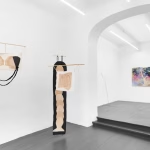


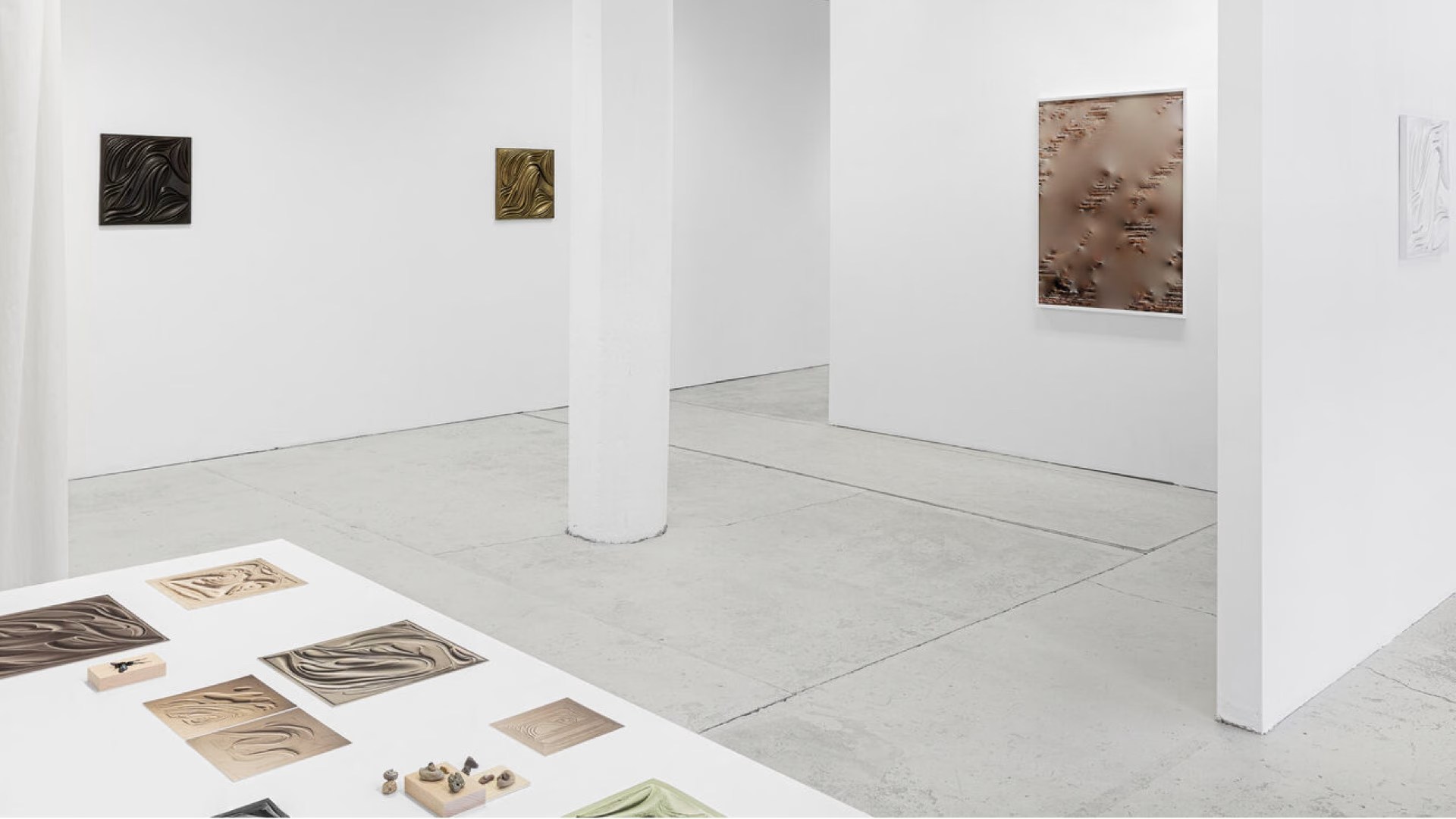
Aaron Scheer’s third solo exhibition Aeonesis opens the “black box” by hand: AI-generated sketches are manually modeled and transformed into bronze reliefs and acrystal surfaces. The show embodies a co-evolutionary idea where digital and organic leak into each other: images born in the algorithm’s “latent” space gain matter, texture, and weight in the studio. The result is neither techno-fetish nor nature nostalgia—a tidy materiality that blurs the boundary between making and being.
Why it matters
Creativity and authorship: Prompt → AI image → hand production chain shifts the question “who made it?” from the singular subject to circulation.
Technology as ecology: Bronze, resin, acrystal, and code in the same sentence; the exhibition reads technology not as nature’s opposite but as its extension.
Time-matter equation: The reliefs do not represent a process; they act as condensed process itself—geological strata superimposed on computational traces.
Key works / axes
Aeonesis (No.1 – acrystal / No.3 – bronze): The surface oscillates between density and permeability; solidification and transformation are read together.
DaNA Series (DaNA V, DaNA XXX): “Genetic” naming meets fractal growth and a sense of computational fossilization; the digital is inscribed into matter as accumulation.
Table work (prompt archive + biological specimen): Text prompts, AI sketches, and a spider-wasp specimen side by side; a clear analogy drawn between algorithmic evolution and biological adaptation.
No:26’s short reading notes
The exhibition does not polish AI aesthetics on the surface; instead, it inverts hierarchy and centers “touch.”
The question “Is artificial intelligence artificial?” is answered here as material traces of collective human intelligence.
Neither utopian nor dystopian: Scheer’s proposal is to see “techno-nature” as continuity; the forms can be read simultaneously as abstract/figurative, organic/digital.
Visit information
- Dates: On view until 19 December 2025
- Venue: OFFICE IMPART (Berlin)
- Note: Exhibition text written by Rachel Falconer (Goldsmiths); the text frames the material-ideological shifts in the show effectively.