

From the Cinematic Frame to the Tactile Canvas: Strawalde’s Parade at Galerie Michael Haas

Throughout East Germany’s grey, heavily censored decades, a single artist operated under two distinct identities. Behind the documentary camera, he went by his passport name, Jürgen Böttcher; when denounced as a “formalist” and cast out by the official Artists’ Association, he retreated into the quiet seclusion of his studio to paint as “Strawalde.” Forbidden from exhibition for decades and cultivated in silence behind closed doors, this painterly language only achieved its rightful freedom following German reunification.
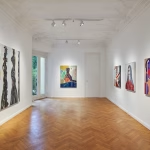
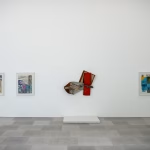
Presented at Galerie Michael Haas as part of Berlin Art Week, the exhibition Parade centres on this singular, idiosyncratic figure of twentieth-century German art.
The Physical Weight of Paint and an Intuitive Dance
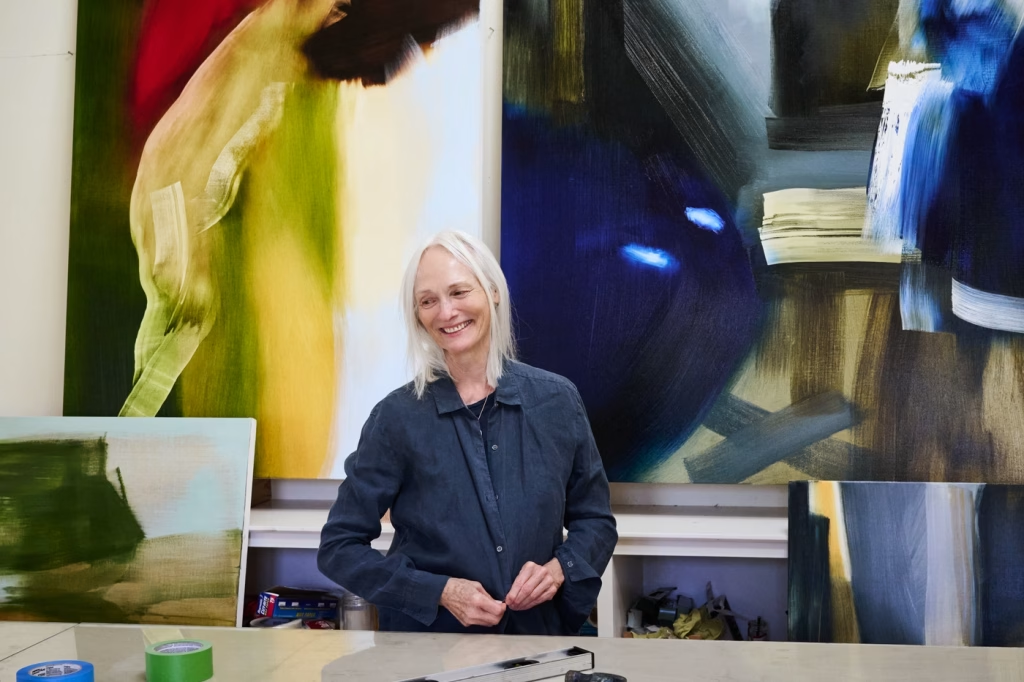
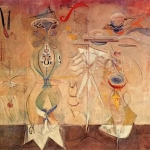
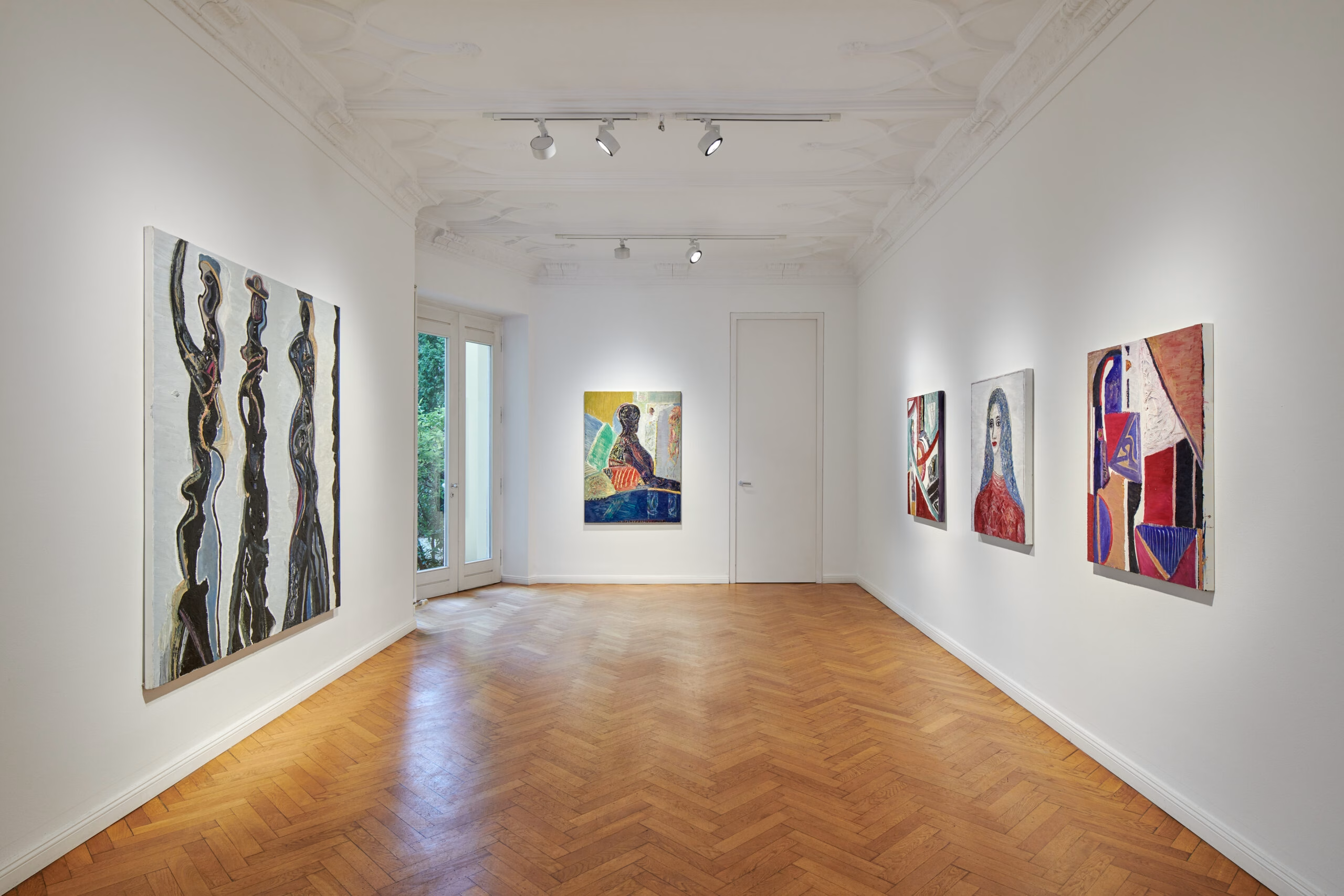
To stand before Strawalde’s canvases is to encounter a stratified repository of memory that has taken decades to dry. Poured and worked across the support, pastose masses of heavy impasto assume a sculptural depth under the rhythmic cadence of the brush and hand. These marks are far from accidental; shaped by an instinctive dance honed over decades, they coalesce into conversational, figurative possibilities. The deliberate framing of a seasoned filmmaker converges on the canvas with unadulterated painterly intuition.
This visceral, physically demanding creative process is distilled most clearly in the artist’s own words:
“Whenever I manage to make a successful painting, I know it has distilled the essence of a thousand things I have seen, smelled, tasted—and even dreamt.”
Born in 1931 and now represented in premier museums and collections worldwide, the veteran artist attended the vernissage in person on 10 September, sharing the arc of this long artistic trajectory with visitors. An accompanying publication provides a timely historical commentary on an oeuvre spanning more than six decades, navigating the fertile terrain between moving image and paint.