

A Surreal Return to a Pre-Plastic World: From Celtic Rituals to Lewis Prosser’s ‘Absurd Basket’ Sculptures

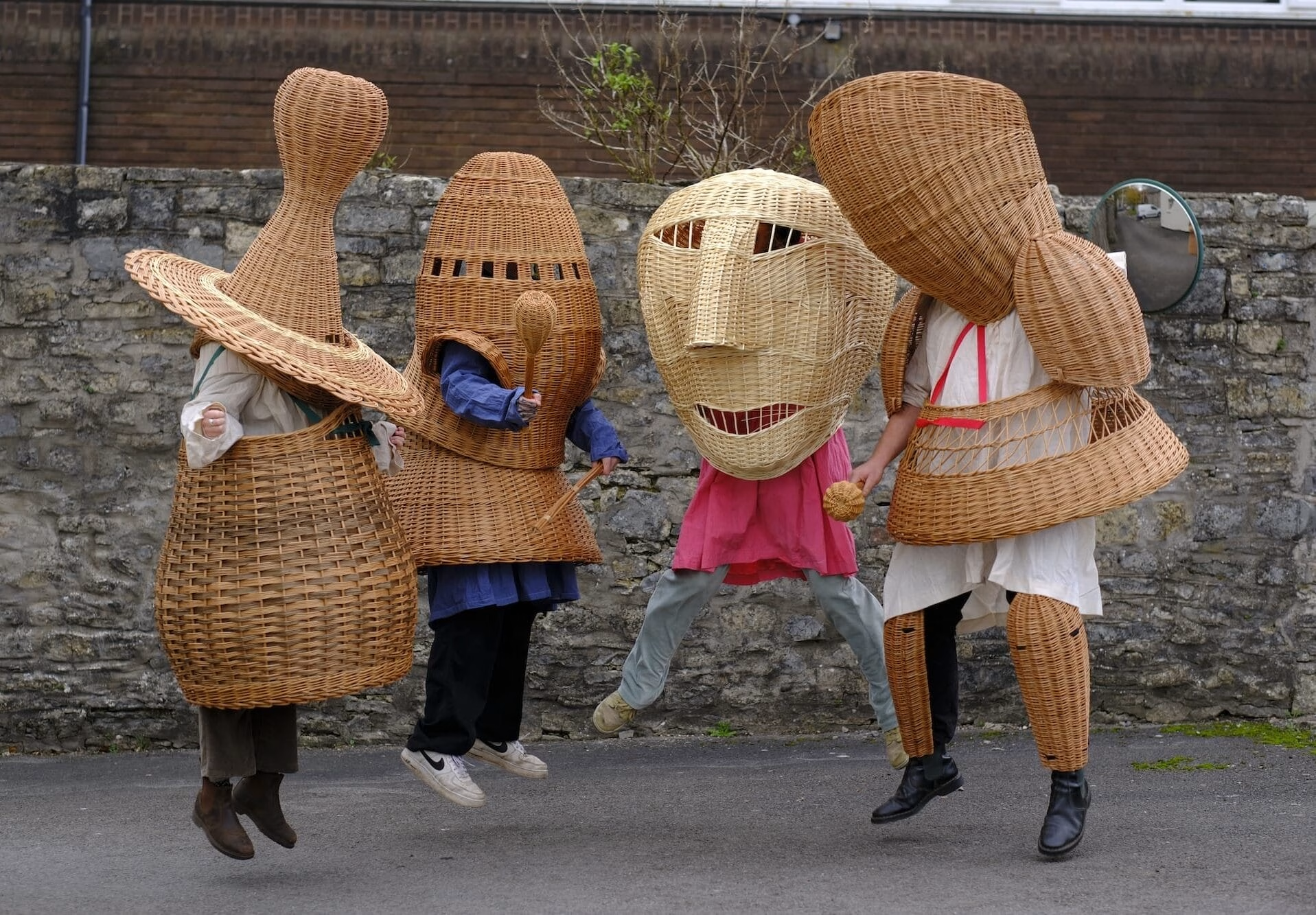
Cast back to an era long before carrier bags, canvas totes, or synthetic packaging held sway—into the dim, tactile world of the Middle Ages and the Renaissance. In those centuries, woven vessels were ubiquitous, populating every corner of daily life from market stalls and sewing kits to colossal back-panniers. Today, Cardiff-based artist and self-described “absurd basketmaker” Lewis Prosser seizes upon this ancient human practice, recontextualising it squarely within contemporary art, vernacular mythology, and idiosyncratic local rites.
Prosser’s multidisciplinary practice is woven organically around folklore, regional identity, and cultural heritage. Morphing into wearable attire and grounded sculptural forms, his works in wicker and willow draw the viewer into traditions of disguise, oral storytelling, and near-forgotten communal ceremonies. Picture a freezing winter’s day in the streets of Wales: a retinue of men adorned with ribbons and rosettes trailing behind a figure bearing an eerie horse skull. Whether evoking the Mari Lwyd—a midwinter folk custom with reputedly Celtic origins—or pre-Christian survivals such as The Hunting of the Earl of Rone festival, these uncanny yet distinctly cinematic rituals form the very bedrock of Prosser’s visual and textural lexicon.
The artist’s project Making Merrie stands as a homage to the traditional mumming plays of Britain and Ireland. Staging the perennial conflict between good and evil, or the bleakness of winter yielding to the renewal of spring, the work draws directly on vernacular weaving techniques native to Wales and South West England. For Prosser, basketry is far from a nostalgic craft hobby; it is an existential reflex. In his own words, it is “a fundamental skill on the brink of being forgotten—one that, if lost, carries away part of what makes us human, part of human nature itself.” Woven from willow withes, these surreal, wearable forms are now preserved in the collection of the Folk Preservation Society in Devon, periodically resurfacing for ritual performances.
Firmly tethered to the past, the artist’s current itinerary is equally ambitious. Pieter Bruegel the Elder’s legendary 1559 masterwork, The Fight Between Carnival and Lent, serves as Prosser’s latest staging ground. To reconstruct 24 distinct woven objects hidden throughout the painting’s dense vignettes—including birdcages, willow shutters, and traditional bee skeps—he has joined forces with ten master basketmakers across Europe. The fruits of this collective undertaking, titled The Baskets Between Carnival and Lent, are slated to go on view in spring 2027 at Wales’s Oriel Myrddin Gallery.
Concurrently, the 2026 Burgos Biennale in Spain, which opened late last September and is currently underway, provides another testing ground for Prosser’s expanding vocabulary. Pushing the formal limits of his medium even further, the artist has conceived a thoroughly novel, wonderfully eccentric performance titled cuerno pelota (horn ball). Designed as an invented wicker-sport, the project splices traditional harvest revelry, competitive athletics, and monumental wearable sculptures into an idiosyncratic ritual contest.
By reconciling nature’s humblest raw materials with the physical movements of the human body, Lewis Prosser reweaves the forgotten crafts of antiquity into the absurd art of the future—leaving the viewer to revel in the spectacle of his surrealist fairground.