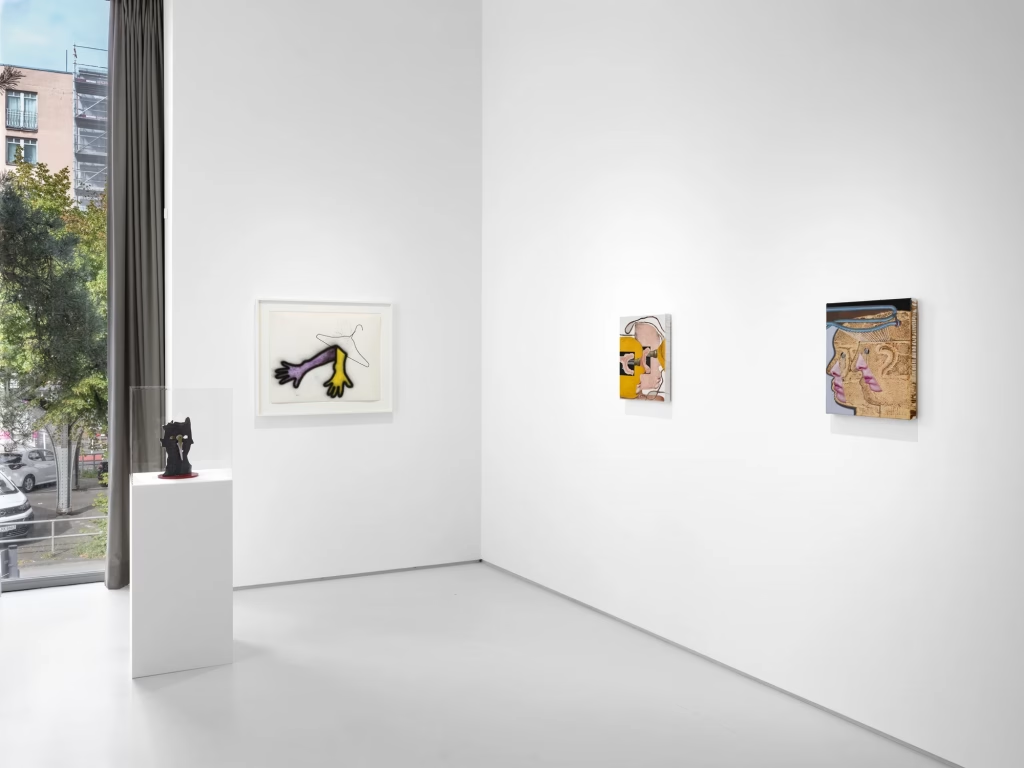


At the point where obscurity and the right to opacity transform into a strategic power, Salim Green’s interdisciplinary practice begins to bloom. Choosing to define objects or concepts not from their center, but precisely from their peripheries, the young American artist welcomes viewers at the Société gallery in Berlin with his first solo exhibition in Europe, “Sugarshack.”
The name of the exhibition stems from an expression used by the artist’s father to describe ruined or abandoned buildings in Waterloo, Iowa, where he was born and raised. Black Americans who arrived in the industrial hub of Waterloo from the segregationist South during the Great Migration were initially forced to live in train boxcars, establishing their own neighborhoods on the city’s east side—the only area where they were permitted. Over time, these increasingly deserted structures transformed into a barometer of a community’s social, economic, and physical vitality.
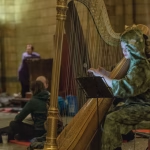
Green transports this historical memory into the space through the social fellowship hall of Payne Memorial AME, a historic Black church in east Waterloo. Recording the traces left behind after events and that quiet accumulation during moments of disuse, this space turns into a living backdrop for new drawings, sculptures, and video works in the exhibition. The artist’s digital avatar, “Shifty,” who frequently appears in his works, also makes an appearance in this exhibition; disguised as a shape-shifting Iowa farmer, he narrates the role of railroads in the city’s destiny and sings a Luther Vandross song like a strange love letter to the east side.
Standing on that uncanny line between being visible and remaining hidden, Sugarshack presents a city’s forgotten architectural memory and migration history to the gaze of art lovers in Berlin.