

Twelve Minutes of Wonder on the Thames: Tickets Announced for London’s 2026 New Year’s Eve Fireworks

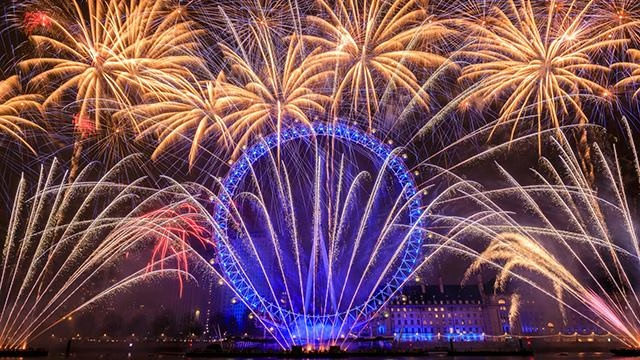
Few rituals rival the kinetic thrill of greeting the New Year from the banks of the Thames, braving the winter chill in collective anticipation of Big Ben’s midnight chime. It is a spectacle defined by sensory contrast: the inaugural flare cutting through the river’s low-slung mist, shafts of light radiating from the London Eye, and the suspended breath of an entire metropolis caught in unison. A ticketed, consistently sold-out affair since 2014, London’s celebrated New Year’s Eve Fireworks display is once again set to transform the nocturnal skyline into a monumental open-air amphitheatre to see out 2026. For those wishing to witness the twelve-minute presentation—an intricate choreography of pyrotechnics, bespoke soundscapes, and the drone formations that have become a hallmark of recent editions—the ticketing calendar has finally been confirmed.
Prospective revellers should mark their diaries: the initial allocation of tickets goes on sale at midday (12:00 BST) on Friday, 23 October 2026. As Mayor of London Sadiq Khan noted, few cities worldwide can stage an arrival into the new year quite like London. Joining the 100,000-strong assembly along the embankment—and sharing that collective pulse with millions watching the broadcast across the globe—remains an unmatched experience. City Hall, however, has issued a firm advisory: tickets will be available exclusively via Ticketmaster, the event’s sole authorized ticketing partner. With unauthorized resellers and counterfeit passes causing an increasing number of disappointed ticket holders to be turned away at the gates in recent years, purchasing solely through official channels is imperative.
Pricing has been held at last year’s rates. London residents benefit from concessionary tariffs ranging between £20 and £35, while general admission for out-of-town and international visitors sits between £40 and £55.
The strategic question, then, is where to position oneself within this panoramic setting. Those with a slightly more flexible budget who wish to stand at the epicenter—where the concussive boom of the pyrotechnics reverberates overhead—should look to the Blue Zone. Covering the Victoria Embankment between Westminster Bridge and the Golden Jubilee Footbridges, this section offers an unvarnished, front-row immersion (£35 for Londoners, £55 for visitors).
For those who prefer to bypass the densest crowds in favor of a broad perspective framing both riverbanks like a cinematic canvas, the Pink Zone on Waterloo Bridge is the quintessential choice. Should Pink Zone passes sell out within seconds, the White Zone on Westminster Bridge serves as an equally compelling premium alternative at the same price point (£35 / £55). Here, one stands virtually in the shadow of Big Ben’s august silhouette, directly facing the deluge of light cascading onto the river below.
If a slightly more detached, contemplative vantage is preferred—one that also proves gentler on the wallet—the Red and Green zones present persuasive options. The Red Zone, tracing the river from the Golden Jubilee Bridge to Temple Avenue (£20 for locals, £40 for visitors), affords more breathing room without diluting the visual momentum of the production. Alternatively, the Green Zone, positioned directly behind the London Eye (£20 / £40), offers an intriguing counter-angle, staging the bursts of color as a backlit halo around the great observation wheel.
For attendees requiring dedicated accessibility accommodations, the Orange Zone on the Albert Embankment—fronting St Thomas’ Hospital—provides an expansive, unimpeded sightline, priced consistently within the £20 to £40 tier.
Those who come away empty-handed during Friday’s opening rush need not abandon hope; City Hall has confirmed that a second, more limited release of tickets will follow in November. For anyone hoping to be part of the twelve minutes that ignite the capital’s night sky, keeping a close eye on the official Mayor of London website remains the best course of action.