

Growing Up in the Wreckage of a Collapsing Identity: “Don’t Let’s Go to the Dogs Tonight” (2024)

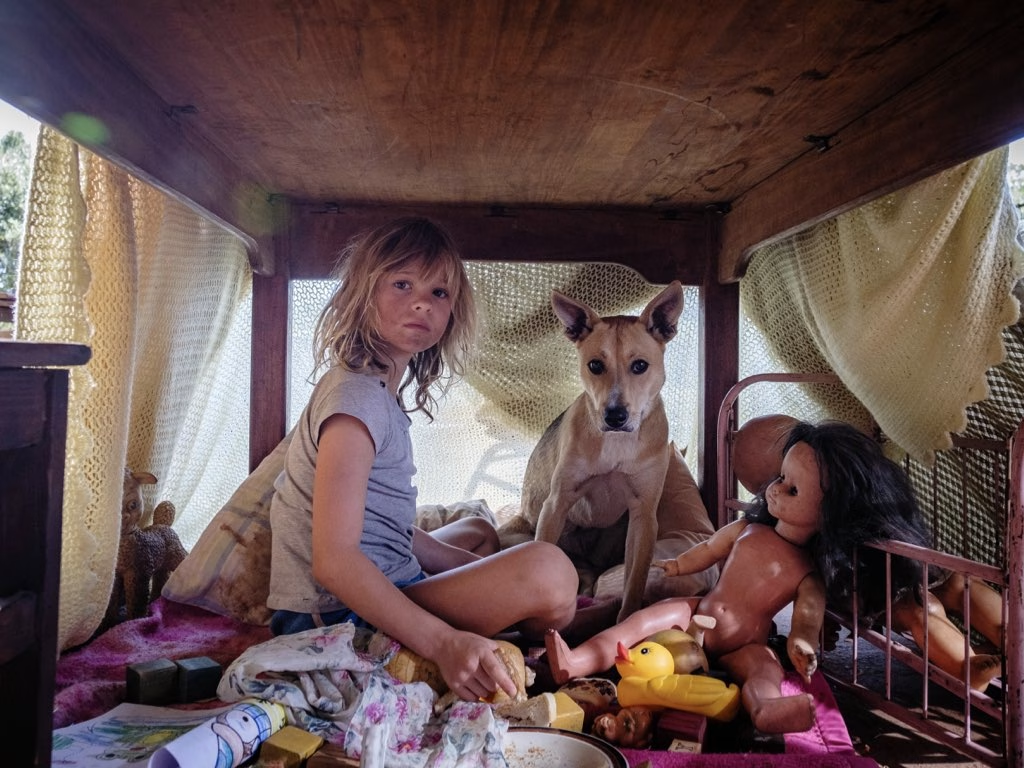
The history of cinema often depicts the rumble of obsolete ideologies and collapsing empires through the grand chaos of battlefields. Yet, the real destruction does not take place at the front; it unfolds in the living room of a house trying to breathe under the shadow of that regime, captured in the silent gaze of a child growing up amidst incomprehensible fears. Embeth Davidtz, who built her career as an actress, steps behind the camera for her debut auteur effort, Don’t Let’s Go to the Dogs Tonight, plunging into exactly this invisible battlefield: the dying colonial era of Rhodesia.
Adapted from Alexandra Fuller’s autobiographical memoir, the film confines us to a microcosm poisoned by racism, paranoia, and a loss of identity, rather than the bombs of war.
The Power of the Gaze: Political Trauma Through the Eyes of a Child
Watching a historical collapse not through the rational and usually corrupt world of adults, but through the eyes of Bobo (Lexi Venter)—a child whose moral compass has not yet been fully shaped by the outside world—is the film’s most potent cinematographic weapon. Davidtz places her camera at Bobo’s line of perception, deliberately casting the audience into a state of ignorance and the uncanny.
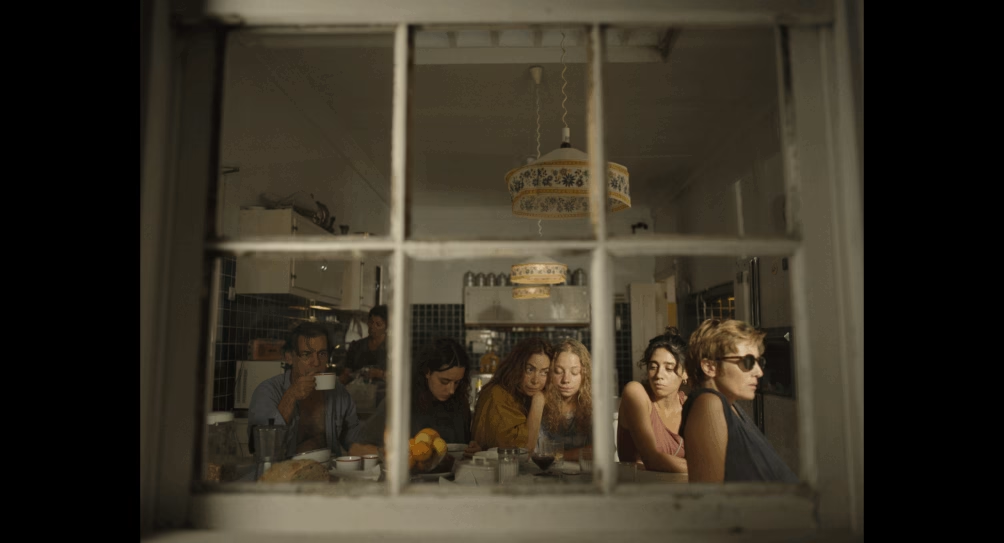
Outside, the bloody Bush War (the Rhodesian Bush War) that altered the destiny of the African continent rages on; however, the film refuses to aestheticize this macro-conflict with epic battle scenes. Instead, we feel the war in the curtains drawn across windows, in the whispers of parents, and in the suffocating anxiety hanging in the air. Lexi Venter’s natural, fragile, and vigilant performance, which goes far beyond the limits of a child actor, maps out perfectly how political instability transforms into an ontological fear within a child’s mind.
The Decaying Face of Colonialism and the Domestic Domain
The film treats the inevitable end of the colonial white identity almost like a psychological thriller through the character of the mother, Nicola Fuller (portrayed by Embeth Davidtz herself). Slowly driven toward madness by the clutches of fear, grief, and alcoholism, Nicola serves as a concrete metaphor for the dying Rhodesian ideology. The fear of losing their privileges and the land they own transforms into a disease rotting the family from within.
Standing in sharp contrast to this toxic and fractured family structure is Sarah (Zikhona Bali), the home’s Black domestic worker. Director Davidtz depicts racism not as a caricatured evil, but as a normalized and systemic sickness that has infiltrated domestic dynamics. Bobo’s choice to seek the emotional security she cannot find from her biological mother in Sarah’s tenderness hits us with a bitter truth: it shows how the sharp boundaries created by the colonial system become meaningless in the face of human nature’s fundamental need for love.
Rejecting Spectacle: The Power of Silence and Atmosphere
The anxiety to deliver didactic messages, so commonly associated with historical period pieces in today’s prestige cinema, gives way to an uncompromising psychological realism in Don’t Let’s Go to the Dogs Tonight. Instead of flamboyant dialogue or melodramatic moments of crisis, Davidtz’s direction leans on silences, the arid atmosphere created by the hot Rhodesian sun, and the micro-expressions on the characters’ faces.
This slow-burn narrative style creates a sense of entrapment in the audience, mirroring exactly what Bobo feels. The film does not claim moral superiority over anyone, nor does it offer easy answers. On the contrary, it observes with clinical coldness how a system built on violence and division poisons even the children of those who established it.
Conclusion: Memory, Destruction, and Awakening
Returning with praise from prestigious festivals like Palm Springs and Seattle, Don’t Let’s Go to the Dogs Tonight redefines history not just as a story of winners or losers, but of those who had to carry the trauma of that history on their small shoulders.
By turning autobiographical memory into an emotional autopsy, Embeth Davidtz carves out a permanent place for herself in modern independent cinema. This film is as much an elegy for the end of an era as it is a staggering portrait of childhood innocence trying to sprout in the most toxic of soils. It is an uncomfortable yet essential cinematic experience that transforms the viewer from a passive observer into someone forced to hold a little girl’s hand in the darkest rooms of history.
Film Details:
- Director: Embeth Davidtz
- Based on the Memoir by: Alexandra Fuller
- Cast: Lexi Venter, Embeth Davidtz, Zikhona Bali
- Key Themes: Colonial collapse, childhood perception of war, systemic racism, and historical trauma.