

Barcelona Art Map: 10 Stops Where Genius Meets the Mediterranean Breeze
A captivating Mediterranean breeze, labyrinthine historic streets, and visual genius bursting from every corner… Barcelona is not just a city; it is the birth room of movements that fundamentally shook art history, from Cubism to Modernism. Sifting through the recommendations of the Apartman No-26 editors, we transform the best Barcelona museums beyond those dry lists we all know into a vibrant art route walked on foot through the streets.
Let us begin with a small but life-saving secret for budget-conscious travelers: on the first Sunday of the month, many of these museums open their doors free of charge. If you want to digest what you have seen while sipping your sangria at a rooftop bar after a day filled with art, our stops in Barcelona’s enchanting oasis are precisely as follows:
The Majestic Guardians of Montjuïc Hill
- MNAC (Museu Nacional d’Art de Catalunya): Imagine an old castle looking down upon the city; this is the absolute memory center of Catalan art from the 12th to the 20th century. Practically rescued by being dismantled from churches, the 10th-century Romanesque wall paintings and the Gothic collection are the jewels of the exhibition. Naturally, the fathers of Catalan Modernism, Gaudí and Casas, stand here shoulder-to-shoulder with Velázquez. After climbing the museum steps to watch the city from above, you can enjoy an intimate dinner accompanied by natural wines at the nearby Gresca.
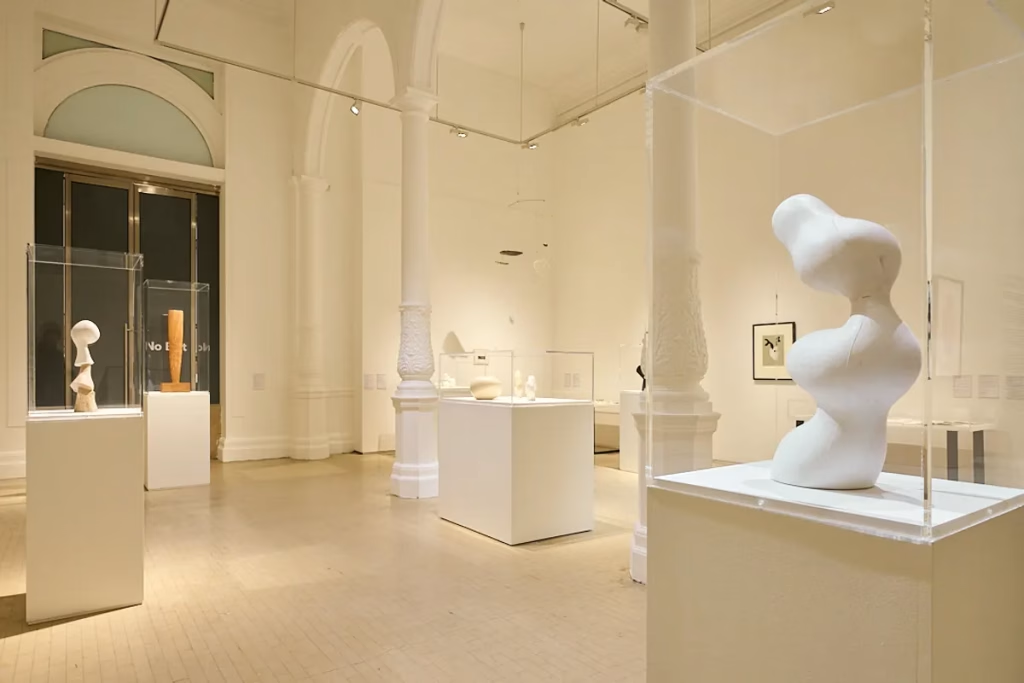
- Fundació Joan Miró: Specially designed by Josep Lluís Sert for his close friend Joan Miró, this building stands as one of the world’s best examples where art and architecture melt into each other. Miró’s famous childlike primary colors, simplified organic forms, and surrealist and cubist universe constitute the backbone of the permanent collection. Wrapped in the greenery of Parc de Montjuïc, the open-air sculpture gallery is a literal feast of emotions. While there, you should also check out the massive archive of over 70,000 photographs by Joaquim Gomis, a pioneer of modern photography.
- CaixaForum: A century-old former textile factory revived with the red-brick genius of industrial Catalan modernism. While the original structure has been preserved, the ground beneath was excavated to build a modern entrance square, library, and auditorium. Alongside its permanent contemporary art collection, it hosts the city’s most ambitious and high-quality temporary exhibitions. Do not miss watching the city from the walking paths on its terraces and stopping by its restaurant with its reasonably priced rotating menu.
The Rebellious Spirit of El Raval and La Rambla
- MACBA (Museu d’Art Contemporani de Barcelona): Richard Meier’s massive, stark white, futuristic building shines like a beacon of modernity in the middle of the narrow and uncanny streets of the Raval neighborhood. It focuses on post-World War II contemporary art history, particularly on Catalan and Spanish artists. Just as integral as the museum itself is the rhythm and raw energy of the skateboarders outside, who have claimed the square as a second home.
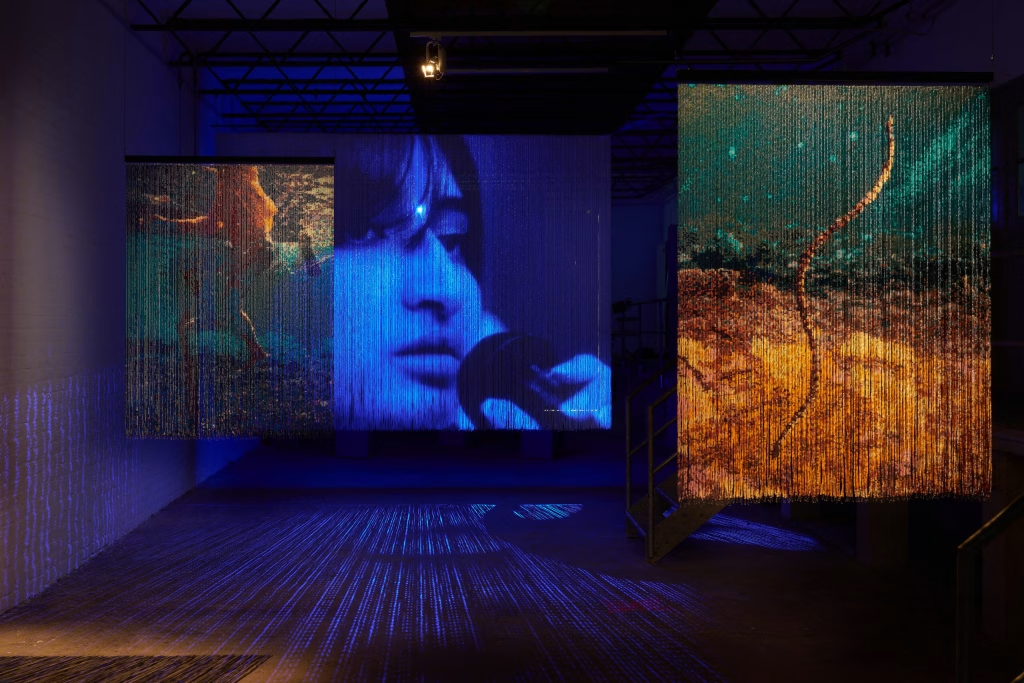
- CCCB (Centre de Cultura Contemporània de Barcelona): Built over a former hospice and a medieval monastery, this center is the heart of multimedia arts, digital culture, and social debates. In addition to a constantly changing exhibition calendar, you can catch panels where world-renowned thinkers debate current issues at very affordable prices. Every first Sunday of the month, watching the mountains and the sea for free from the 5th-floor observation viewpoint is a classic Barcelona tradition.
- Arts Santa Mònica and Virreina Centre de la Imatge: Two fantastic stops challenging one another along the La Rambla boulevard. Arts Santa Mònica is an interdisciplinary oasis bringing architecture, music, gastronomy, and literature together with Catalan digital media (which can easily be combined with the Wax Museum directly opposite). Virreina, on the other hand, is a tremendous visual arts center housed inside an old Baroque palace, questioning the boundaries of photography and the moving image. And the best part? Entering Virreina and breathing in that fascinating architecture is completely free. Upon leaving, you must try one of the 10 different types of paella at the Paella Bar Boquería just around the corner.
Picasso’s Born Traces and the Eixample/Gràcia Texture
- Museu Picasso: Housed inside five historic palaces lined side-by-side in Ciutat Vella, you bear witness to how young Pablo’s genius was constructed step-by-step. You will not find Les Demoiselles d’Avignon here; but you can trace a tremendous developmental arc extending from Picasso’s childhood portraits in art school to the breakthroughs of his famous Blue Period and his mature Cubist masterpieces. To escape the brutal lines at the door, be sure to buy your ticket online or watch for the uncrowded lull during lunchtime.
- Fundació Antoni Tàpies: Founded by Antoni Tàpies in 1984, this contemporary art center strikes you immediately from the outside with its peculiar “Cloud and Chair” sculpture made of brick, iron, and aluminum tubes. The roots of the avant-garde spirit and iconic scribbles of this genius—who carried scratch papers, mud, and fabric scraps onto his canvases in the 1950s, later incorporating furniture and running waters—are hidden precisely here.
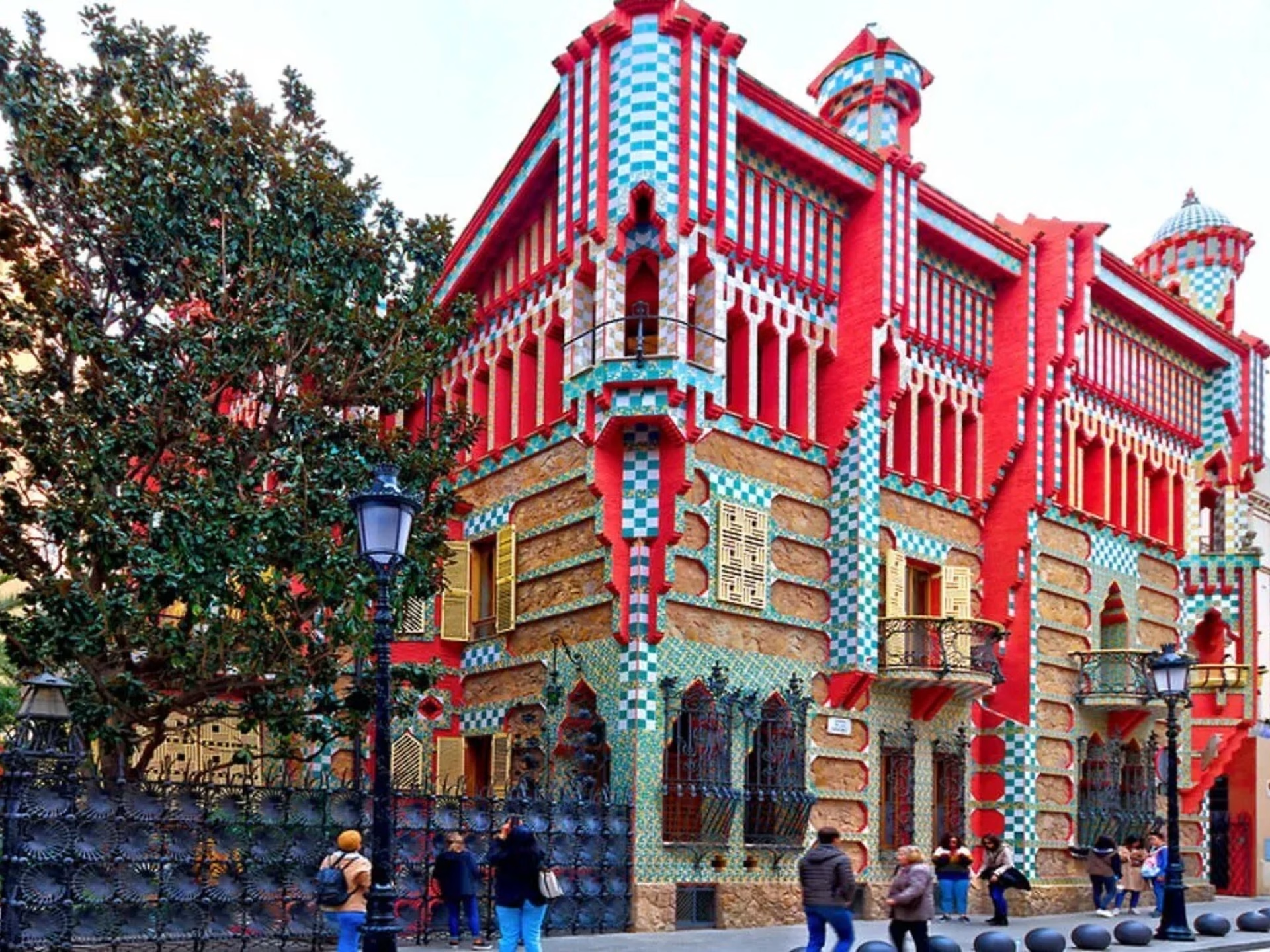
- Casa Vicens: Antoni Gaudí’s first major work, constructed between 1883 and 1885; essentially, the first laboratory of his wild genius. This place carries the very first seeds of all the symbolism and techniques Gaudí would later utilize at the Sagrada Família. The house-museum has been restored faithfully to the original, from the tiles on its walls to its furniture, and even down to the 19th-century popular plants in its garden. Following this visual feast in the Gràcia neighborhood, you can eat excellent meats at El Disbarat or taste creative tapas at La Panxa del Bisbe.
The Industrial Steel of Poblenou
- Museu Can Framis (Fundació Vila Casas): Located in the Sant Martí (Poblenou) district, this museum is an architectural masterpiece reinterpreted with cast concrete, sharp angles, and plate glass while preserving the texture of an old factory. It houses more than 300 paintings and photographs belonging to Catalan artists of the last 50 years, both well-known and waiting to be discovered. The way the natural light filtering through the windows illuminates the works is so organic that it completely erases the sterile museum feeling. With DJ nights, virtual reality experiences, and film festivals organized throughout the year, this place functions as a living, breathing organism.