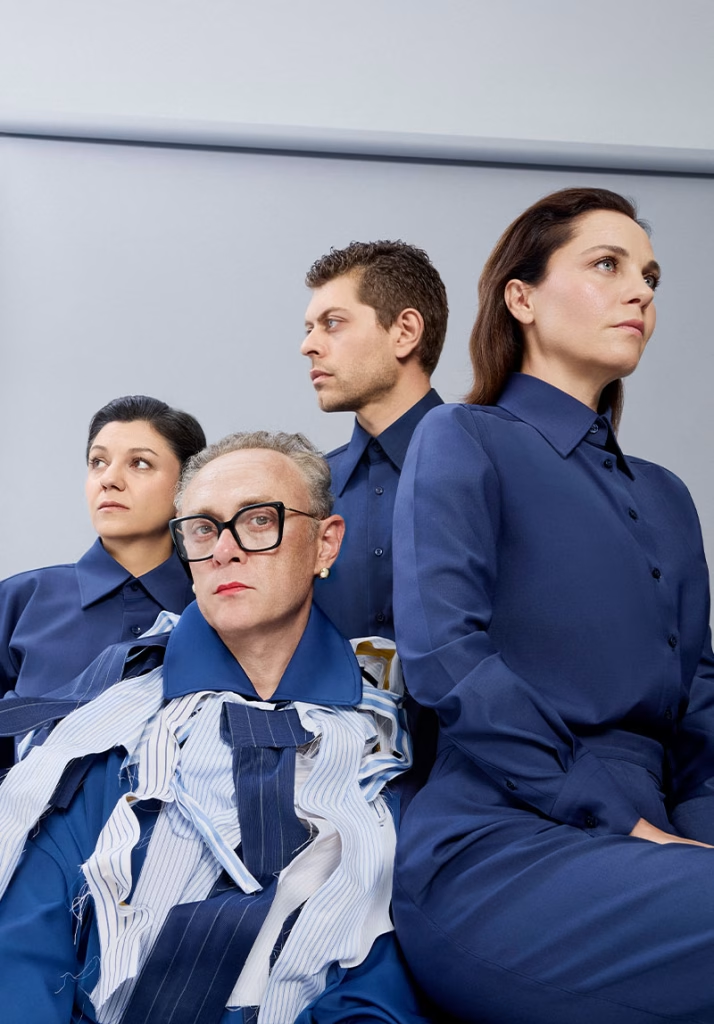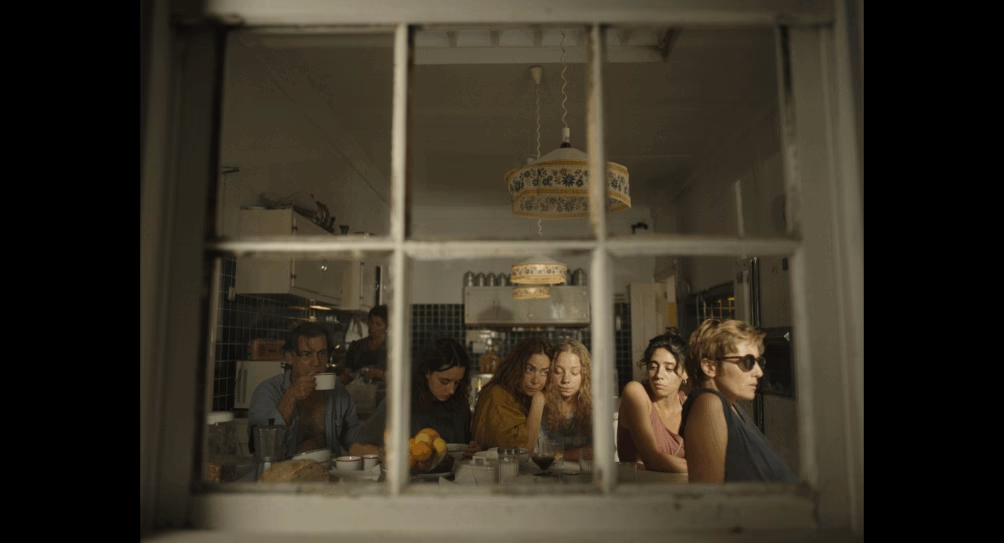


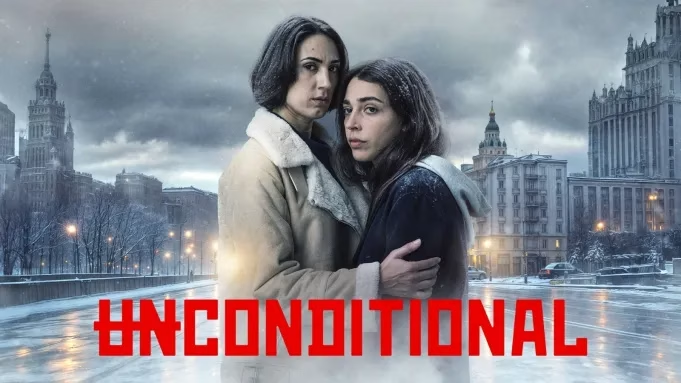
Streaming on Apple TV+, “Unconditional” tells the story of Orna Levy (Liraz Chamami), a mother who vows to find her daughter, Gali (Ronn Talia Lynne), after she is arrested in Moscow and disappears into the dark labyrinths of Russia’s corrupt and convoluted prison system. Promising much more than a standard rescue operation, the series explores how far a parent will go to protect their child and which moral lines they are willing to cross in the process.
Showrunners Adam Bizanski and Dana Idisis have constructed a striking, surprise-filled thriller that doesn’t just drive the plot forward but builds upon it with every episode. With its muted color palette and nerve-wracking score, Unconditional manages to accelerate your heart rate during both action sequences and moments of emotional breakdown.
A Familiar Theme, Unexpected Contradictions
A mother’s unconditional love for her child is not uncharted territory for the world of television. Naturally, Unconditional occasionally falls into the standard clichés of the genre. For instance, the question of how Orna can untangle a knot that Russian oligarchs, Indian police, and Israeli agents could not remains somewhat unanswered. While her becoming a recognized figure on television provides some explanation, it undeniably pushes the boundaries of plausibility.
This issue of credibility becomes even more pronounced through Orna’s internal contradictions. Throughout the series, Orna is profiled as a passive character who worries that life simply sweeps her along and that she has no agency over events. In a jarring flashback, Gali even throws this perceived inaction in her face. Yet, the Orna we watch is an unstoppable force who stands up to state officials, media moguls, agents, and the mafia—someone who can sense a lie in an instant and take immediate action. The sudden emergence of such sharp skills in a woman who remained inactive for years creates a gap that the series struggles to explain. Similarly, her friends—former intelligence officers and PR experts who appear like guardian angels in moments of crisis—seem a bit too convenient for the plot, though they don’t feel out of place within the show’s tempo.
Surpassing the “Taken” Syndrome: A Confrontation Beyond Revenge
It is best not to get hung up on these logical flaws; after all, the worlds of film and television are filled with stories of parents who move mountains to protect their families. This is a subgenre in its own right. However, what sets Unconditional apart from its peers and renders its flaws invisible is its handling of moral dilemmas.
One of the first examples that comes to mind in this genre is undoubtedly Liam Neeson’s 2008 film, Taken. While that film satisfies our fantasy of descending upon villains with divine rage, it is entirely devoid of moral depth. While Neeson’s character rescues his daughter, he leaves all other young victims of human trafficking to rot, and the film presents this as the most logical course of action. Similarly, the Jennifer Garner series The Last Thing He Told Me is a straightforward hero’s journey that doesn’t demand much thought from the viewer.
Unconditional, however, challenges the viewer rather than numbing them. While Orna initially believes her daughter is an innocent angel, as the truth comes to light, she is forced to question who Gali actually is and what it means to have raised such a person. As the title suggests, Orna’s love is unwavering, but even long after the series ends, the shockwaves and moral questions created by the story continue to echo in your mind.
Gray Areas and Moral Ambiguity
The series features an intelligent script that demands your full attention—especially while following Hebrew and Russian subtitles. The story avoids being didactic when handling the Levy family’s Israeli identity. Set in an undefined present that makes no mention of Gaza or the West Bank, the series nonetheless allows for deep readings through the themes of mandatory conscription, the intelligence community, and the cycle of violence. Bizanski and Idisis refrain from giving any group moral superiority, instead leaving the viewer in the middle of the mud and Orna’s impossible situation.
This ambiguity continues in the portrayal of the Russian characters. They are given meaningful backstories that complicate their actions, moving them beyond being mere “bad guys.” Most strikingly, Orna herself makes highly controversial decisions that cause her moral compass to waver for the sake of her daughter. The series does not judge her for this, but it doesn’t act as if everything is fine, either.
In conclusion, despite its flaws, Unconditional is a brave and powerful series. Contrary to the unwavering certainty suggested by its title and protagonist, it leaves the viewer with uncomfortable and thought-provoking questions. To be honest, this makes it much more valuable than many popular examples of its genre.
Showrunners: Adam Bizanski, Dana Idisis Cast: Liraz Chamami, Ronn Talia Lynne Platform: Apple TV+