

There is a world of difference between looking at a city like a tourist and truly seeing it; in the former, you merely consume, while in the latter, you infiltrate the city’s soul and its cracks. Galerie im Tempelhof Museum in Berlin is hosting an exhibition that questions precisely this sharp distinction between the two actions: sight·seeing. That small dot in the middle of the title clearly exposes the distance between immersing oneself in observation and blindly consuming. Hosted by Frauenmuseum Berlin and presented as part of the Kammerspiel series, this gathering features Beate Spitzmüller and Judith Brunner, inviting us to explore a city for a second time—this time through a much more honest and complex lens.
Urban Energy Clusters vs. Material Dissolution
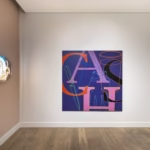
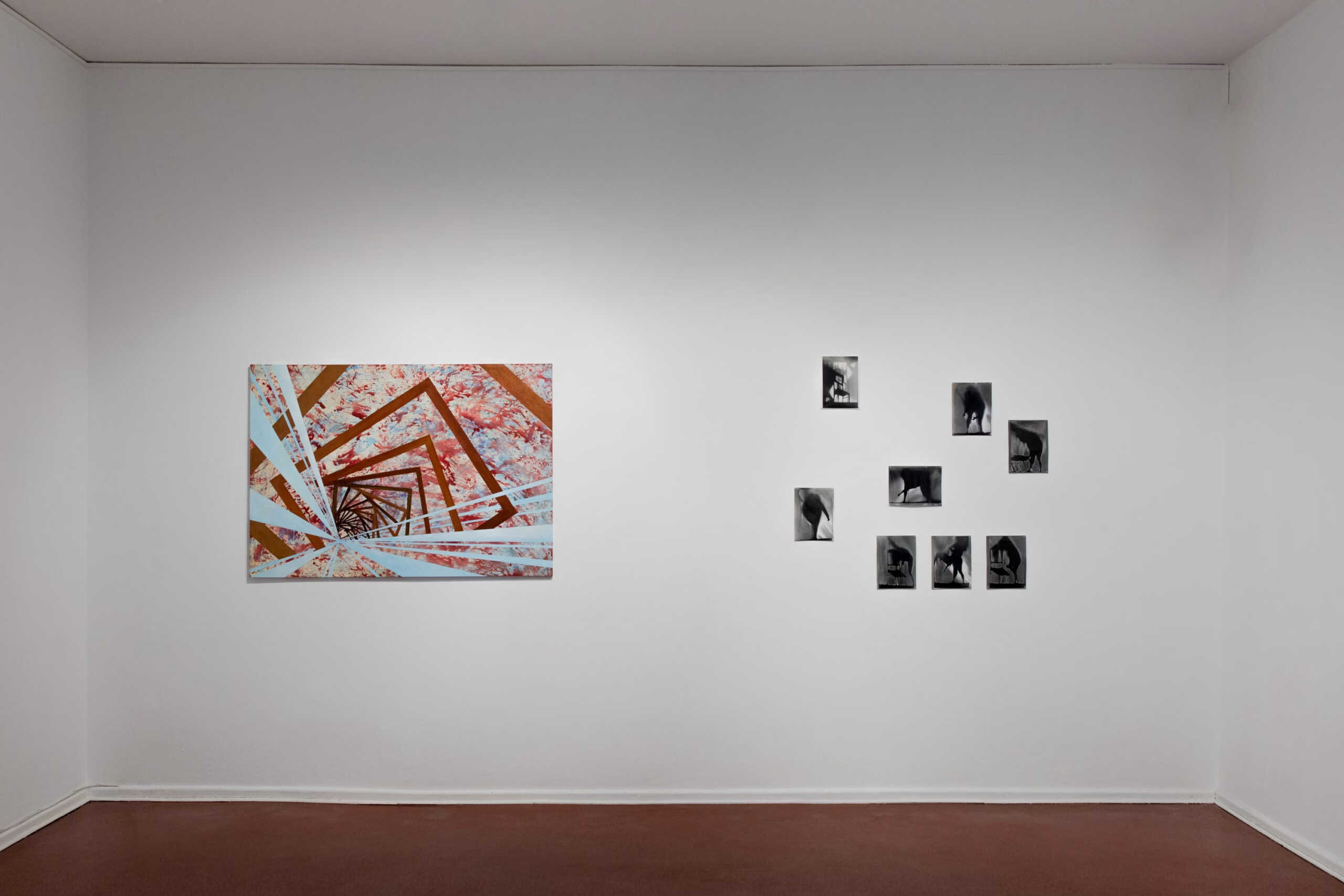
On one side of the hall are Judith Brunner’s works, which view the city entirely through the lens of abstraction. In her series titled Gates and Moves, the artist examines bridges, thresholds, and the transient feelings generated by moments of transition, departure, and arrival. By bringing together acrylic, oil paint, bronze, and iridescent pigments, she transforms solid urban structures into dense clusters of energy. When wide, intuitive, gestural fields of color come side-by-side with rigid geometric lines, you can see the breaking points inside the secure buildings we walk past every day. Here, the city functions as a metaphor in constant limbo, oscillating between stability and dissolution.
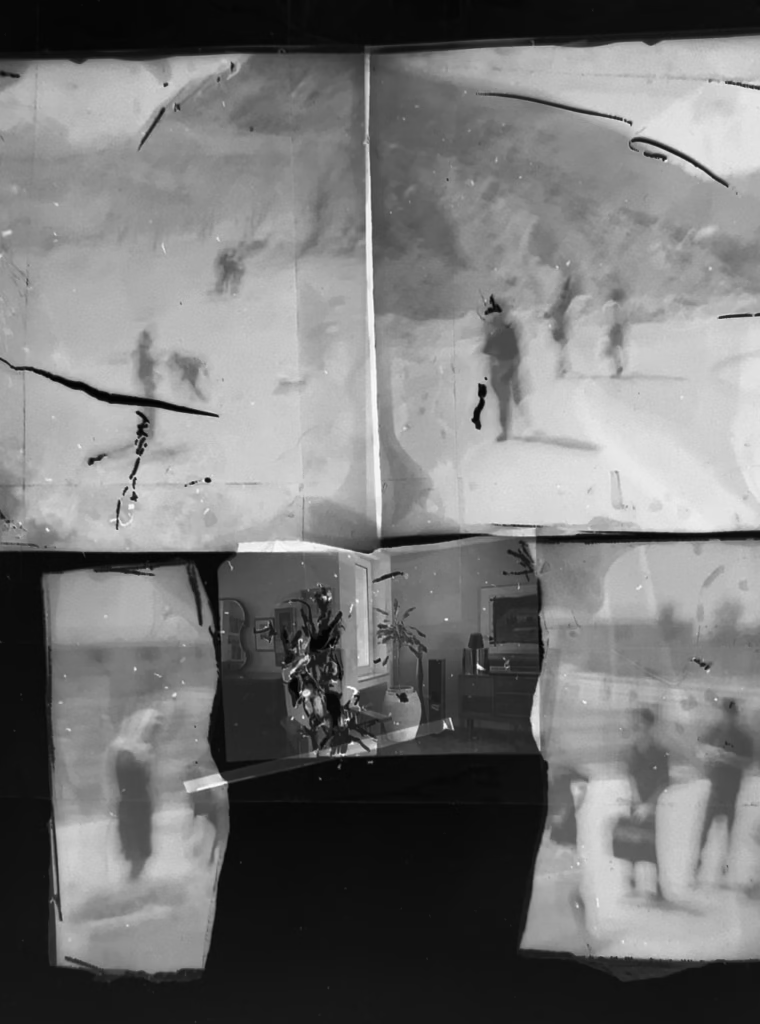
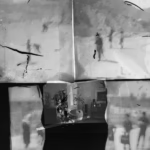
On the other side, Beate Spitzmüller establishes an experimental language that blurs the boundaries between photography and film. Spanning from Iceland to Johannesburg, and on to Frankfurt am Main, these predominantly black-and-white images are completely altered through analog and digital interventions. The applied solarizations, superimpositions, and intentionally left distortions render those monumental landscapes we know both permeable and as fragile as toy models. These static frames are complemented by a film composed of charcoal drawings where lines move continuously and rhythms shift.
Chronology and Location
Although a minor date confusion in the text points toward September, the official calendar shows that the exhibition doors remain open until July 5, 2026. A quiet day can be set aside to look at the streets we pass by every day within the unique atmosphere of Tempelhof—once again, but this time dismantling all our preconceived notions.
Exhibition Details:
- Exhibition Title: sight·seeing (Part of the Kammerspiel series)
- Organized by: Frauenmuseum Berlin
- Venue: Galerie im Tempelhof Museum, Berlin
- Artists: Judith Brunner & Beate Spitzmüller
- Closing Date: July 5, 2026
- Admission: Open to the public
- Core Mediums: Acrylic and oil paintings, bronze components, iridescent pigments, solarized photography, and hand-drawn charcoal animation film.