

From Frieze London’s Code Universe to the 2027 Istanbul Biennial: Deciphering the Image with Carol Yinghua Lu

Navigating the high-octane, glittering, and at times dizzying spectacle of Frieze London across Regent’s Park, certain booths pull you up short—cutting through the din of commercial display to draw you straight into the crucible of critical thought. Curated by Carol Yinghua Lu, co-curator of the forthcoming 19th Istanbul Biennial in 2027, the curated section The Code Universe carves out precisely such an uncanny, intellectually clarifying oasis. Amid the hurried commerce of the aisles, Lu refuses to let the viewer remain a passive spectator, casting them instead as an investigator dissecting the pervasive web of signs that encloses our contemporary world.
To trace Lu’s intellectual trajectory requires a closer look at the foundational tenets of her curatorial practice. Foremost among the milestones of her more than two-decade collaboration with Liu Ding is undoubtedly the 8th Yokohama Triennale. Conceived at a moment when the pandemic had plunged the globe into isolation, vulnerability, and helplessness, the exhibition took shape, strikingly, from a “feeling of despair.” While much of the cultural establishment recoils from uttering the term, in Lu’s lexicon despair denotes neither defeat nor surrender; rather, it constitutes the most authentic ground for radical reimagination. It evokes the posture of Lu Xun, the vanguard of modern Chinese literature, who composed Wild Grass amidst the political turbulence of 1924–1926: refusing the counterfeit solace of blind optimism, confronting darkness and desperation in their entirety, and seeking an egress from within them. By placing twentieth-century historical ruptures in dialogue with contemporary tremors, Lu holds up the mirror of the past to interrogate our present.
Here echoes Lu’s incisive critique of institutional complacency: “forms that have lost their purpose.” Her grievance targets the bureaucratic inertia that besets so many museums, biennials, and galleries, where institutional self-preservation, founding egos, or sheer formal flashiness eclipse the generative intellectual impulse of art itself. The dilemma, for Lu, lies not in form as such, but in the evaporation of its intent. This iconoclastic approach equally informs her reappraisal of contemporary Chinese art history. While the international art establishment obstinately roots the canon in the market boom of the 1990s, Lu rewinds the clock—as demonstrated in the exhibition Poetry goes no further than language at Buxton Contemporary in Australia—to the 1980s, recovering the radical conceptual impulses, semantic disruptions, and linguistic experiments spearheaded by the New Measurement Group and figures such as Qian Weikang.
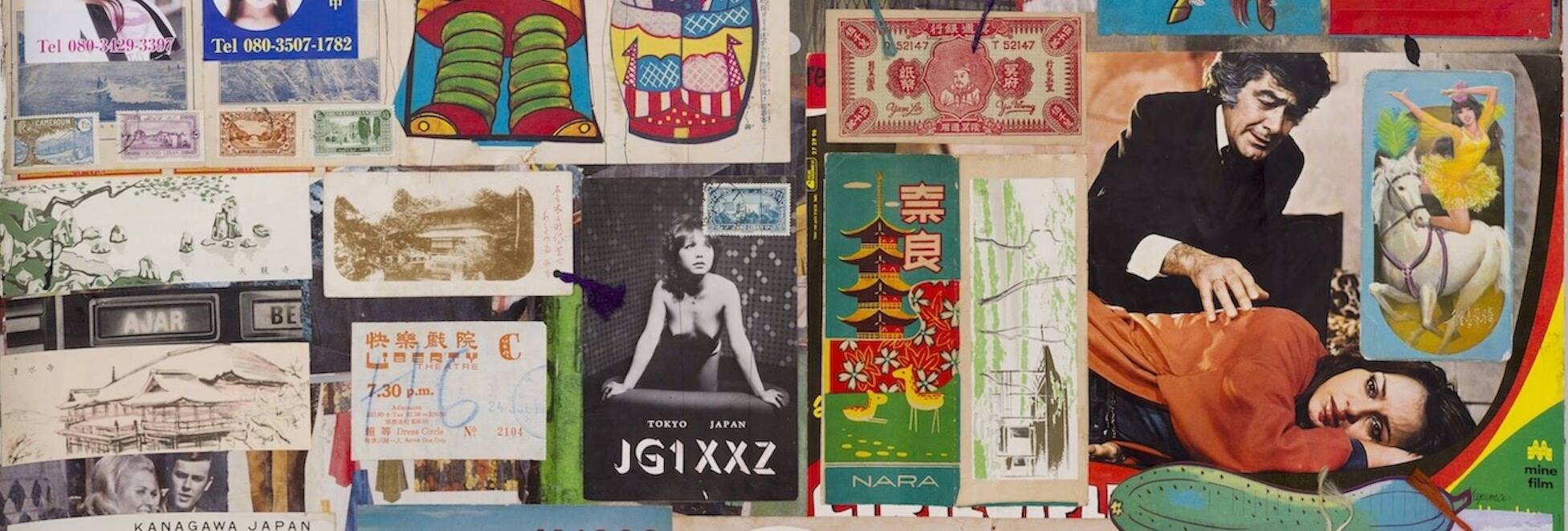
At Frieze London, The Code Universe lays bare the reverberations of this conceptual lineage within the post-digital era with laboratory rigor. The section revisits the semiotic shift that upended art history in the wake of the 1968 global cultural revolutions—the historic convergence of Pop art and Conceptualism. Eight artists are gathered here to demonstrate that line, color, and composition are never neutral aesthetic devices, but socially encoded systems laden with ideological ciphers. The presentation traces an expansive geopolitical arc, spanning 1970s Japan and 1990s Indonesia to contemporary inquiries emerging from Ukraine, the United States, Spain, Bosnia, and China.
Traversing the booths, a palpable friction emerges between Selma Selman’s haunting untitled 2025 oil on scrap metal at acb Gallery (S07) and Nikita Kadan’s charcoal-on-paper work Shchekavytsia at Voloshyn Gallery (S05). Across the presentations of greengrassi / Take Ninagawa (S01), Nonfrasa (S06), Spurs Gallery (S04), TINA (S02), Trautwein Herleth (S03), and Valentine (S08), the common denominator is striking: a profound suspicion of the image. In an era where the world has ceased to be an unmediated reality awaiting discovery and has congealed into an endlessly encrypted, refracted “system of appearances,” these artists decline to manufacture new imagery, choosing instead to dismantle and decipher what is already before us.
Yet across this discourse of systems, structures, and semiotics, one senses that Lu’s concern is never sterile abstraction. In affirming that “no system can exist without human beings,” she insists upon the individual’s capacity to think and act within turbulent times.
It is precisely for this reason that attention turns to the horizon. The vision already taking shape for the 19th Istanbul Biennial, set for 18 September – 14 November 2027, intersects deftly with the city’s palimpsestic memory. Lu envisions Istanbul as an immense, multi-layered novel structured through innovative narrative forms: dispersing parallel micro-histories across the city’s various arteries, capturing the suspended polyphony of its frictions, mobilities, and vernacular realities. As she describes it: “Like spinning countless spiderwebs inside a dense forest.”
Stepping away from the clamor of Frieze’s aisles, a singular conviction remains: deciphering these codes is not merely a method for interpreting art, but an urgent bid to reclaim our compass within a disorienting world. And by all indications, come autumn 2027, the streets of Istanbul will become the most exhilarating labyrinth for this unfolding narrative.