

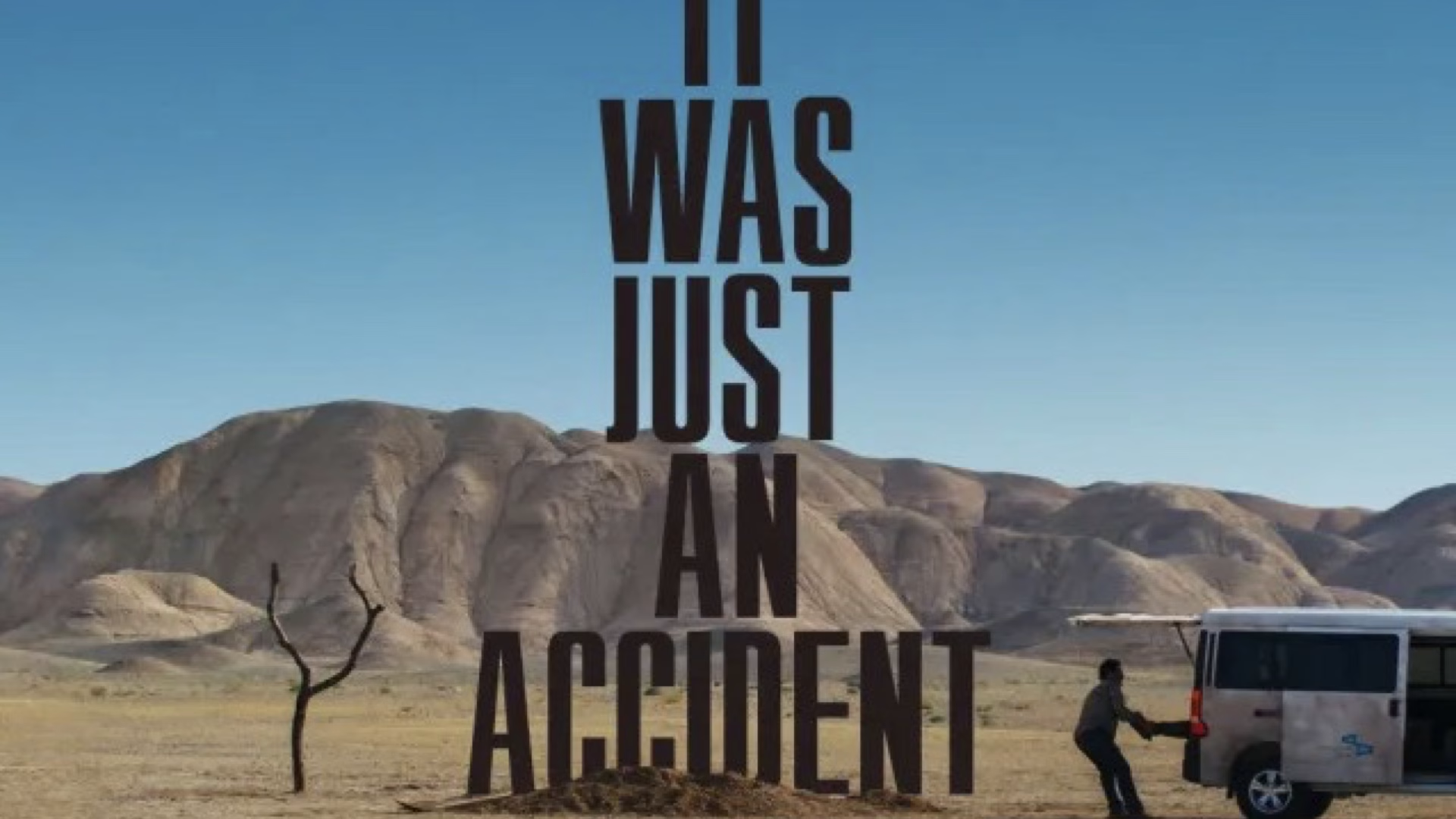
Jafar Panahi’s 2025 film “It Was Just an Accident” is not only a cinematic triumph but also an ethical manifesto. Crowned with the Palme d’Or at the 78th Cannes Film Festival, this production made Panahi the only director in history to win the top prize at all four major film festivals (Cannes, Venice, Berlin, Locarno).
Here’s an in-depth review from Apartment No:26 of this impactful masterpiece, where memory turns into a moral reckoning:
The film masterfully explores how an ordinary event—like a minor car accident—can spiral into a massive ethical crisis. Through the story of a man pursuing revenge, director Panahi forces the viewer to question the concepts of “justice” and “certainty.”
Vahid, a modest mechanic, finds himself in a nightmare after a routine traffic accident. The physical features and prosthetic leg of the man opposite him open a dark door in his mind: the torture-filled days he spent in Iranian prisons… The character is convinced that this stranger is the person who tortured him; however, this certainty is based not on visual evidence but on traumatic sensory memory. Panahi destabilizes the notions of “truth” and “proof” here, creating a shattering opening.
Fueled by the fire of revenge, Vahid kidnaps the man he suspects and intends to kill him. But at that very moment, the film shifts from an action thriller into a story of moral paralysis. Even the slightest doubt about the man’s identity blocks the expected catharsis.
As other former prisoners become involved, an individual reckoning evolves into a collective ethical dilemma. The survivors’ differing responses to trauma deepen the story, while the tension escalates not through violent scenes but through discussions, accusations, and the characters’ emotional fragmentation.
Panahi’s Vision: Creating Miracles Under Restriction
Jafar Panahi shot this film too without approval from Iranian authorities, under restrictions. Yet for Panahi, these limitations are not obstacles but have transformed into cinematic sensitivity:
Human-Scale Narrative: The focus is not on surroundings or action; it is entirely on faces, voices, and moral tension.
Politics Through Implication: State violence is not shown directly; it is felt through symbols like memories and a prosthetic leg. This strengthens the narrative’s universality.
Open-Ended Conclusion: The film refuses to offer the viewer relief. The unresolved nature of trauma, as in real life, shapes the final emotion.
Apartment No:26 Note
It Was Just an Accident is not just a film; it is a cultural testimony. It shows the emotional cost of revenge and how heavy justice becomes when it falls on the individual’s shoulders independently of institutions. Panahi’s minimalist mastery, long takes, and limited use of locations position the viewer not as an observer but as a moral participant.
This film continues to ask that unsettling question—one that will linger in your mind for days after it ends: If you’re not 100% certain, what does justice serve?