

Gagosian, Davies Street, London · Until May 16, 2026
Stepping into the Gagosian space on Davies Street, you are confronted once again with the staggering truth that has made Rachel Whiteread’s artistic practice so unique for years: void is, in fact, something remarkably heavy. Throughout her career, Whiteread has transformed abstract concepts like absence, memory, and loss into solid entities using industrial materials, and she continues this stance in her new exhibition titled “Substitute.” The title is a clever reference to the way the artist echoes one medium through another and her process of substituting negative space with physical matter.
The Memory of Wood, the Coldness of Metal
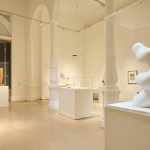
Standing before the massive reliefs covering the main walls of the gallery, the uncanny illusion created by the material immediately draws you in. Whiteread achieved these gargantuan forms by pressing paper pulp onto old wooden barn doors and gates that have been ruthlessly eroded by time. However, it doesn’t end there; she has coated these fragile, recycled paper surfaces with pigmented silver and copper leaf, granting them an unexpected, cold metallic grandeur.
Paper pulp, traditionally viewed in sculpture as a preliminary draft or a temporary stage, is transformed in Whiteread’s hands into a definitive monument in direct dialogue with the past. Just as in her 2005 project Embankment, where she filled Tate Modern’s Turbine Hall with over fourteen thousand polyethylene boxes, we are witnessing the monumentalization of the ordinary. While the heavy texture on the surface carries the traces of its own history, it presents the cool, matte, and heavy feel of metal to the viewer with illusionistic mastery.
The Elegance of Transparency and Beachcombed Losses
Directly opposite those opaque and heavy metallic surfaces stand more transparent, poetic examples of the artist’s famous casting practice: two sash windows cast from resin in shades of pink and blue, softly allowing light to pass through them. This contrast perfectly balances the rhythm of the exhibition.
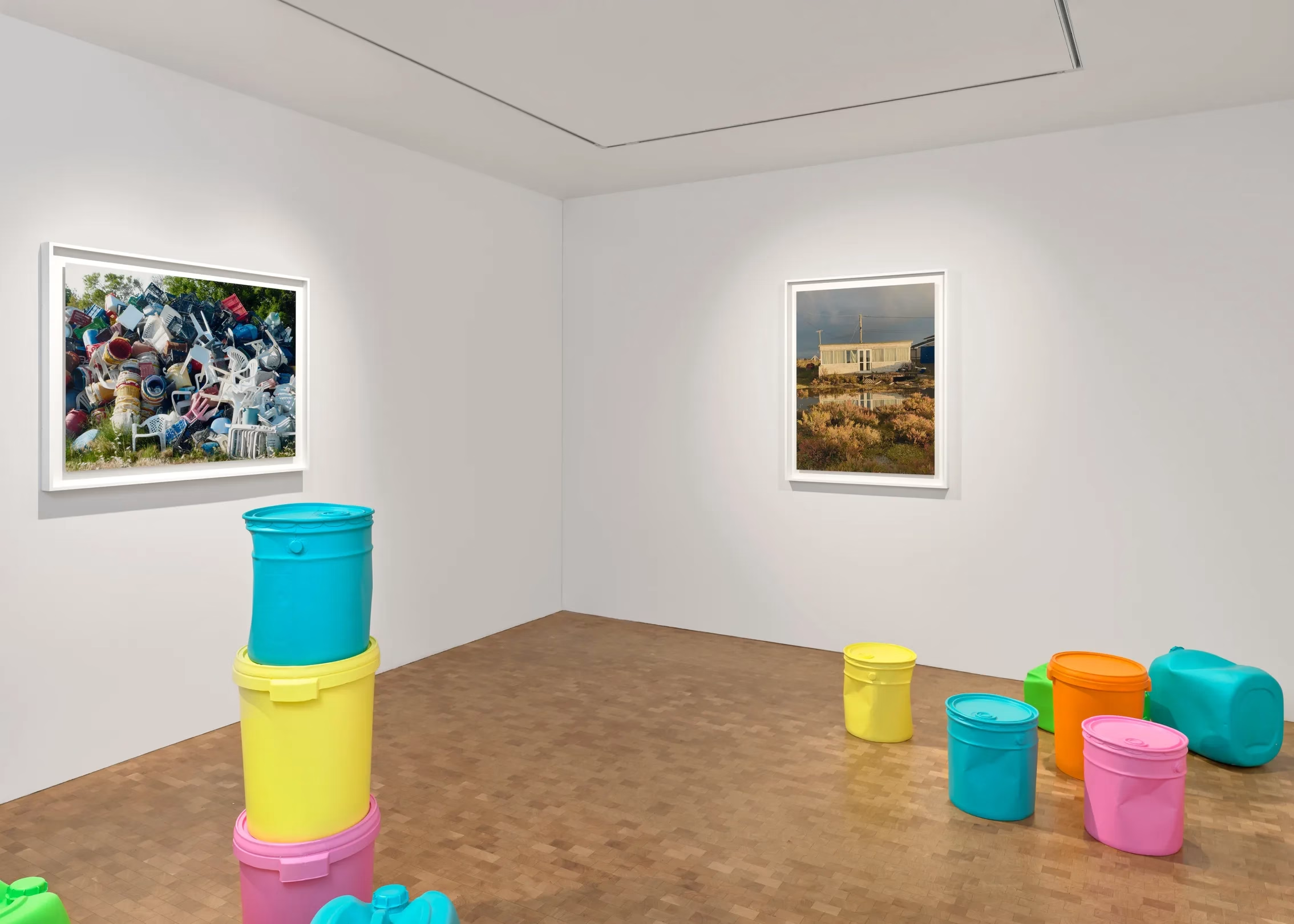
Moving into the back gallery, you encounter a completely new material in Whiteread’s practice: fiberglass. These small sculptures, cast from ordinary objects the artist found while searching for lost items during beach walks and in river mud, are painted in bright colors evocative of seaside nostalgia. In their arrangement and scale, they almost resemble small seating groups. This layout sends a subtle nod to her iconic 1994 work, Untitled (6 Spaces), where she froze the voids beneath chairs.
Voids Remaining in Two Dimensions
The photographs accompanying the sculptures in the exhibition act as silent two-dimensional echoes of the artist’s three-dimensional world. These frames, documenting unexpected, coincidental alignments of objects and small materialistic occurrences in daily life, harbor an intense sense of abandonment just like her sculptures. You can clearly trace the muted color palette and the play between negative/positive space from her sculptures in these photographs.
We are in the final days to experience this quiet and staggering exhibition, where Whiteread violates the fine line between the natural and the constructed, unearthing memories embedded within familiar objects and structures. If you are in London, do not miss the opportunity to confront this metallic and transparent weight of the void.