

What would remain if we could completely deactivate our own ego, prejudices, and that never-silent inner voice while looking at an object or a person’s face? In these days where culture and aesthetics fold in on themselves, Galerie Albrecht in Berlin invites us into that refined silence with its exhibition Sachlichkeit—a showcase of the sharp, lingering legacy of the “New Objectivity” movement that shook Europe between 1918 and 1933. The exhibition declares that objectivity is not a mechanical, soulless coldness as commonly believed; on the contrary, it is the courage to skillfully push one’s own self into the background and focus entirely on what is ahead—the purest and most radical form of empathy in a gaze.
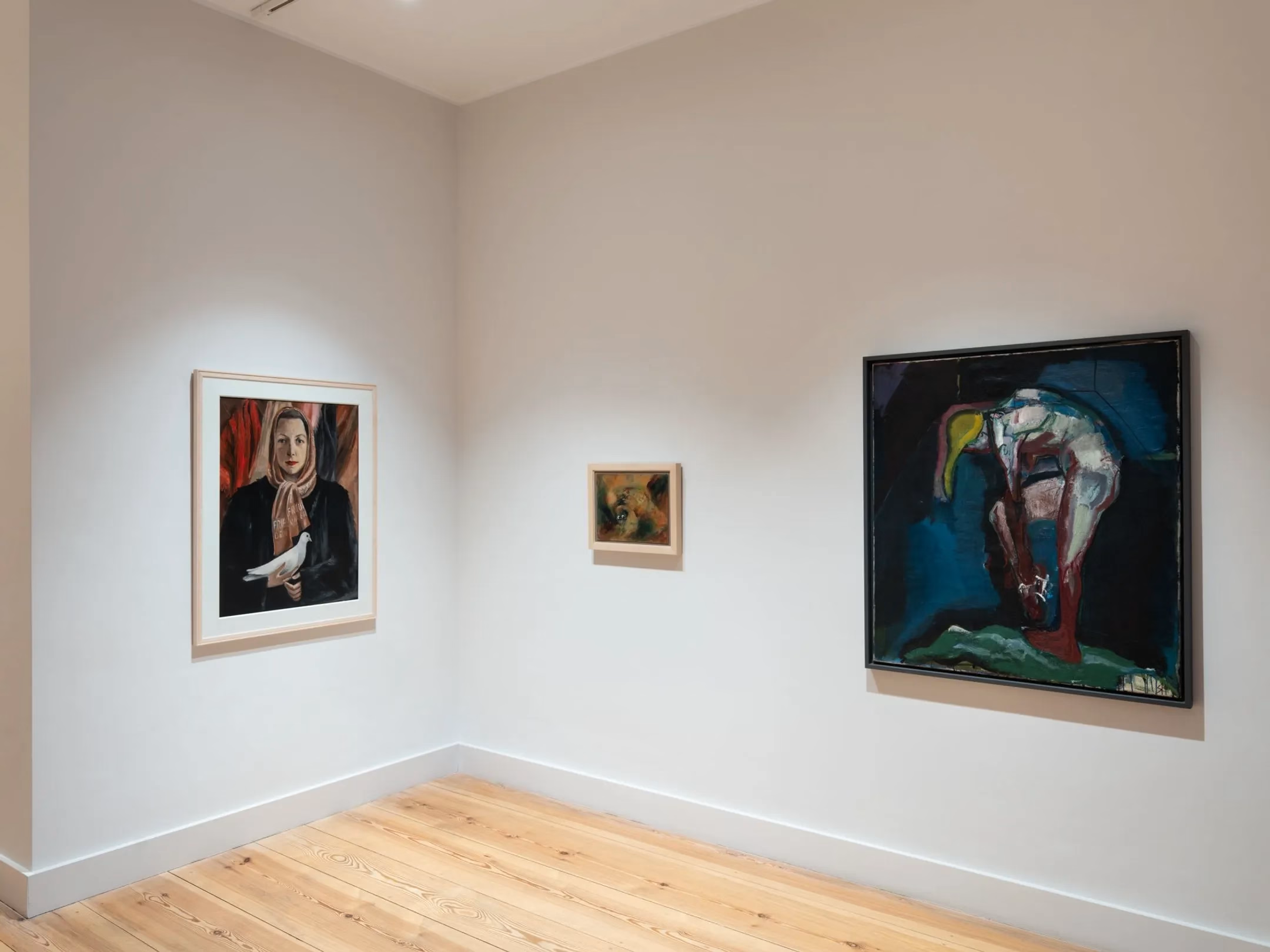
At the very heart of this deep observation are the compassionate portraits of Kate Diehn-Bitt, an artist who remained in the shadowed pages of art history but finally receives her long-overdue applause with this exhibition. Diehn-Bitt’s seamless scenes, depicting a woman with a dove on her shoulder or a dentist with a patient in his chair, prove how a distant approach can suddenly evolve into profound sensitivity. Instead of distancing the viewer from the subject, the uncompromising realism in the details brings us even closer to their vulnerable, naked world.
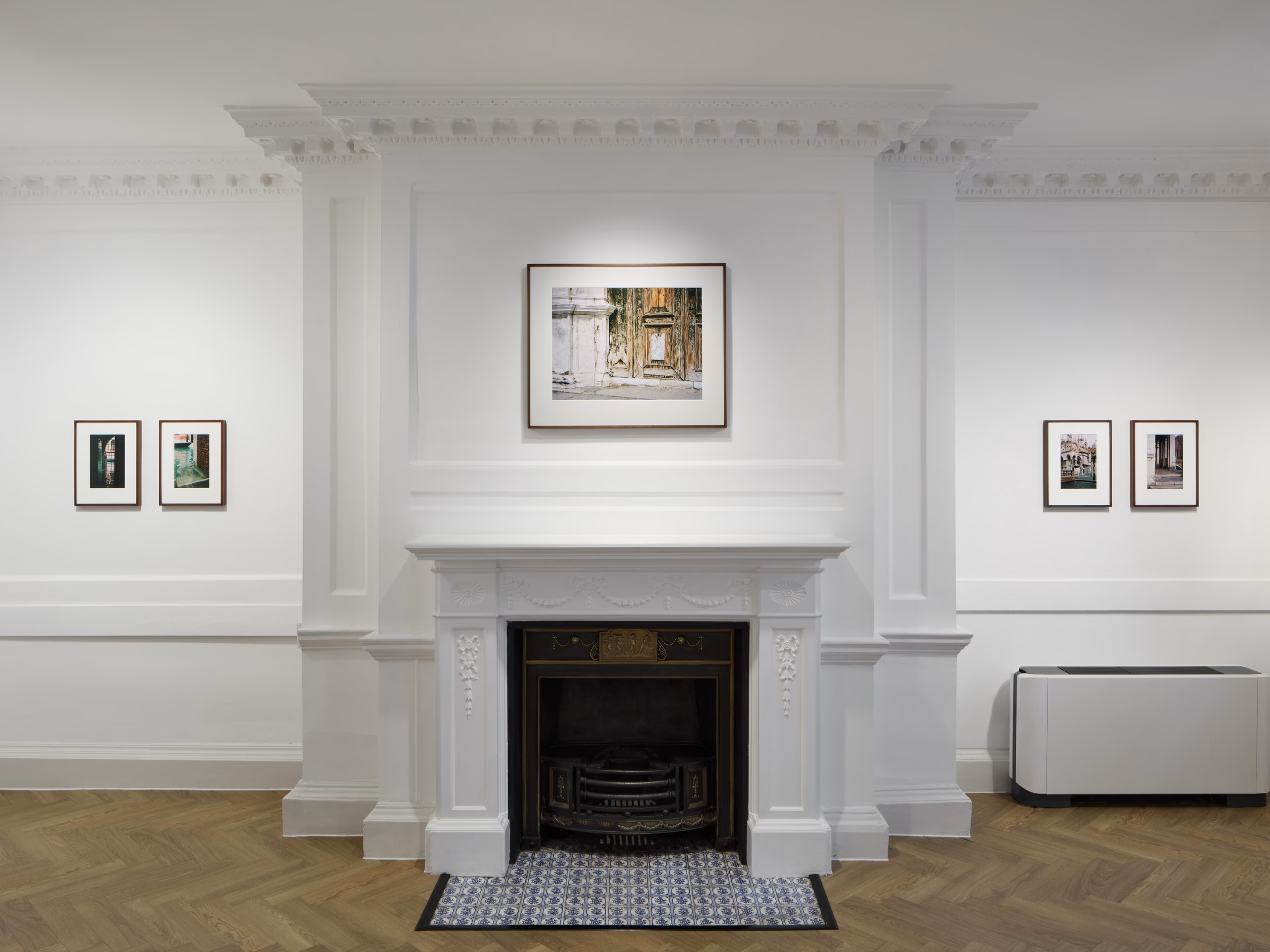
In other corners of the space, historical references clash with modern alienation effects. Michael Langer’s automobile series, inspired by “German Pop,” questions objectivity through a Picasso-esque cubist fragmentation, forcing us to perceive industrial designs as mechanical sculptures. On the other hand, Rafael Cidoncha’s meticulous works, navigating the most uncanny and noble shades of gray, practically slow down the passage of time to dissect the micro-realities resting upon objects.
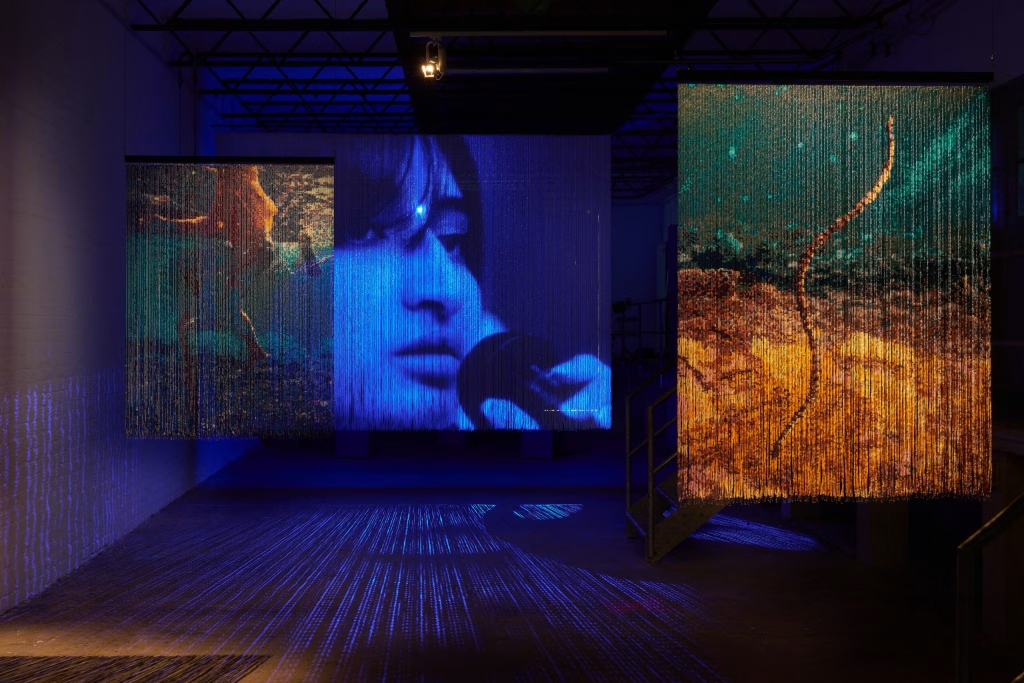
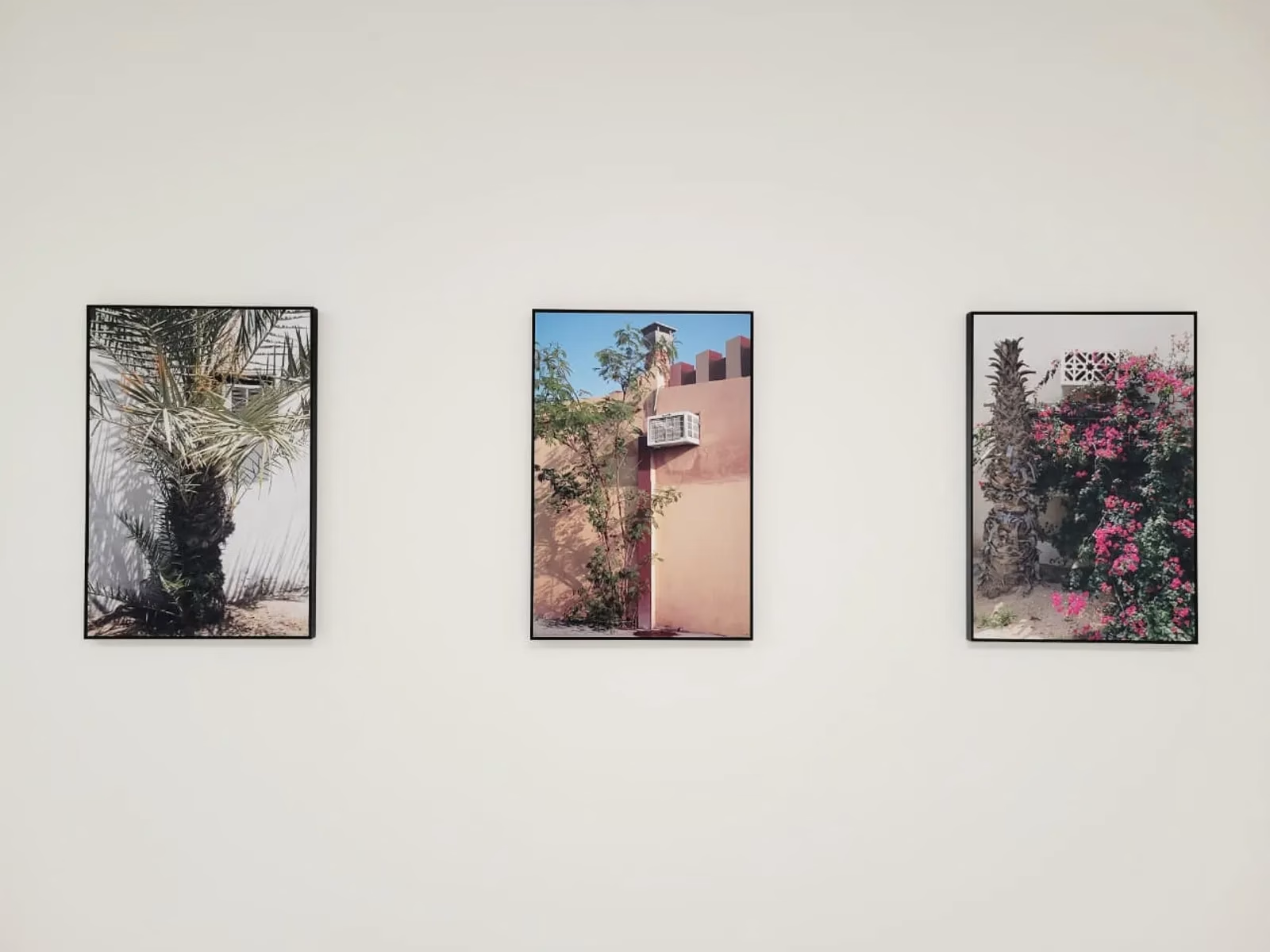
Placing the female experience and its societal boundaries under the microscope, Emese Kazár adds a staggering conceptual layer to the exhibition with her metaphor of femininity and silkworms, constructed through the figure of Princess Margarita. When combined with the poetic realism of Sabine Herrmann, Kazár’s silky yet cocooned narrative demonstrates just how polyphonic an orchestra objectivity can actually be. What we are witnessing here is not merely flawless technique or formal discipline; it is an effort to understand the invisible world hidden behind objects and bodies—essentially, a whole way of looking at the world. In today’s world, where everything is excessively distorted, filtered, and manipulated, Galerie Albrecht’s multi-layered selection reminds us that remaining objective is actually the most honest form of compassion we can offer to one another.
Do you think that pushing our own emotions and prejudices completely into the background, and looking at an object or a person exactly as they are, could be the most radical method of empathy that modern humanity has forgotten?
The exhibition will continue until June 27, 2026.
Exhibition Details:
- Venue: Galerie Albrecht, Berlin
- Exhibition Title: Sachlichkeit (Objectivity)
- Closing Date: June 27, 2026
- Featured Artists: Kate Diehn-Bitt, Michael Langer, Rafael Cidoncha, Emese Kazár, Sabine Herrmann.