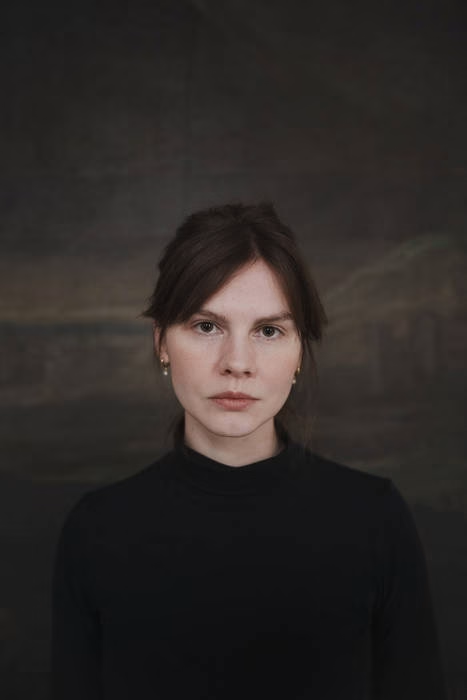


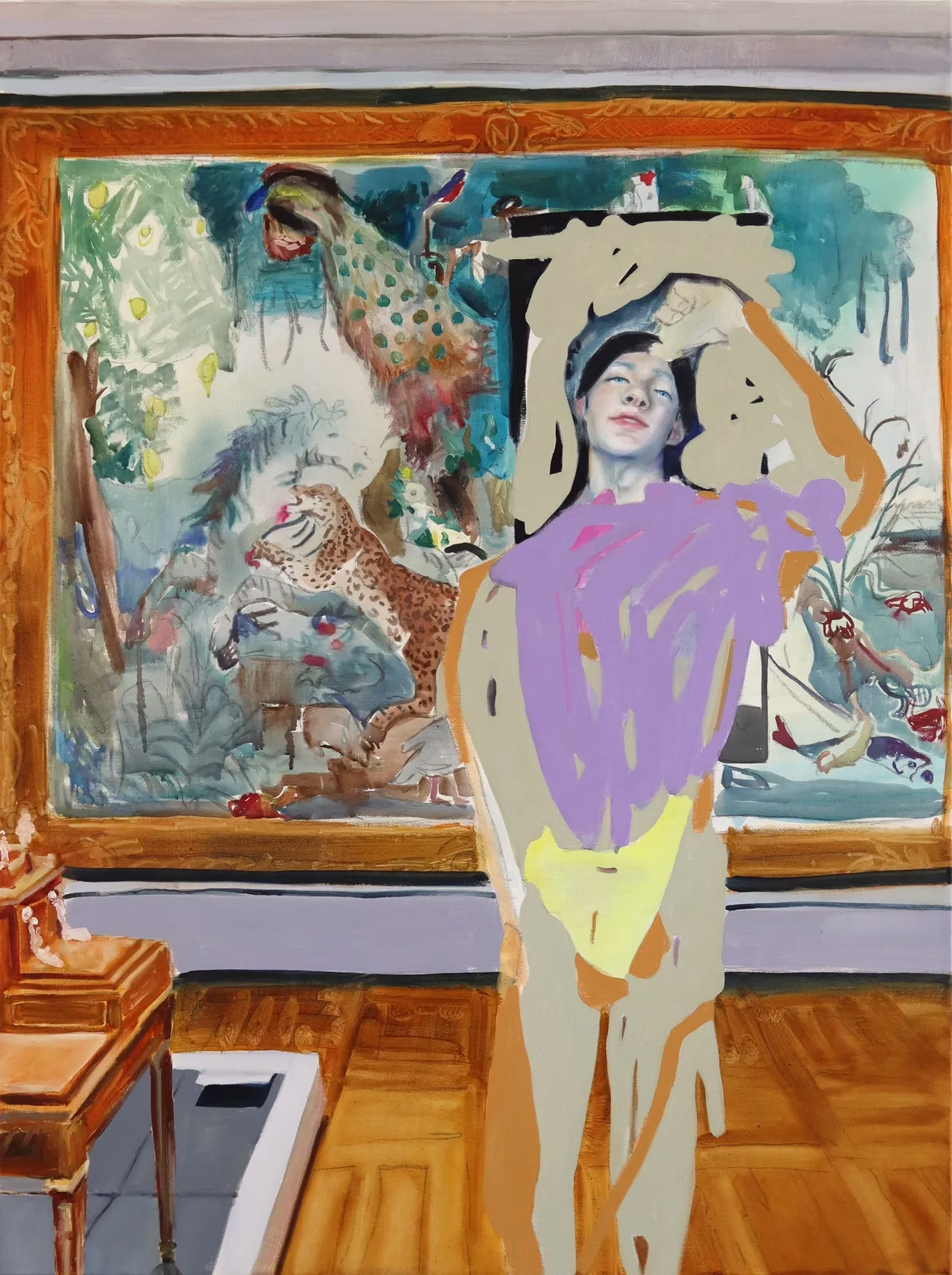
Sometimes you need a neuroscientist’s brush to realize your eyes are lying to you. In Berlin’s art labyrinth, Sebastian Maas’s “Seduce Me” exhibition, echoing across the walls of KORNFELD Galerie, sets exactly this mental game in motion. Following his education in biology and neuroscience, Maas turned his direction to the Academy of Fine Arts, Munich, painting onto the canvas not how the human brain sees, but how it recognizes images. Running until June 20, 2026, this selection functions less like a painting exhibition and more like a neurosurgical operation performed on that uncanny friction zone between the aesthetic codes of old masters and the visual reflexes of modern humanity.
The artist’s swift yet infinitesimally calculated marks on the canvas conjure the ghosts of European art history, from Rubens’s voluptuous figures to Goya’s dark dramas. However, Maas speaks with this historical heritage through fragmented echoes rather than direct quotation. For instance, when looking at his work titled Gojo (2026), you believe you are encountering the dense sacredness of a Baroque martyrdom scene; yet, upon closer inspection, the decontextualized state of the figure looks almost like a martyrdom selfie taken in a museum corridor. The artist clashes the heavy, sacred burden of the past with today’s volatile, fragmented visual consumption, driving the viewer into a sort of crisis of recollection.
Maas’s neuroaesthetic approach masterfully exploits the visual triggers at our brain’s subliminal threshold. In the painting Fountain of Youth, figures with a porcelain smoothness reminiscent of Watteau’s Rococo touches make a playful reference to today’s obsession with immortality and flawless beauty—essentially, to the modern world of bio-hacking. By colliding transparent transitions akin to watercolor with the heavy, pasty interventions of oil paint within the same composition, the artist builds a complex optical structure where past and present overlay. This is an illusion that seduces not just the eye, but the memory centers as well.
In works like Best Buddies or Meerjungmann, Maas deliberately disrupts our habitual ways of seeing. The generative discomfort that emerges when academic animal depictions are trapped in the same frame as naive, caricatured figures popped out of pop culture constitutes the true power of the exhibition. The artist strips pastoral nature of its innocence with toxic pink clouds or concrete walls smuggled into classical aesthetics. Ultimately, what stands before us is not a finished declaration, but an open-ended experimental field that the viewer must complete with their own neural patterns.
Exhibition Details:
- Artist: Sebastian Maas
- Exhibition Title: Seduce Me
- Venue: KORNFELD Galerie, Berlin
- Closing Date: June 20, 2026
- Key Themes: Neuroaesthetics, historical decontextualization, and the collision of classical and pop imagery.