

Scandal! Hermione von Preuschen: The Woman Who Drew the Kaiser as a Skeleton and Berlin Queueing to See It

- VENUE: Alte Nationalgalerie, Berlin
- DATES: Now open → November 15, 2026
- TAGS: 19th-Century Scandal • Feminist Courage • German Art History
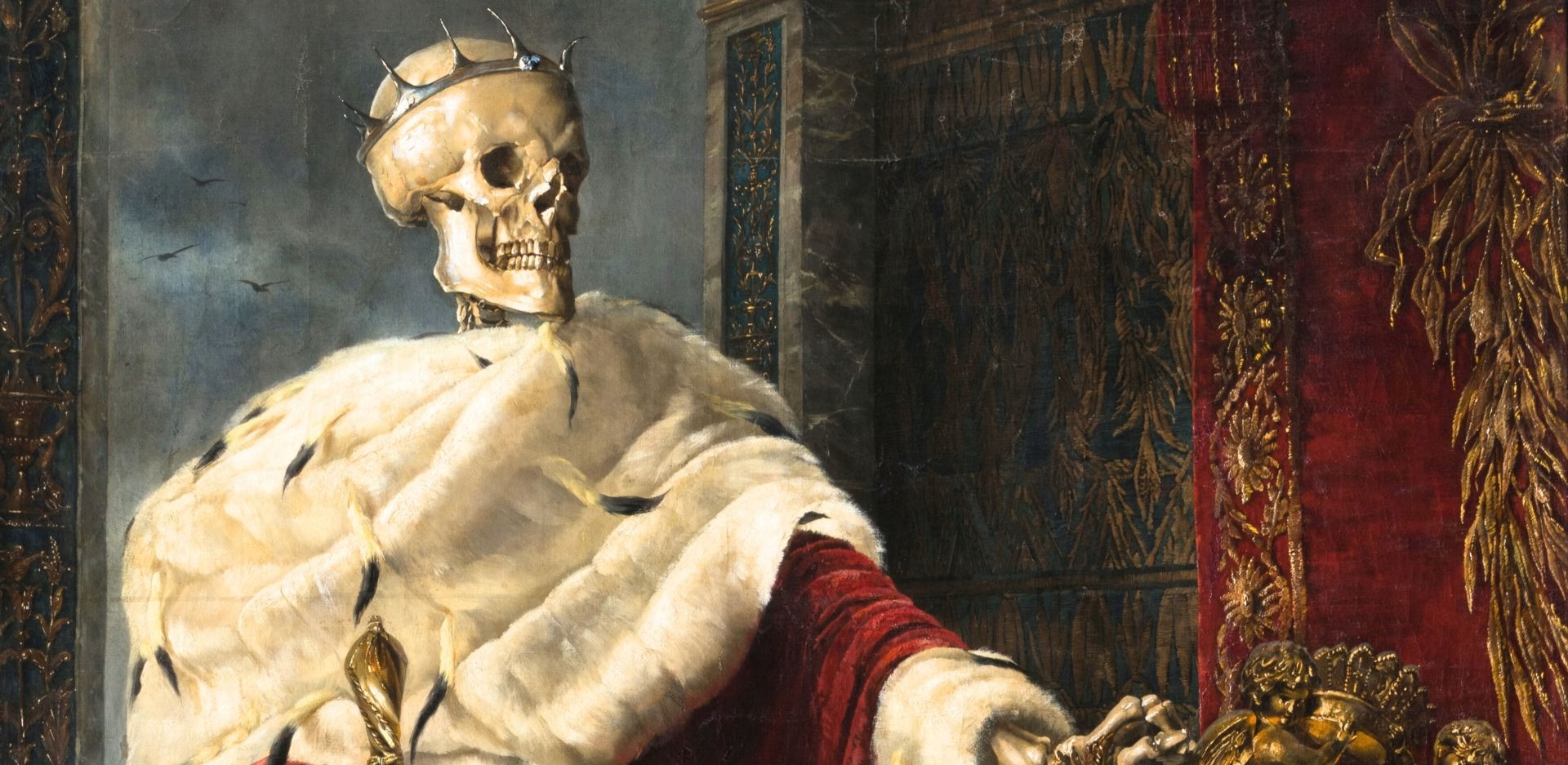
You look at the painting: Kaiser Wilhelm I is sitting on his throne as a skeleton adorned with jewels. Its artist: a woman excluded from the academy, whom the entirety of Berlin queued up just to see. If anyone says history does not change, they are mistaken.
There is the joy of discovering a hidden treasure hidden within the Alte Nationalgalerie in this exhibition. Tucked away in a corner behind the coin section at the Bode Museum—yet when you enter, it awaits you right in the center of an octagonal room: Mors Imperator. The Death of the Emperor.
Hermione von Preuschen painted this canvas in 1894 and exhibited it entirely on her own, bypassing the Berlin Academy completely. In that era, this demanded both immense courage and madness—especially for a woman. Academic channels were closed to women; so what do you do? You open your own exhibition.
The result? The city of Berlin was paralyzed. Newspaper columns were boiling over, everyone was criticizing it, but that very same “everyone” was running to queue up and see it. The Kaiser, depicted in skeletal form with his fingers curled over a blue sphere, looks as though he is abandoning his throne. By 19th-century standards, this was not a caricature; it was an all-out assault.
The curators have had the work restored: the jewels gleam, and the embroideries are so vivid you feel you could almost touch them. And as you look at the painting standing in the middle of the octagonal room, it is impossible not to think: how incredibly lonely must this woman have felt 130 years ago?
Right now, this is one of the least noticed yet most necessary-to-be-talked-about exhibitions in Germany. I highly recommend visiting that small room, whose exact location even the museum guides barely know.
Exhibition Details:
- Artist: Hermione von Preuschen (1854–1918)
- Masterpiece Featured: Mors Imperator (1894)
- Venue: Alte Nationalgalerie, Berlin
- Closing Date: November 15, 2026