

- VENUE: Neue Nationalgalerie, Berlin
- DATES: Now open → August 9, 2026
- TAGS: Abstract Sculpture • Paris Avant-Garde • Light & Surface
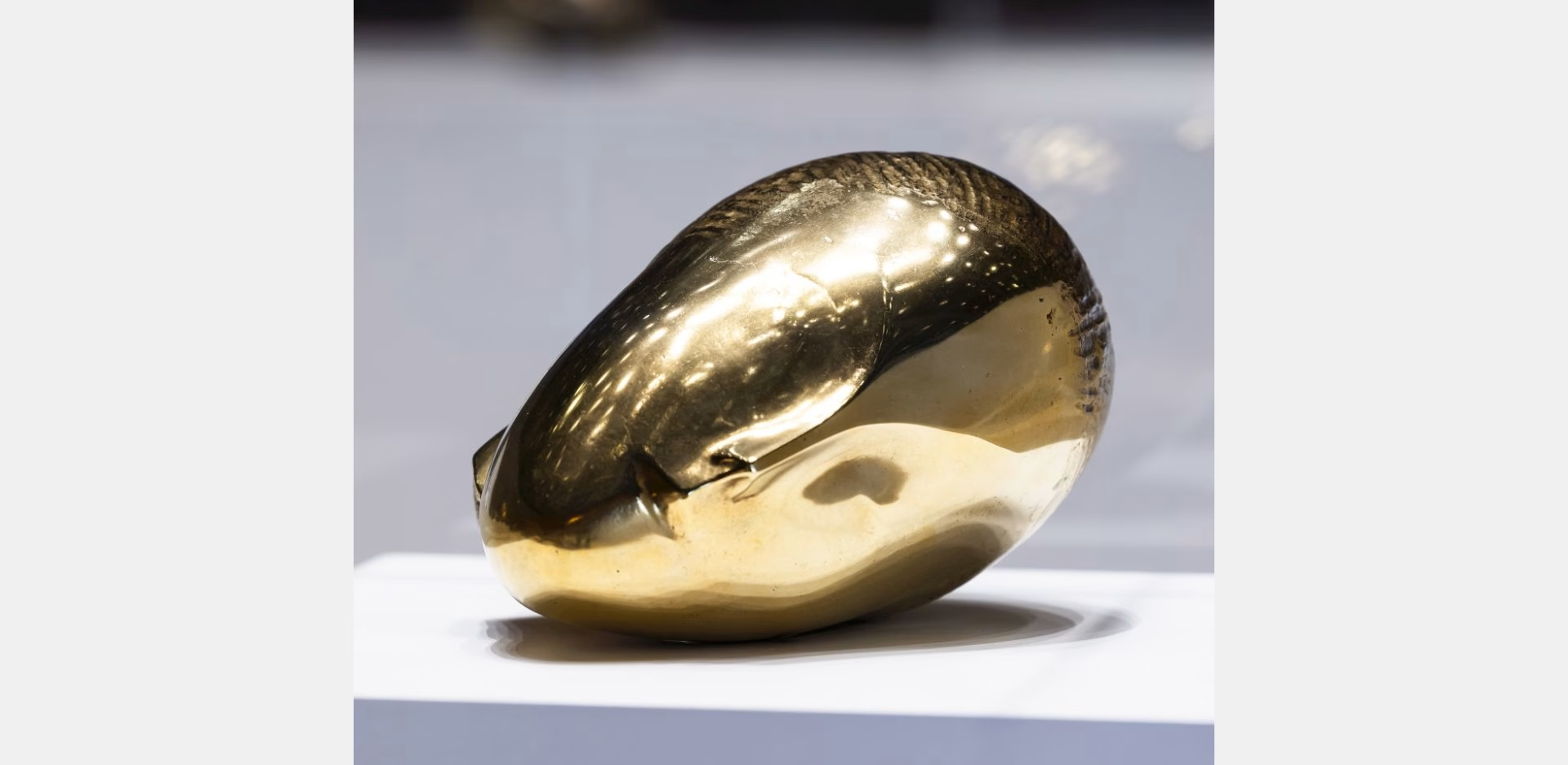
Can an egg shape make you cry? Until I saw Brancusi, I would have said no. Now, my answer has changed.
Prepared by the Neue Nationalgalerie in collaboration with the Centre Pompidou, this retrospective gathers Brancusi’s works—which have been exhibited in various corners of the world until today—into Mies van der Rohe’s palace of glass. And believe me, the artworks speak in a completely different language within this space.
Why is the Romanian-born Constantin Brancusi so vital? Because he bridged sculpture back to a simplicity that predated the Industrial Revolution. He worked in Rodin’s studio for a few months, then left—remarking, “nothing grows under the shade of big trees,” and carved out his own path. He abstracted forms to such a degree that you occasionally begin to question why they are still made of stone or bronze.
While touring the exhibition, what struck me most was the relationship he established with light. There are polished bronze birds—some suspended from the ceiling, others standing on pedestals. The Berlin sun filtering in from the outside strikes them, making them appear as though they are melting away into thin air. It feels as if you are looking at light itself, rather than a sculpture.
The partial reconstruction of his Paris studio is particularly magnificent. Brancusi positioned his sculptures not merely as objects, but as entities existing in relation to one another. Capturing that exact atmosphere is entirely possible here.
Let me add this: do not leave this exhibition until August. I want to go and sit there on quiet days, testing whether what I see changes as I stand before a sculpture. Furthermore, in the Berlin summer heat, the air conditioning of the Neue Nationalgalerie is a blessing in its own right.
Exhibition Details:
- Artist: Constantin Brancusi (1876–1957)
- Venue: Neue Nationalgalerie, Berlin
- Institutional Partner: Centre Pompidou, Paris
- Closing Date: August 9, 2026
- Architecture Context: Mies van der Rohe’s modernist glass pavilion (1968)