

In Berlin’s dynamic contemporary art scene, artist Anna Witt – whose practice explores social transformation, collective emotion, and political imagination – centres a new question in her exhibition “Radical Optimism” at Galerie Tanja Wagner:
Is it possible to think of hope as a radical act?
Witt’s work has long mapped the intersections between individual experience and public space. “Radical Optimism” transforms this approach into both a personal and societal practice of imagining.
Nights of Labour: Dreams, Memory, and a Space of Resistance
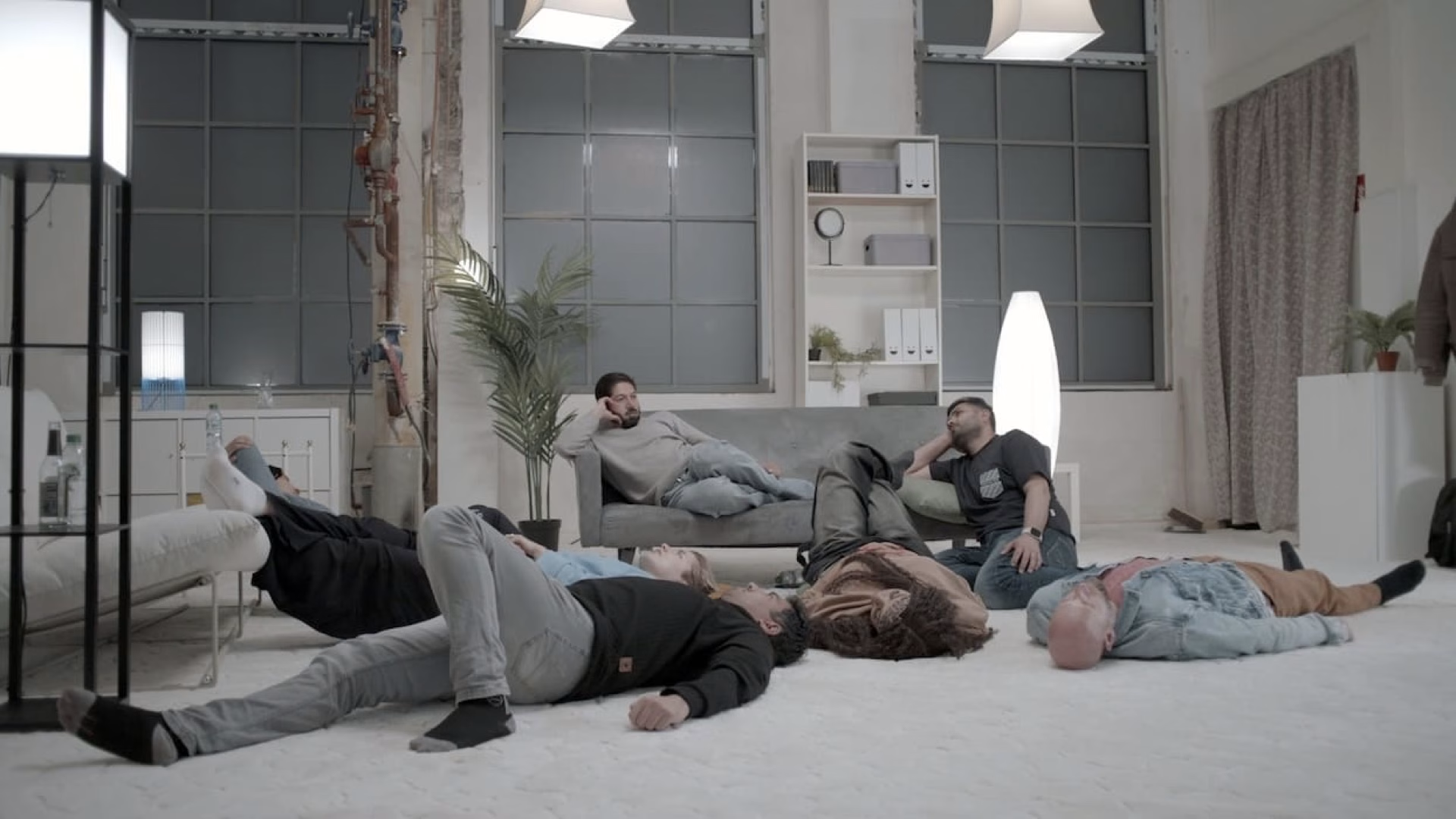
The backbone of the exhibition is the two-channel video installation Nights of Labour, which makes visible the political potential Witt invests in the act of dreaming.
Participants gathered in the former industrial hall of Hydra Werke in Berlin carry in their bodies the tension between the site’s past and the transforming urban fabric.
- The camera’s gentle movements through the staged space,
- the temporary sense of community created by rugs and furniture,
- the intense inwardness appearing on the participants’ faces
—all turn into a kind of collective resilience ritual.
Images of the empty space and voice-overs on the second channel remind us of both the presence and fragility of dreaming. Drawing inspiration from Jacques Rancière’s Nights of Labor, Witt carries the utopias that 19th-century workers built at night into today’s post-industrial society.
Crushed and Melted: Layers of Digital Closeness and Exhaustion
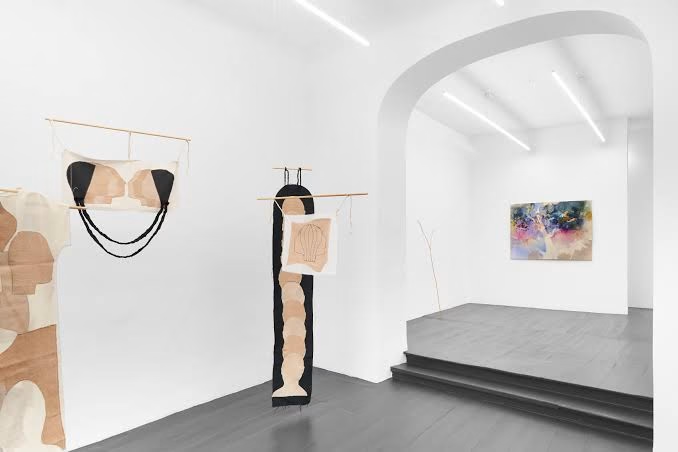
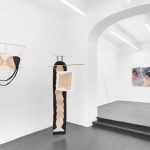
Witt’s Crushed and Melted series examines the contradictions between physical and digital care practices. Works that combine textile collages pressed into acrylic glass with ASMR tones translate:
- the fragile structure of digital communities,
- the endless cycle of care and burnout,
- the boundary between closeness and destruction
into an abstract sensory language.
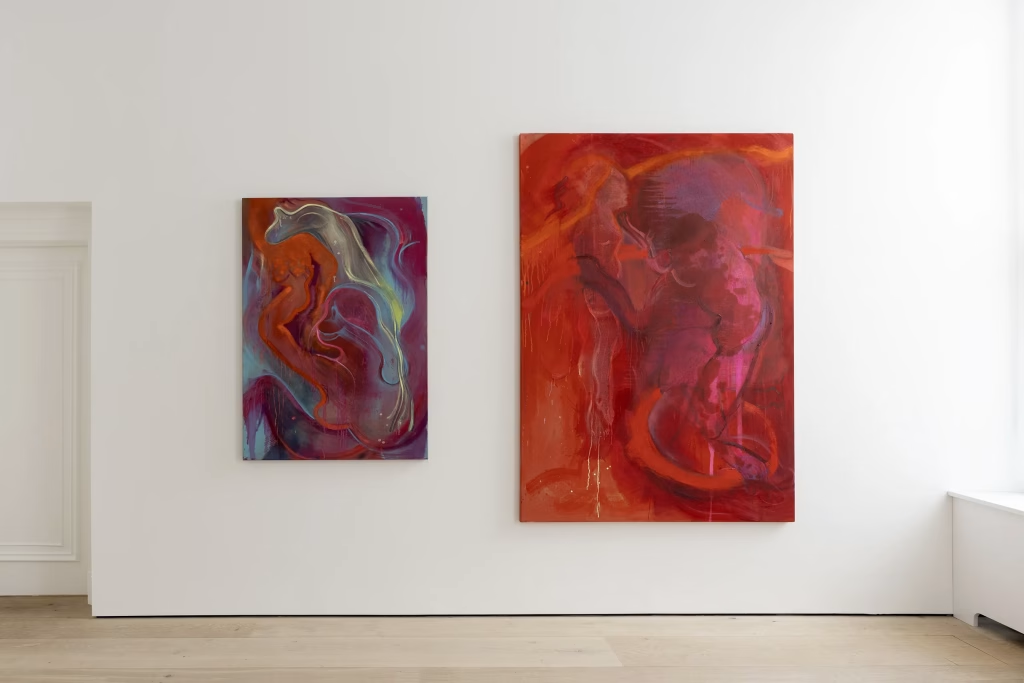
In the series, Cruel Optimism reflects Lauren Berlant’s concept of a paradoxical attachment to ideals of the “old good life” onto contemporary relationships. Running Away overlays both the liberating and the desperate sides of the desire to escape.
Survival of the Softest: The Political Power of Softness
The text-based work Survival of the Softest, also featured in the exhibition, summarises a discussion Witt has pursued for years: Can fragility be a form of strength? In a world that glorifies hardness, Witt presents softness as a mode of resistance.
Apartman No:26 Note
“Radical Optimism” is an exhibition that reminds us that dreaming can still be a social gesture in an increasingly inward-turning world. Witt treats dreaming not as a passive inner process but as a collective drawing practice for the future. She invites the viewer to ask: Is it possible to imagine a life together beyond the existing system – not within it?
Exhibition Details
- Artist: Anna Witt
- Exhibition: Radical Optimism
- Venue: Galerie Tanja Wagner, Berlin
- Duration: On view until 17 January 2026