

Frankenstein (2025) – Guillermo del Toro’s Reckoning with Our Inner Monsters

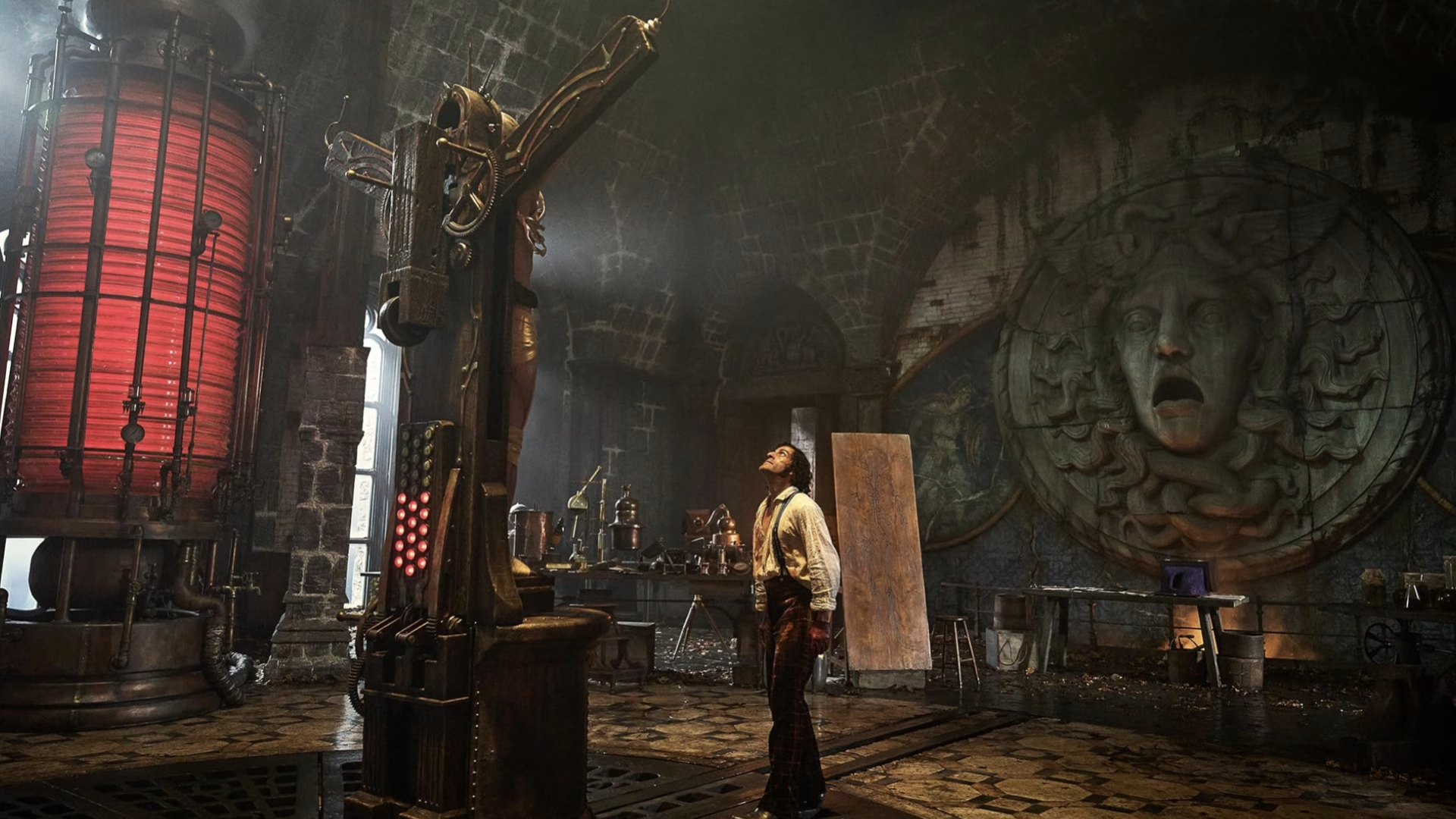
Guillermo del Toro’s long-awaited passion project has finally come to life. Reimagining Mary Shelley’s 1818 gothic classic, Frankenstein is not merely a “monster story” but a mesmerizing exploration of creation, loneliness, and the fragile boundaries of humanity. Del Toro’s recurring theme of the “outcast, misunderstood being” merges with Shelley’s timeless figure in this adaptation.
Victor Frankenstein (Oscar Isaac) is a scientist whose genius is overshadowed by hubris. His obsession with creating life from dead tissue leads him to a boundary-pushing experiment. When his Creature (Jacob Elordi) comes to life, the resulting tragedy is not only scientific but existential, unraveling a profound collapse.
Del Toro reworks the story without stripping away its classic gothic elements, infusing it with contemporary sensitivity. The Creature’s sorrow matches its rage, just as Victor’s pride mirrors his helplessness. Through the lens of a father-son, creator-created relationship, the film weaves a poignant lament about the longing for love and belonging.
The Director’s Vision: Between Gothic and Lyrical
Del Toro describes Frankenstein not just as a horror story but as “humanity’s most fragile prayer.” While preserving the gothic atmosphere, he moves away from muted pastels, embracing vivid colors, dramatic lighting, and grandiose sets to amplify the intensity of emotions.
- Empathy Focus: Centering the Creature’s loneliness, the film etches the question of “who is the real monster?” into the audience’s mind.
- Poetic Visuals: Paired with Alexandre Desplat’s score, slow, rhythmic camera movements bring the melancholic tone of Shelley’s novel to the screen.
- Personal Layer: Del Toro’s theme of the “outcast as saint” is woven into the film with near-autobiographical passion.
Performances: Two Opposing Souls
Oscar Isaac delivers a Victor who embodies both arrogance and regret, while Jacob Elordi imbues the Creature with unexpected vulnerability and poetry. Their scenes transcend scientific experiment, evolving into a father-son conflict.
Festival and Awards Journey
- Venice 2025 World Premiere: The screening, held on Mary Shelley’s birthday, received a 15-minute standing ovation.
- Awards Buzz: With its visual mastery, stellar cast, and profound storytelling, the film is already a strong contender for awards season.
What Critics Are Saying
- Variety: “Transforms gothic heritage into a lyrical masterpiece.”
- Deadline: “Del Toro’s most personal and poetic film.”
- The Hollywood Reporter: Despite some criticism of its runtime, its emotional depth and visual splendor shine.
Consensus: Del Toro stays true to Shelley’s text while reintroducing it to contemporary discussions of alienation and belonging.
Apartment No:26 Note
Our Inner Creature
Frankenstein (2025) is more than a classic adaptation; it’s a magnificent cinematic experience that probes the fragility of humanity, the power of compassion, and the limits of creation. With Guillermo del Toro’s signature, gothic horror transforms into a tragedy that touches the heart.