

Homage to an Architectural Legend in Venice: Iuav Salutes Vittorio Gregotti at the Heart of His Era

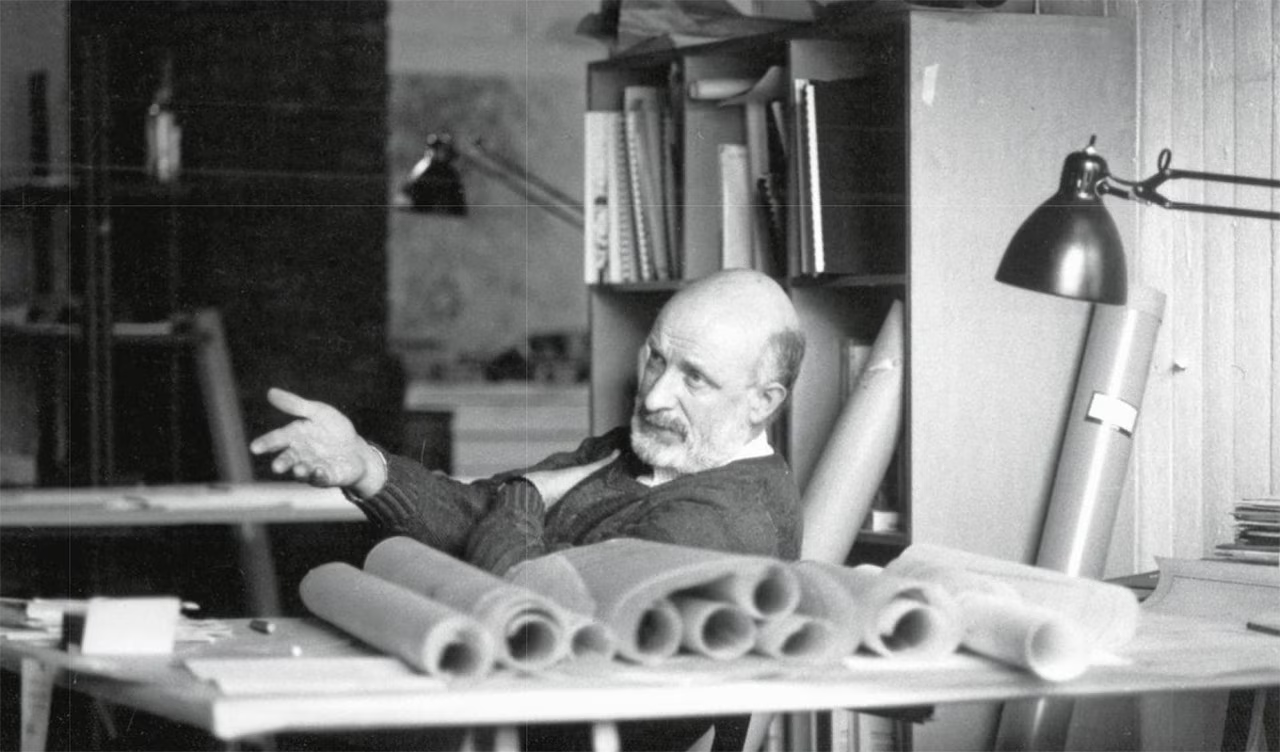
As Venice’s deep-rooted educational plane, the Università Iuav di Venezia, celebrates its 100th anniversary, it offers a long-overdue tribute to one of the most shifting figures of Italian architecture and intellectual life. Today, Vittorio Gregotti (1927–2020)—one of the most authoritative architects of the second half of the 20th century, the legendary editor-in-chief of Casabella magazine, a theorist, and an educator—is being commemorated at the Tolentini campus through two major exhibitions and a polyphonic round-table discussion.
For Gregotti, Venice and its misty lagoon were not merely a city; they formed a massive experimental laboratory where he collided architecture with art, philosophy, history, and literature. This comprehensive program, starting today at Iuav’s Tolentini building, dissects his intellectual legacy once more, alongside the radical expansion he brought to the definition of the architect’s craft.
1. “Vittorio Gregotti e Venezia” Exhibition: In Search of a New Modernity
Opening its doors in the rectorate area of the Tolentini campus and continuing until the end of July, the first exhibition focuses on the projects Gregotti produced for Venice and the theoretical texts he wrote about the city. Curated by PierAntonio Val, the exhibition paints an intellectual portrait of an individual who did not view architecture simply as erecting buildings, but nourished it through publishing and academia:
- 10 Advice to Young Architects: Displayed on large panels, Gregotti’s golden recommendations for young architects—sifted from his Casabella editorials and given a second life in his famous book Lezioni veneziane (Venetian Lectures)—are presented to the viewer.
- Venice as an Experimental Field: The exhibition brings together projects that treat Venice not as a frozen museum of the past, but as a living fabric where a “new modernity” (nuova modernità) can be constructed.
2. “La didattica come progetto di architettura”: Redesigning Education
The rarest and most urgent destination of the day is located in the famous Sala Scarpa hall of the Tolentini Library. Drawing sustenance from the Fondo Vittorio Gregotti archive, which was donated by the artist to the university, this exhibition will remain open for only a single week.
Curated by Guido Morpurgo and Antonella D’Aulerio, the exhibition brings to light for the first time the handwritten lecture notes, personal sketches, and conceptual maps kept by Gregotti throughout his teaching career of over twenty years.
- The Crisis of European Architecture: The most striking documents in the exhibition are the original manuscripts belonging to Gregotti’s 1998 lectures, “Identity and Crisis of European Architecture,” which would later be published as a book by Einaudi. These critical sentences constructed by the architect a quarter-century ago still maintain their urgency in today’s globalized and commercialized world of architecture.
3. Round Table: The “Gregottiani” Phenomenon
Taking place today at 11:00 AM in Tolentini’s Grand Amphitheater (Aula Magna), the round-table meeting titled “Gregotti e Venezia: Gregottiani” brought together dozens of important names—from Benno Albrecht to Carlo Magnani—who spent years working in his studio, writing for his magazines, and walking alongside him in academia. The central axis of the discussion revolved around the distances and relationships that have intervened today with Gregotti’s rigid yet consistent framework of thought.
Agenda Notes
To remember that architecture is not merely an aesthetic form but a political and philosophical stance, be sure to add these two exhibitions to your itinerary amidst Venice’s historic water canals. Do not forget that time is exceptionally short, particularly for the manuscript exhibition in the library.
- Venue: Università Iuav di Venezia – Tolentini (Santa Croce 191, Venice)
- Exhibition 1: “Vittorio Gregotti e Venezia”
- Dates: May 21 – July 31, 2026 (Monday–Friday, 09:00–19:00)
- Location: Rectorate Area
- Exhibition 2: “La didattica come progetto di architettura”
- Dates: May 21 – May 29, 2026 (Very Short Duration! Monday–Friday, 10:00–13:00 / Afternoons by appointment)
- Location: Library, Sala Scarpa
- Admission: Completely free of charge.
Reflection Question:
What do Gregotti’s persistent late-90s critiques regarding the crisis of European architectural identity—and his warnings about architecture detaching from philosophy and history to become mere commercial visual objects—evoke for you in today’s world of skyscrapers and artificial intelligence? When designing a city, does a greater modernity lie in preserving the historical heritage of the past, or in boldly inserting that new and radical modernity Gregotti pursued into that very fabric?