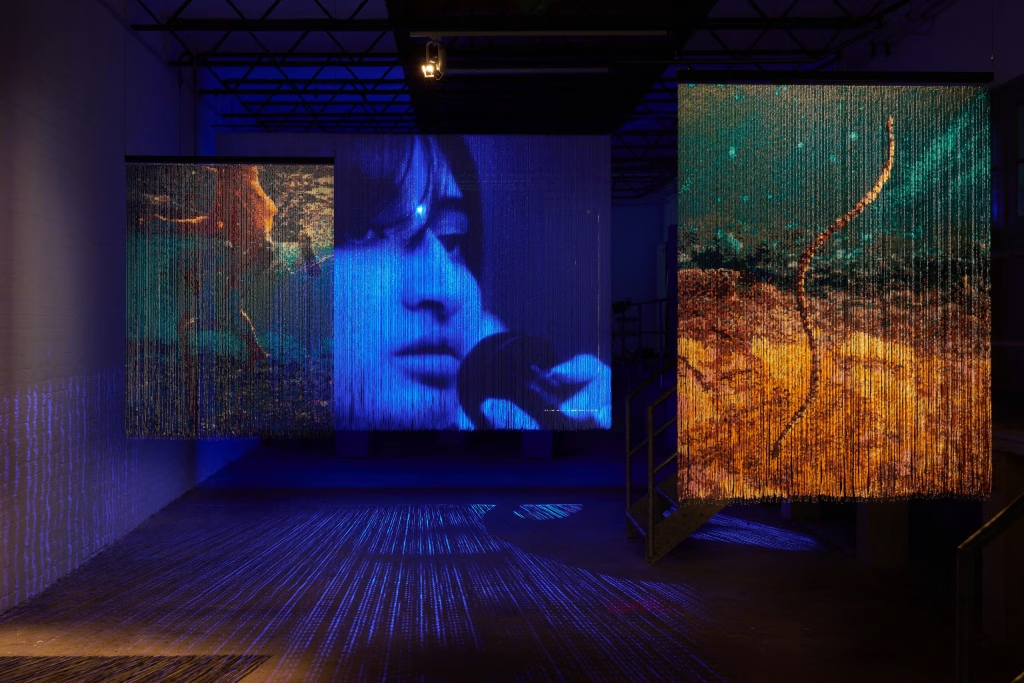


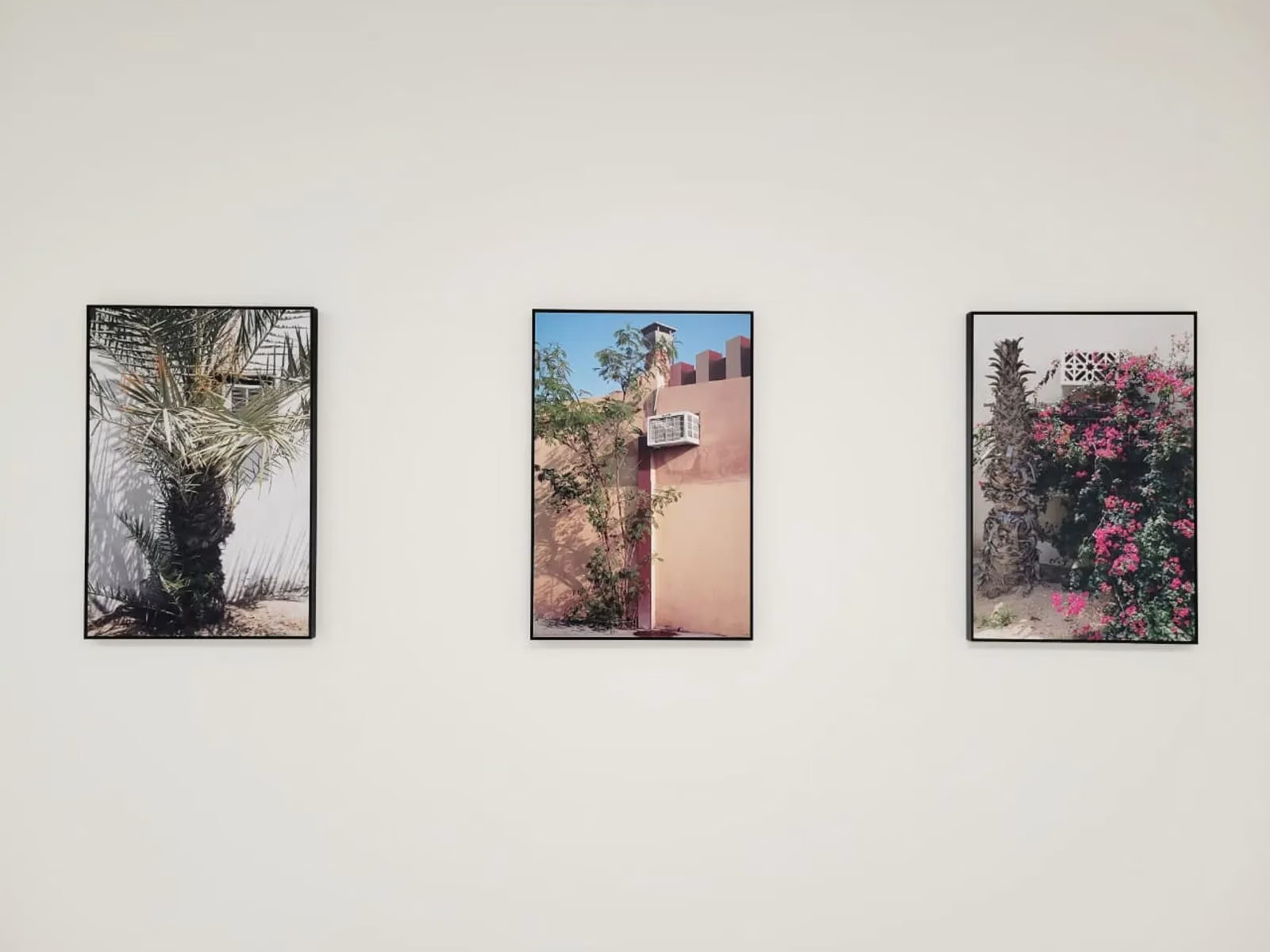
Walking through the cool halls of Galerie Tanit in Munich, we encounter an exhibition that brings us to that razor-sharp threshold where the Middle East’s most scorching deserts ironically intersect with modern technology. In his solo exhibition titled Eau De Vie (Water of Life), Lebanese-born photographer and violinist Georges Yammine places the uncanny relationship between ecological crisis and technological dependence under the microscope. In this visual journey, Yammine moves not only with a photographer’s sharp eye but also with a musician’s rhythmic sensitivity that divides time and space.
The conceptual backbone of the exhibition takes shape in the geography of Qatar, where annual rainfall stays below 100 millimeters and water literally transforms into an existential miracle. In this relentless climate, Yammine tells the story of how life stubbornly carves out its own path through one of the most mundane byproducts of modern civilization: air conditioning leaks. Rising across the building facades captured in his frames are the waste waters discharged by cooling systems working tirelessly to ensure our comfort in the suffocating heat that reaches 50°C. The greenery sprouting from between the concrete, nourished by these artificial condensation droplets, exposes nature’s umbilical cord to technology—one that is both incredibly fragile and unbelievably resilient.
The artist’s aesthetic language transforms this ironic oasis into what feels like a political manifesto. In the photographs, the water droplets gliding across the concrete like a rhythmic violin bow constantly leave the viewer with the question: “What does the continuity of life actually depend on?” Seeing how the waste water released into the environment by an artificial climate control system is turned into a lifeline by nature creates a jarring contrast in the midst of our modern lifestyle. Considering how global water reserves stand at a critical threshold in this year of 2026, Yammine’s “Water of Life” photographs serve as a stark warning about the future, rather than a lyrical song whispered in our ears.
Exhibition Details:
- Artist: Georges Yammine
- Exhibition Title: Eau De Vie
- Venue: Galerie Tanit, Munich
Key Themes: Ecological crisis, technological byproducts, environmental resilience, and the politics of water.